Burgess Hill, West Sussex · 7 min read
Transforming a Tired Back Garden in Burgess Hill: A Renovation Guide
Most Burgess Hill back gardens are structurally sound and visually exhausted. Here is how to renovate one without starting from zero.
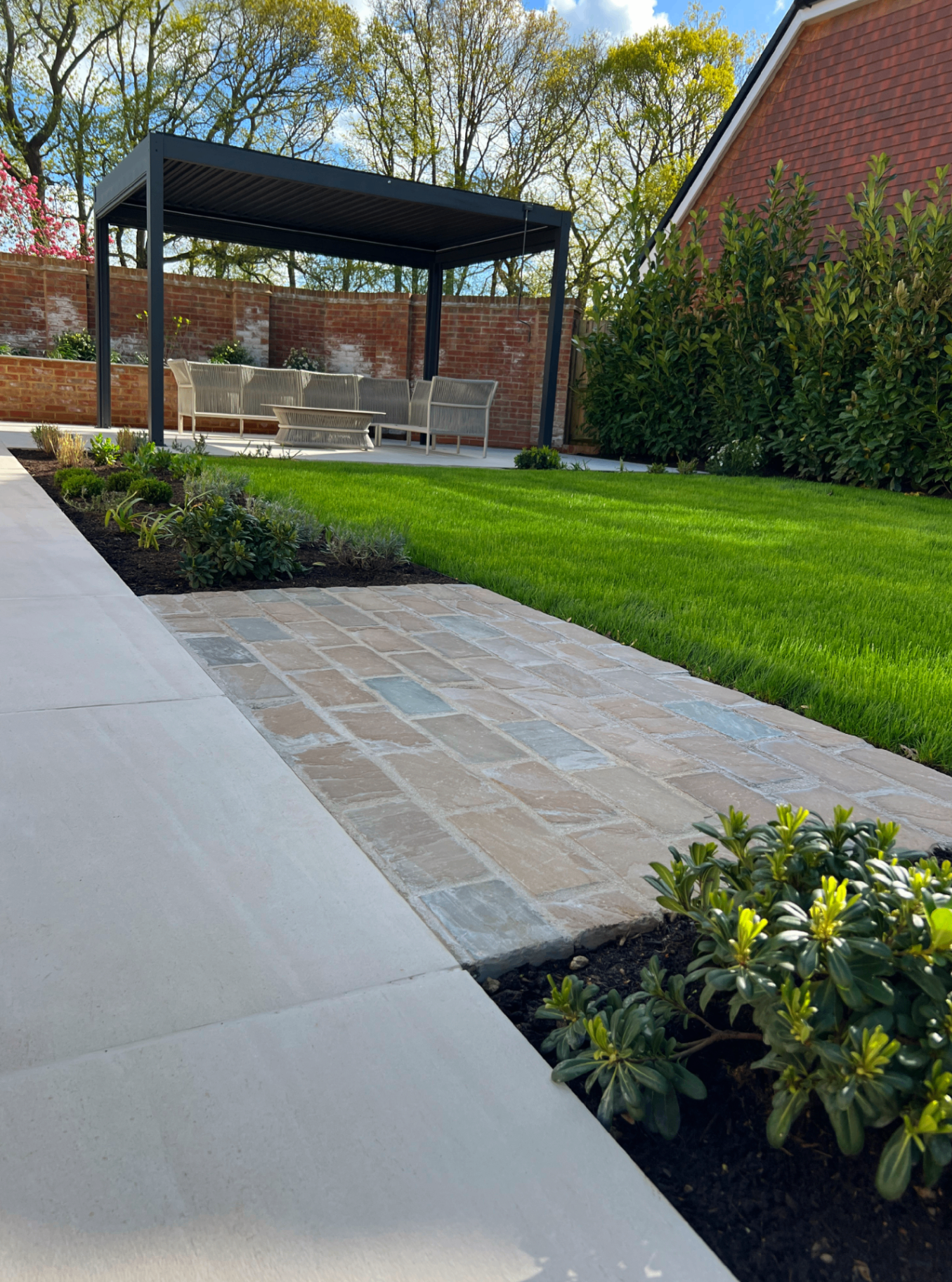
Renovated family garden with stone paths, raised beds and lawn
Post-war and nineties estates around Burgess Hill share a garden type: a rectangle, a lawn down the middle, a narrow border either side and a concrete slab patio that never catches the sun. Nothing about it is broken. Everything about it is unused. Renovation, not demolition, is usually the right answer.
Start by auditing what is already there
- Mature trees and hedges - almost always worth keeping; they buy you twenty years of privacy for free.
- Boundaries - a sound fence can be stained dark and disappear behind planting rather than replaced.
- Existing hard surfaces - sometimes reusable as a base; often better lifted and the hardcore crushed on site.
- Drainage and soil - the two things worth spending on before anything visible.
Break the rectangle
The single biggest change to a standard back garden is refusing to run the layout parallel to the fences. Turning the terrace, offsetting the lawn, or splitting the plot into two rooms with a hedge or pergola makes a 12-metre garden feel considerably longer, because you can no longer see all of it at once.
Put the seating where the sun is
Patios are usually built against the house because that is where the door is. If the back of your house faces north - common on the newer Burgess Hill developments - the useful terrace belongs at the far end, with a path that makes the walk feel intentional.
Order of works that saves money
- Clearance and any tree work first, while machine access still exists.
- Drainage, levels and retaining structures.
- Services: lighting cable, irrigation, power for a garden room.
- Hard landscaping: terraces, steps, paths, walls.
- Topsoil, planting, turf.
- Lighting fittings, furniture, finishing.
Doing these out of sequence is the most common source of avoidable cost in a domestic renovation - typically lifting new paving to run a cable that was not planned.
What a renovation should deliver
A garden you use in April and October, not just July. Somewhere dry to walk in winter. Planting that looks deliberate in February. And a maintenance routine you can actually sustain.
Related services
Where we work
We design and build gardens, garden rooms and pergolas across Mid Sussex and the surrounding towns.
More landscapers & landscape gardeners guides
- How to Choose a Landscaping Company in Mid Sussex: 10 Questions to AskThe difference between a garden that lasts and one that fails is almost always visible in the quote. Ten questions to ask before you sign.
- Garden Renovation: What a Full Rebuild InvolvesA renovation is a construction project with plants at the end of it. Knowing the sequence makes the disruption far easier to live with.
- Landscaping a Sloping Garden: Terraces and RetainingSlopes are the most expensive and most rewarding gardens to build. Here is how the engineering and the design work together.