Sussex, Surrey & Kent · 8 min read
Transform Your Outdoor Space: Professional Landscaping Secrets & Essential Tools
The difference between a garden that looks good for a season and one that works for decades comes down to planning, groundworks and restraint. Here is how professional landscapers actually approach a plot.
A Mid Sussex build in progress: groundworks and levels resolved before a single visible finish goes down.
Walk past a garden that still looks crisp a decade after it was built and you are looking at decisions you cannot see: compacted sub-bases, falls that move water away from the house, drainage runs, footings. The visible layer - the stone, the timber, the planting - is only the last third of the job. That is the first professional secret: great gardens are built from the ground up, literally.
Whether you are a homeowner planning a full transformation or a developer dressing a plot for sale, the same principles apply. Here is how a professional design-build team approaches an outdoor space, and what is worth paying attention to if you want the result to outlast the trend.
Start with a plan, not a purchase
The most expensive landscaping mistakes are made before any work starts: buying materials before levels are measured, booking a patio before drainage is understood, planting before the soil is improved. A proper design process reverses that order - survey first, concept second, specification third, build last.
On sloping Weald clay plots across Mid Sussex and the Surrey border, this stage is where projects are won or lost. Levels, retaining structures and land drainage are decided here, and every later trade works from the same scaled plan.
Hardscaping vs softscaping: get the order right
Hardscaping - paving, walls, steps, structures - is the skeleton of the garden. It is disruptive and expensive to change, so it goes in first and it has to be right. Softscaping - lawns, planting, hedges - is the layer that softens and seasons the space, and it is far more forgiving to adjust over time.
The 60/40 rule of thumb
On most family gardens we design, roughly 40 percent of the budget goes on hard landscaping and groundworks, the rest on planting, lawns, lighting and finishes. Gardens that feel 'hard' usually inverted that ratio; gardens that feel calm invested in structure and then let planting do the softening.
The tools behind a professional finish
Ask any experienced landscaper what separates a professional finish from a DIY attempt and they will point at preparation and measurement: laser levels for accurate falls, plate compactors for sub-bases that never sink, sharp kit for clean cuts in stone and timber. If you are tackling smaller groundwork jobs yourself, it is worth investing in quality landscaping tools and hardware rather than hiring the cheapest option twice.
For anything involving retaining walls, drainage, electrics or structures, though, the honest advice is to bring in a team that does it weekly. The cost of getting groundworks wrong - relaying sunken paving, digging out failed drainage - dwarfs the cost of having it built properly the first time.
Watch: a transformation in progress
This short reel shows one of our recent builds moving from groundworks to finished space - watch the transformation process in action and notice how much of the work happens before anything pretty is visible.
Planting that looks after itself
Professional planting schemes are restrained on purpose: a small palette of proven species, repeated in drifts, chosen for the soil and aspect they will actually grow in. Structure comes from evergreen bones and hedging; seasonal interest from a handful of perennials and grasses; and everything is mulched thickly to suppress weeds and hold moisture while it establishes.
Maintenance tips that actually matter
- Water new planting deeply and rarely rather than little and often - it trains roots down.
- Mulch beds every spring to cut weeding and watering by half.
- Sweep and re-sand block and jointed paving annually to keep weeds and ants out.
- Prune shrubs after flowering, not on a calendar - you keep the shape and the blooms.
- Service lighting, irrigation and drainage outfalls once a year, before winter.
When to bring in the professionals
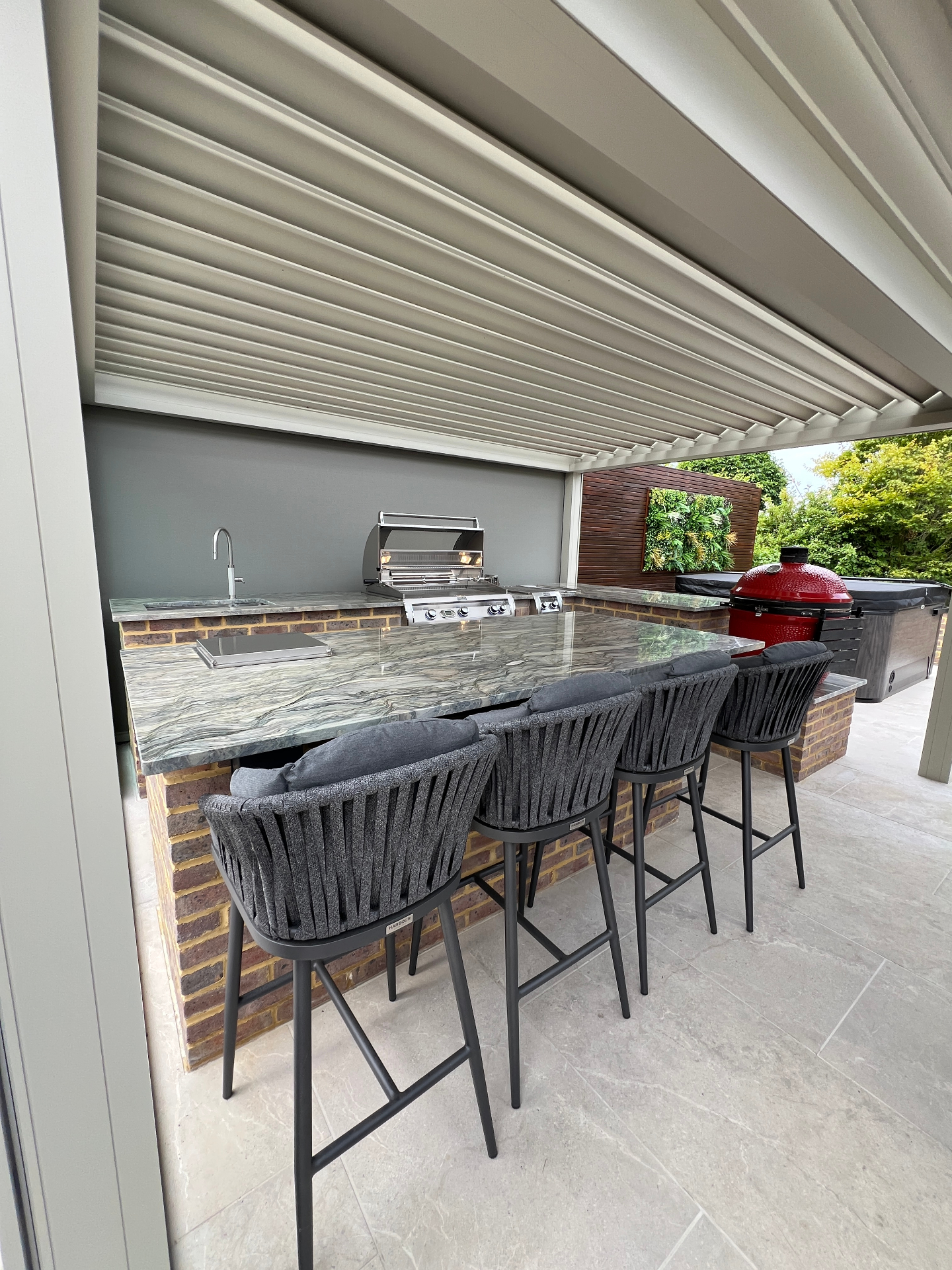
If your project involves level changes, retaining structures, drainage, a garden room, outdoor kitchens or a budget where mistakes would sting, a design-build team will almost always save you money overall - and deliver a garden that adds genuine value to the property rather than a list of features.
We design and build gardens across Sussex, Surrey and Kent, from courtyard refreshes to full estate transformations, and we book builds two to six months ahead. If you are planning for spring or summer, the right time to start the design conversation is now.
Common questions
- What do professional landscapers do differently?
- Professionals start with the ground, not the finishes. A measured survey, drainage plan and build sequence come before any paving or planting, which is why professionally built gardens hold their levels, drain properly and still look sharp ten years on.
- What is the difference between hardscaping and softscaping?
- Hardscaping is the built structure - paving, walls, steps, decking, pergolas and drainage. Softscaping is everything living - lawns, planting, hedges and trees. A good design fixes the hardscape first, because it is expensive to change, then layers the softscape over it.
- How much does professional landscaping cost in Sussex?
- As a guide, a full garden transformation with paving, levels, lighting and planting typically starts around £20,000 and scales with size, access and materials. Every plot is different, so treat any figure as an estimate until a measured design is priced.
- How do I keep a landscaped garden looking good?
- Choose low-maintenance structure: quality paving, restrained planting palettes, mulch, irrigation for new beds and a simple seasonal routine. Most of the maintenance burden is decided at design stage, not in the years after.
Related services
Where we work
We design and build gardens, garden rooms and pergolas across Mid Sussex and the surrounding towns.
More landscapers & landscape gardeners guides
- Transforming a Tired Back Garden in Burgess Hill: A Renovation GuideMost Burgess Hill back gardens are structurally sound and visually exhausted. Here is how to renovate one without starting from zero.
- How to Choose a Landscaping Company in Mid Sussex: 10 Questions to AskThe difference between a garden that lasts and one that fails is almost always visible in the quote. Ten questions to ask before you sign.
- Garden Renovation: What a Full Rebuild InvolvesA renovation is a construction project with plants at the end of it. Knowing the sequence makes the disruption far easier to live with.