Sussex · 7 min read
Courtyard Garden Design: Small Space, Strong Character
Courtyards have their own microclimate and their own rules. Handled well, they are the most atmospheric gardens we build.
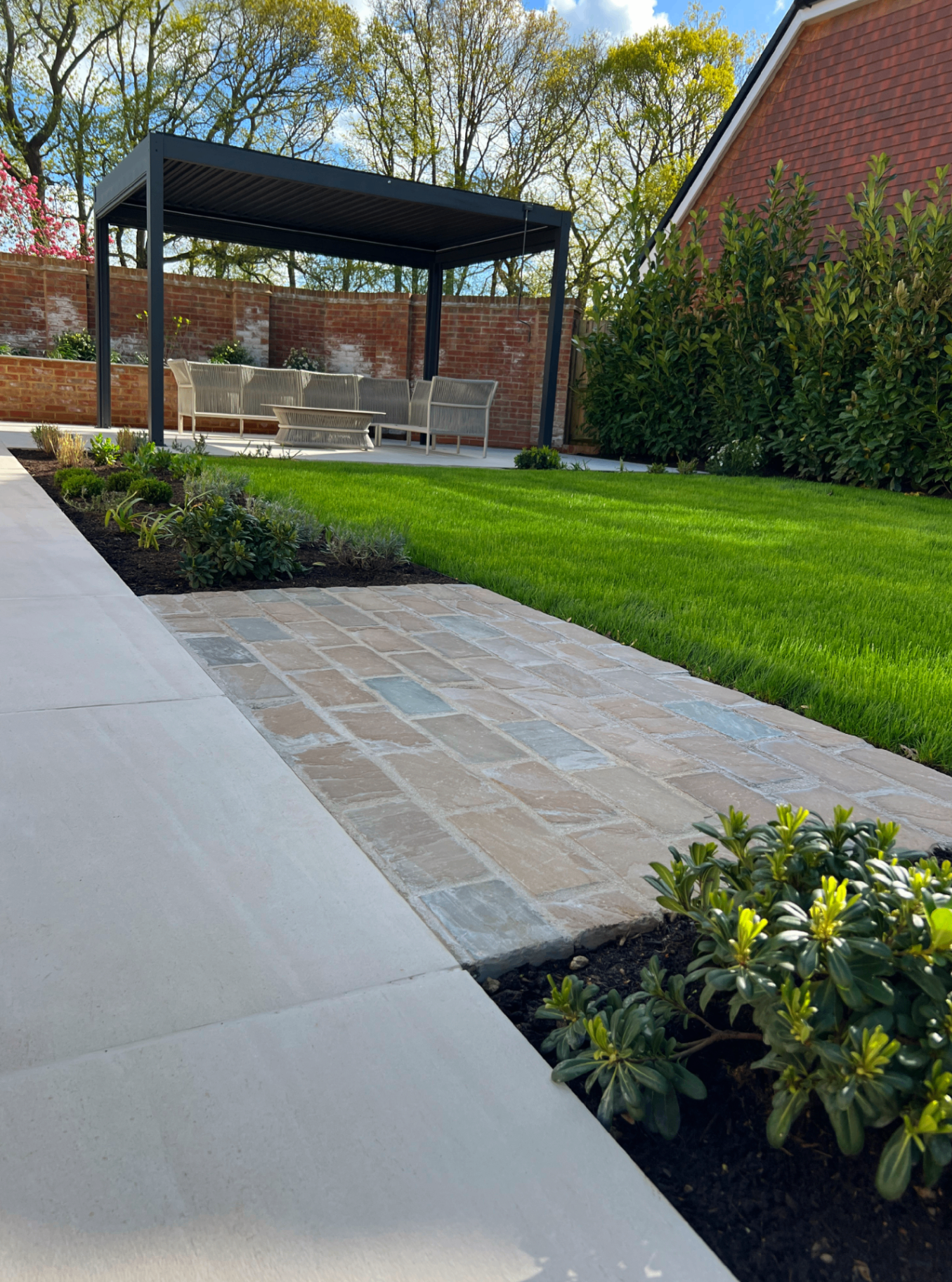
Enclosed courtyard garden with stone paving and planting
A courtyard is defined by its walls. That enclosure creates shelter, shade, reflected heat and still air - a genuinely different growing environment from an open garden a few metres away.
Read the microclimate first
- Sun-trap courtyards are hot and dry - Mediterranean planting thrives, thin soil does not
- North-facing courtyards are cool and shaded - ferns, hydrangeas, hostas and evergreen structure
- Enclosure holds moisture at ground level, so drainage under paving is essential
- Wind is deflected downwards over high walls, so tall thin plants may still need support
Treat the walls as the main surface
In a courtyard you see more wall than ground. Lime render, brick, stone or a dark painted finish sets the whole atmosphere. Climbers, wall-trained shrubs, wall fountains and hung planting are not decoration here - they are the design.
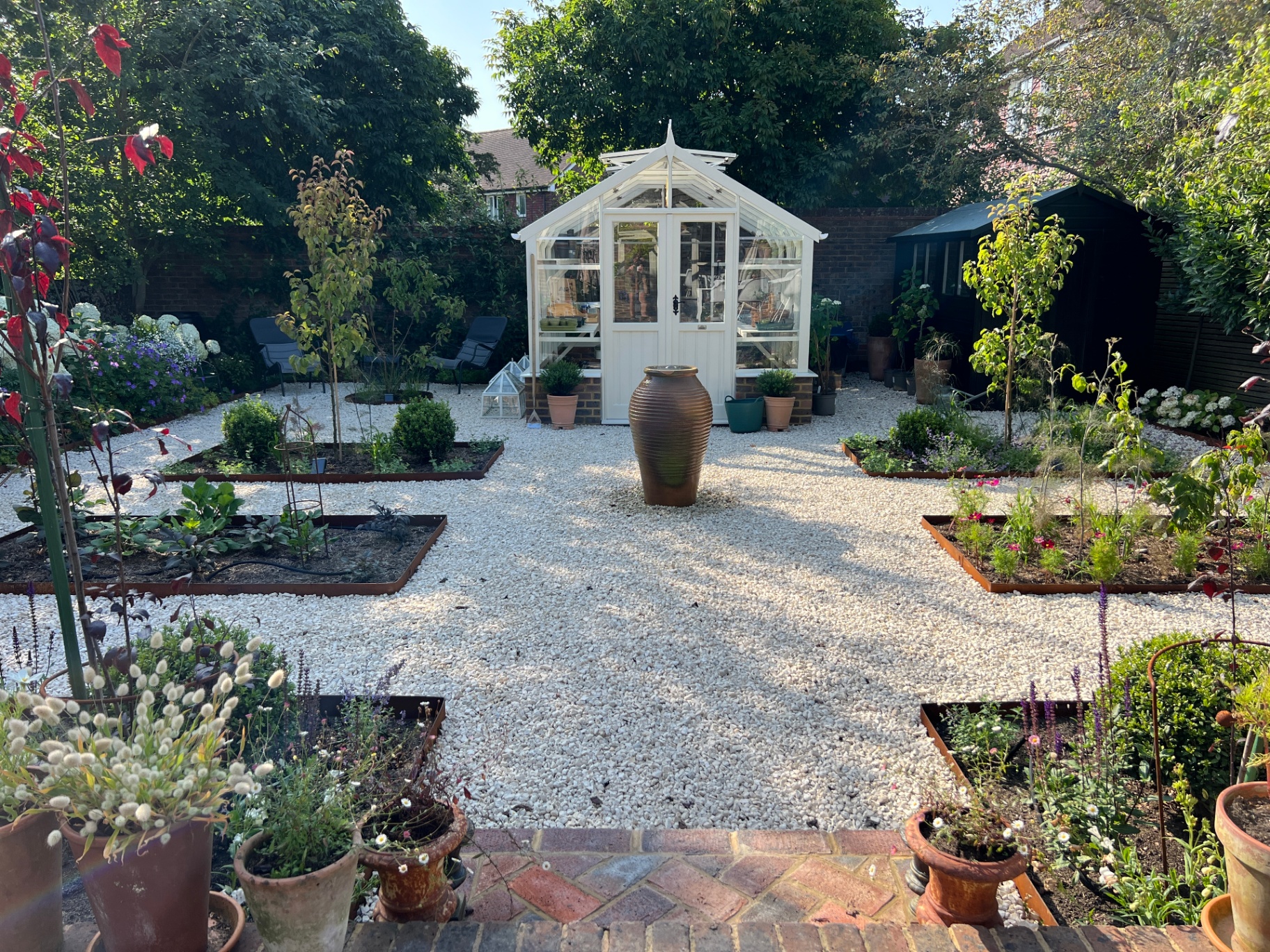
Water works especially well
Sound carries and reflects in an enclosed space, so even a small rill or wall spout has a real effect. It also masks traffic noise, which is often why a town courtyard feels less relaxing than it looks.
Paving and levels
Keep it simple, keep it consistent, and get the falls right - a courtyard has nowhere for water to go. A linear drain against the house and a permeable build-up beneath the paving handles the volumes that walls concentrate.
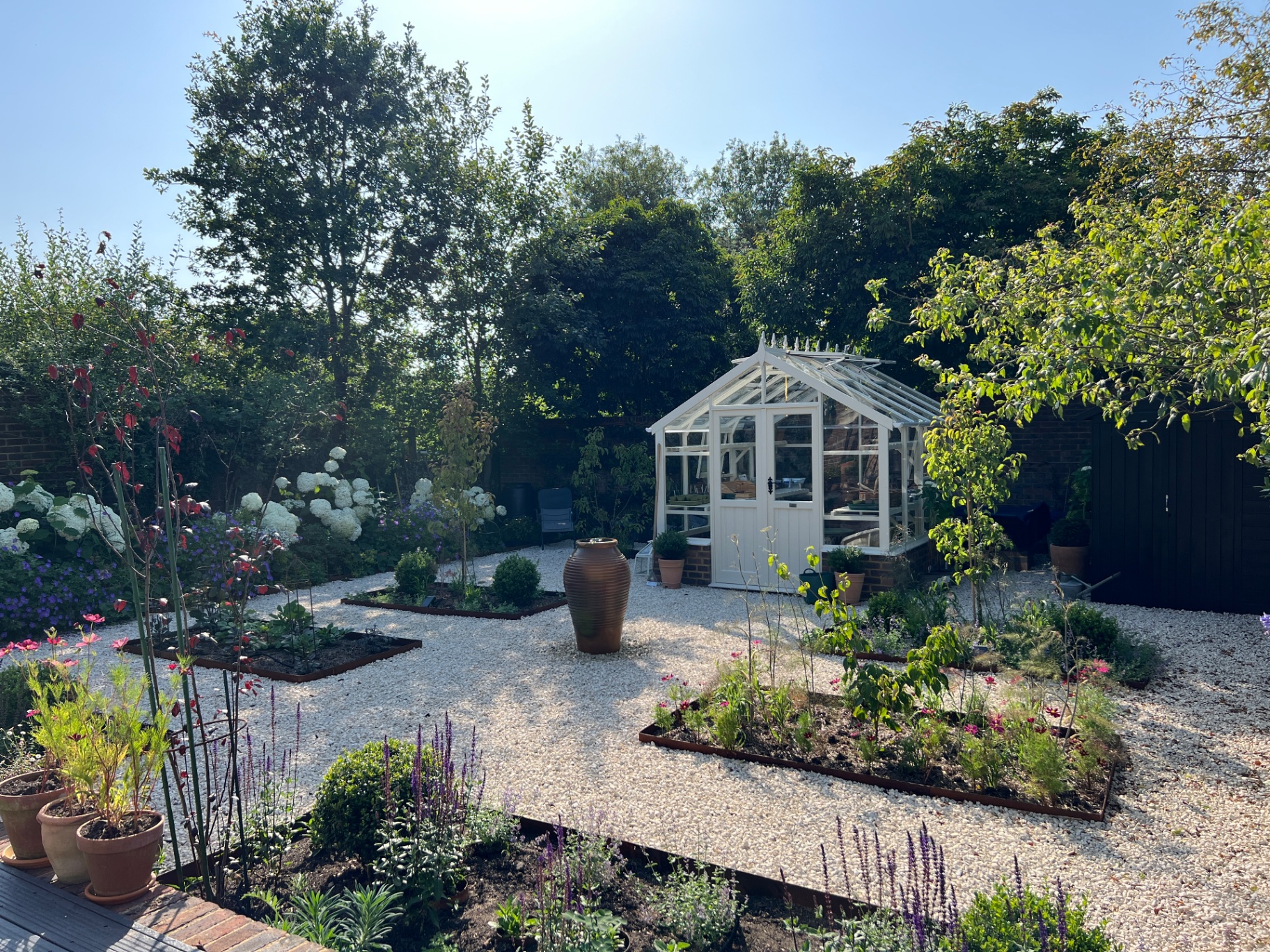
Design it for the view from indoors
Courtyards are looked at far more than they are walked in. Compose the view from the kitchen window as carefully as you would a picture: one strong specimen, layered evergreen structure behind, and lighting that keeps it alive after dark.
Related services
Where we work
We design and build gardens, garden rooms and pergolas across Mid Sussex and the surrounding towns.
More garden design guides
- Garden Design in Cuckfield: What a Bespoke Design Process Actually InvolvesFrom the first site survey to the finished build, here is exactly how a bespoke garden design unfolds for a Cuckfield home - and what to expect at each stage.
- Luxury Garden Design in Haywards Heath: Costs, Timelines and What to ExpectA frank guide to budgets and programme for a high-end garden in Haywards Heath - what drives cost, what protects value, and where to spend first.
- Sloping Gardens in the South Downs: Terracing, Steps and Retaining WallsA slope is an opportunity to build a garden with rooms, views and drama - provided the engineering underneath it is taken seriously.