South Downs, Sussex · 7 min read
Sloping Gardens in the South Downs: Terracing, Steps and Retaining Walls
A slope is an opportunity to build a garden with rooms, views and drama - provided the engineering underneath it is taken seriously.
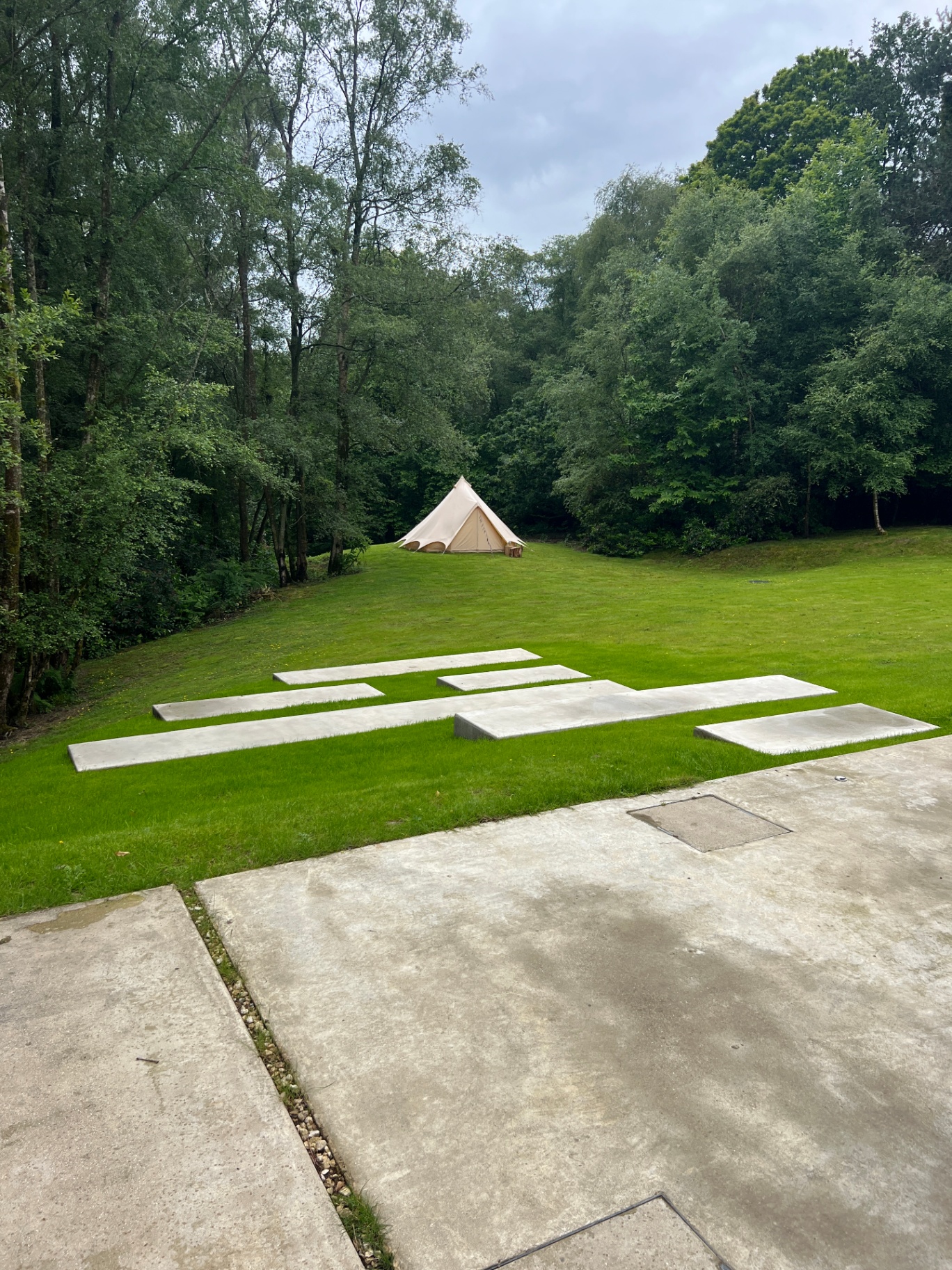
Cantilevered concrete steps rising through a sloping lawn
Gardens on the Downs edge - Ditchling, Hassocks, Clayton, Westmeston - almost all slope. Owners tend to see the slope as the problem. It is usually the best thing about the plot: it gives you levels, views and the chance to build a garden you discover rather than survey from the back door.
Terracing: fewer, larger levels
The instinct is to cut many shallow terraces. The better answer is usually two or three generous ones, each big enough to hold a real function - dining, lawn, planting - with the slope resolved between them. Small terraces produce a garden of corridors.
Retaining walls: this is engineering
- Anything retaining over roughly a metre - or supporting a structure, drive or boundary - needs a designed solution and often a structural engineer.
- Drainage behind the wall is not optional. Free-draining backfill, a perforated land drain and weep holes prevent hydrostatic pressure, which is what actually pushes walls over.
- Material choice: gabions, reinforced masonry faced in stone, board-marked concrete, or oak sleepers for lower changes.
- Party boundaries: walls affecting a neighbour's ground need conversation and sometimes consent before the digger arrives.
Steps that feel right underfoot
Outdoor steps need shallower risers and deeper treads than indoor stairs - around 140-150mm rise with a 400mm-plus going feels generous and safe. Keep every riser in a flight identical, make the flight wider than you think, and light the treads from the side rather than from above.
Water, always downhill
On a slope, every hard surface you add sends water somewhere. Plan the route before you build: channel drains at terrace edges, permeable surfaces where possible, and a soakaway or attenuation that is sized for the run-off rather than guessed.
Planting a slope
Deep-rooted perennials, grasses and shrubs stabilise banks far better than turf, which is also miserable to mow on a gradient. Chalk soils on the Downs suit a beautiful palette - salvias, verbena, achillea, euphorbia, ornamental grasses - that thrives in exactly the free-draining conditions a slope creates.
Related services
Where we work
We design and build gardens, garden rooms and pergolas across Mid Sussex and the surrounding towns.
More garden design guides
- Garden Design in Cuckfield: What a Bespoke Design Process Actually InvolvesFrom the first site survey to the finished build, here is exactly how a bespoke garden design unfolds for a Cuckfield home - and what to expect at each stage.
- Luxury Garden Design in Haywards Heath: Costs, Timelines and What to ExpectA frank guide to budgets and programme for a high-end garden in Haywards Heath - what drives cost, what protects value, and where to spend first.
- Garden Design Costs in Sussex: A Transparent BreakdownWhere the money goes in a garden project, why quotes vary so widely, and how to set a budget that survives contact with the site.