Sussex, Surrey & Kent · 7 min read
Garden Room Heating and Running Costs Through a British Winter
A well-built garden room costs less to run than most people expect. A badly built one costs more than they fear. The difference is the fabric.
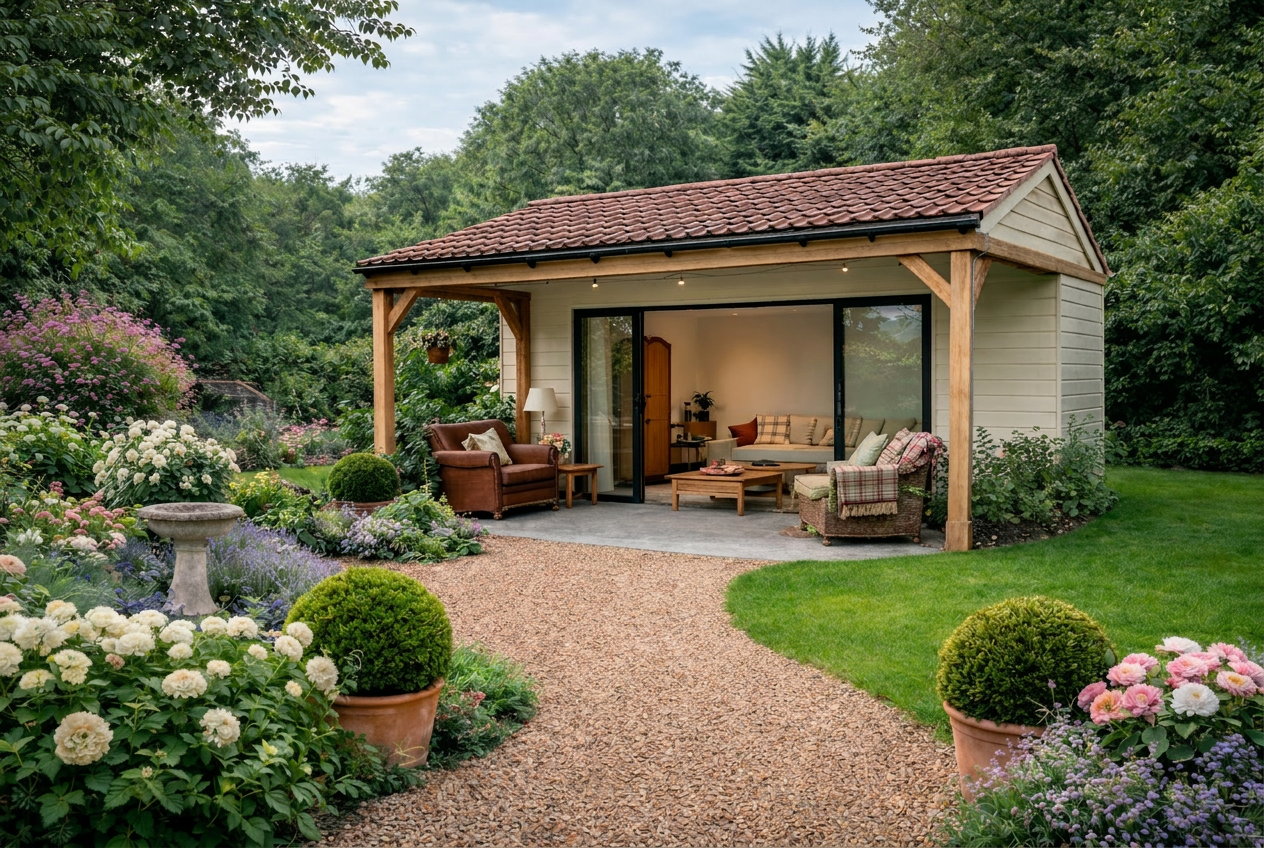
Insulated garden room lit from within on a winter evening
The question behind this one is usually simpler than it sounds: will I still be using it in February, and what will it add to the bill? Both answers come from the same place, which is the fabric of the building. Heating is cheap in a well-insulated, airtight, properly glazed room and ruinous in a thin one, whatever heater you install.
Fabric first, always
- Insulation continuous through floor, walls and roof, with no gaps at junctions where the studs meet the plates.
- An airtightness layer that is actually taped and sealed, not a sheet stapled up and punctured by every cable.
- Thermally broken, double or triple glazed units with argon fill and a warm-edge spacer.
- A ventilation strategy. Sealing a room without ventilating it moves the problem from cold to condensation.
- Shading or an overhang on south-facing glass, because overheating in July is the other half of this problem.
Which heating suits which room
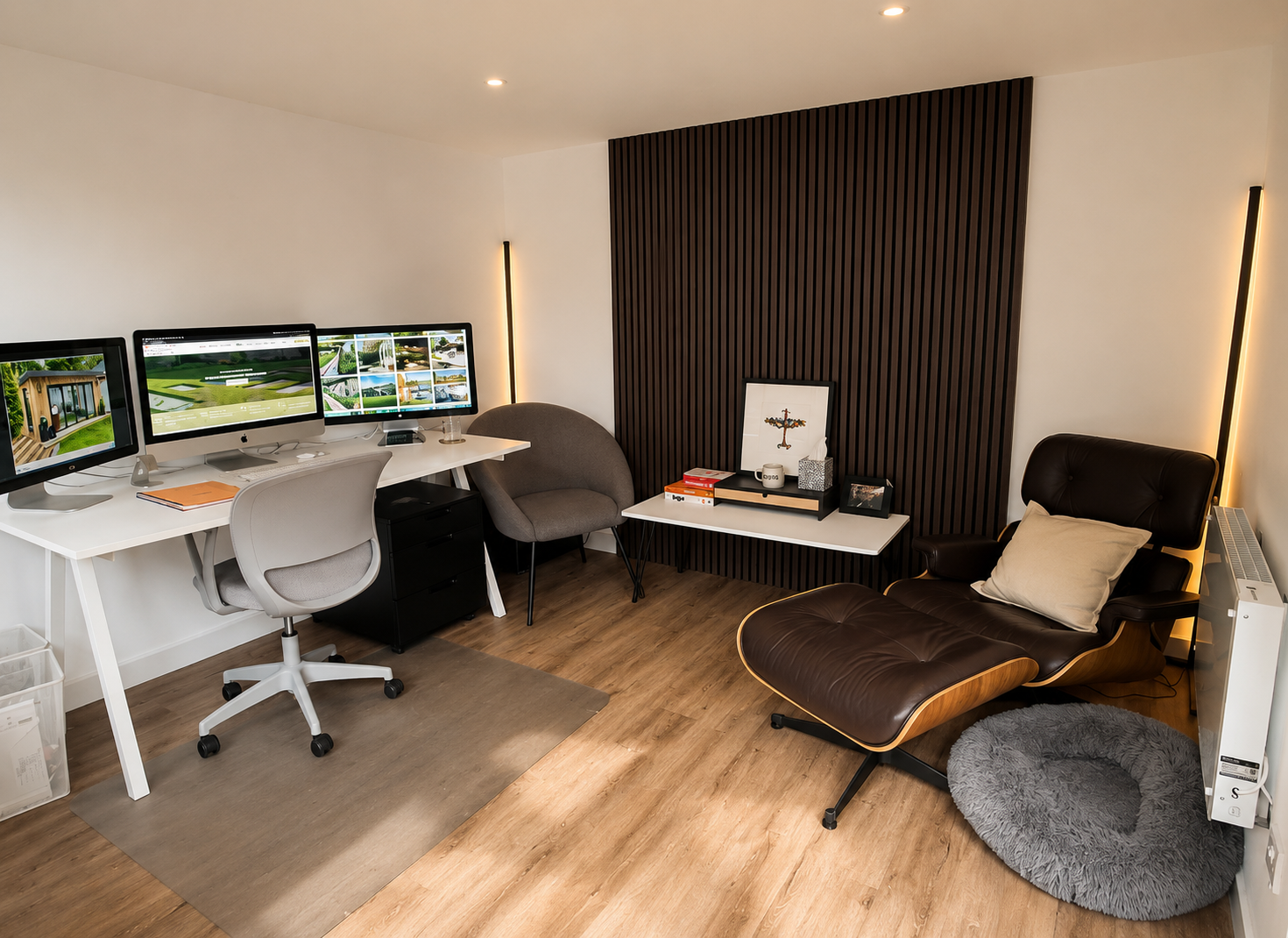
For a small, well-insulated office, an electric panel or infrared panel on a thermostat and timer is usually the sensible choice: low capital cost, no maintenance and instant response for a room used in bursts. For larger rooms, gyms, or anything used all day, an air source heat pump in the form of a small air-to-air unit gives you heating and cooling from one box at roughly a third to a quarter of the electricity for the same heat. Underfloor electric heating is comfortable but slow to respond and best paired with a well-insulated slab.
What it costs to run, in practice
As an indicative guide only, and depending entirely on your tariff, insulation and how long you sit in it: a well-insulated 12 square metre office heated by panel heaters for a normal winter working day tends to use a few kilowatt hours, which at current domestic electricity rates is usually in the region of £1 to £2 a day in the coldest months and close to nothing in shoulder seasons. The same room with an air-to-air heat pump typically uses a fraction of that. A poorly insulated room of the same size can easily use three or four times as much. Your own usage, tariff and weather will change these figures, so treat them as a sense of scale rather than a prediction.
Please treat every figure here as an indicative guide range based on projects we have completed, not a quotation. The final price depends on access, ground conditions, levels, drainage and specification, and is only confirmed after a site visit.
Getting the power supply right
A garden room should be fed by a correctly sized armoured cable in a trench at the right depth, on its own RCD-protected circuit, installed and certified by a qualified electrician under Part P. Data matters too: a hard-wired ethernet run laid in the same trench costs very little at first fix and solves the video call problem permanently.
Where the comfort really comes from
Rooms that people use all year round tend to share the same details: a decent depth of insulation, glazing facing the right way for the time of day the room is used, a floor that is not cold underfoot, and enough thermal mass or shading to stop it cooking in summer. Get those right and the heater becomes a detail.
Where we work
We design and build gardens, garden rooms and pergolas across Mid Sussex and the surrounding towns.
More garden rooms guides
- How Much Does a Garden Room Cost in Sussex?A line-by-line look at where garden room budgets go in Sussex, and the specification choices that separate a ten-year building from a thirty-year one.
- Oak-Framed vs Contemporary Garden Rooms: Which Suits a Sussex Home?If you are drawn to oak-framed buildings but need the performance of a contemporary garden room, this guide compares the two styles on looks, planning and longevity.
- Garden Rooms: The Complete Buyer's GuideGarden rooms range from a shed with a window to a fully insulated, year-round building. This guide explains the differences that actually matter before you spend anything.