Mid Sussex · 9 min read
Garden Rooms: The Complete Buyer's Guide
Garden rooms range from a shed with a window to a fully insulated, year-round building. This guide explains the differences that actually matter before you spend anything.
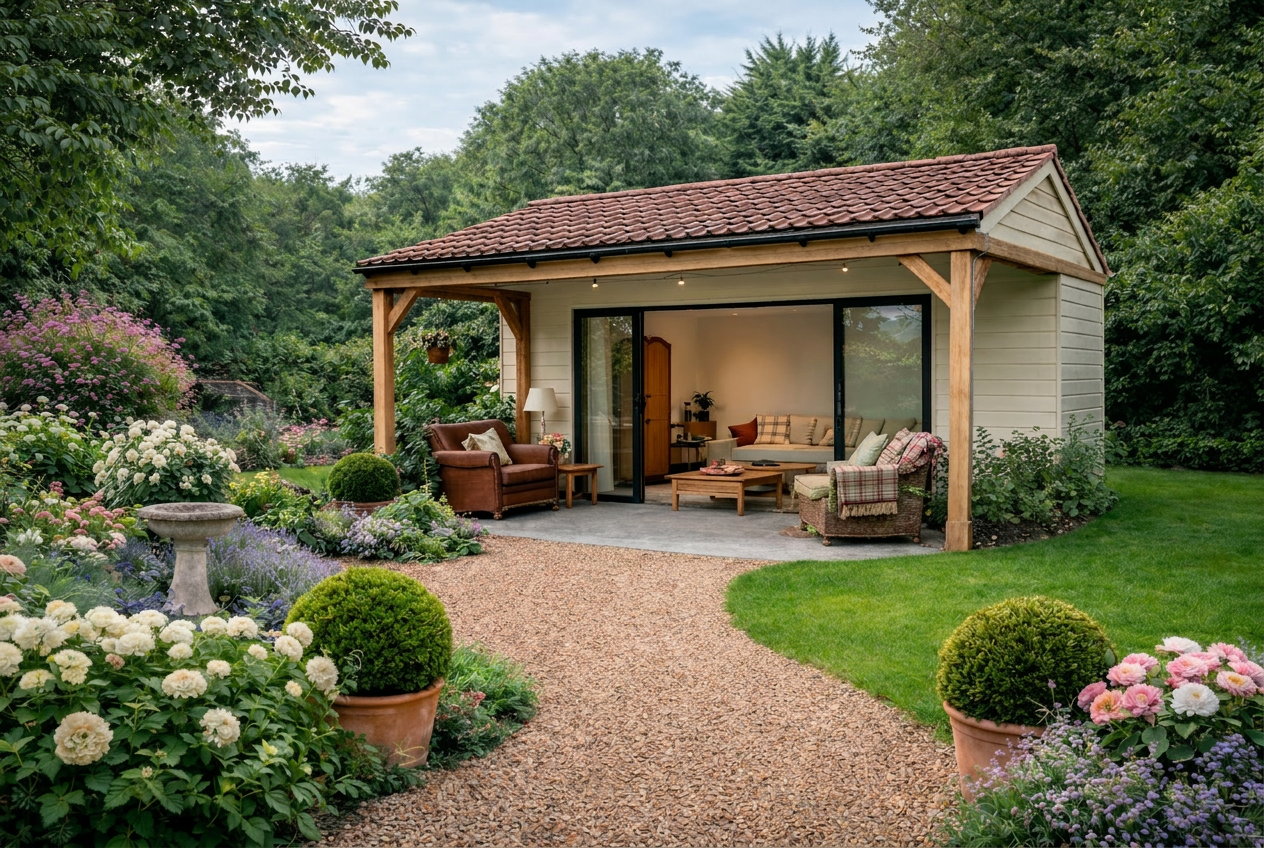
Timber-clad garden room with full-height glazing set into a Sussex garden
Garden rooms are the most searched-for garden building in the UK, and the most inconsistently built. Two buildings that look near-identical in a photograph can differ by twenty years of service life and several hundred pounds a year in heating. This guide is written from the build side: what we specify, why, and what to ask any company you are comparing.
Start with how you will actually use it
The specification follows the use, not the other way round. A summer studio for weekend painting is a genuinely different building from an office you will sit in at 8am in January, or a gym where equipment loads the floor and moisture loads the air. Write down the honest answer to three questions before you speak to anyone: how many hours a week will it be occupied, in which months, and by how many people.
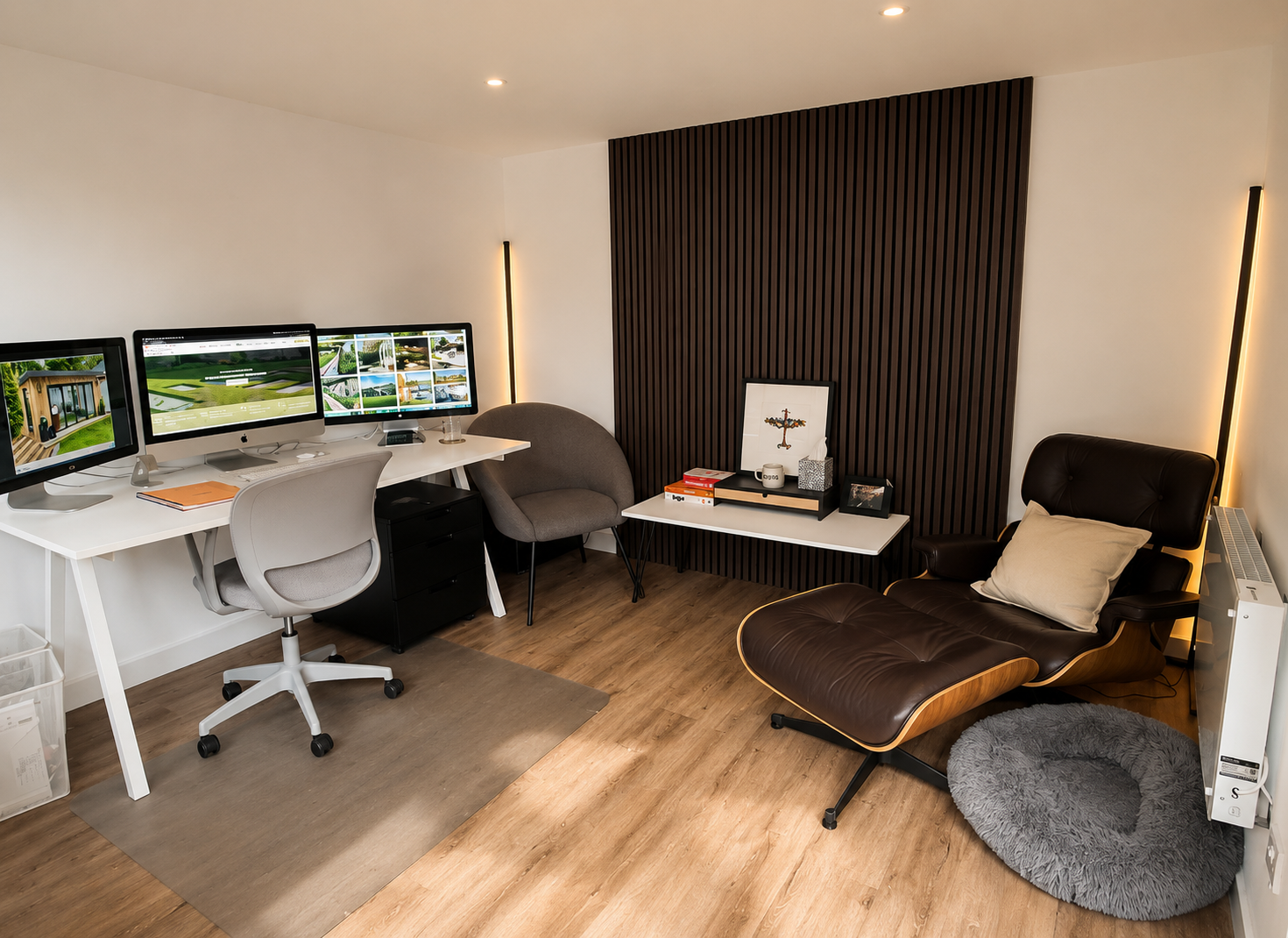
- Home office - year-round warmth, quiet, data, good daylight without screen glare
- Gym - reinforced floor, cross ventilation, generous power, rubber or engineered flooring
- Studio or hobby space - north light where possible, plenty of wall for storage
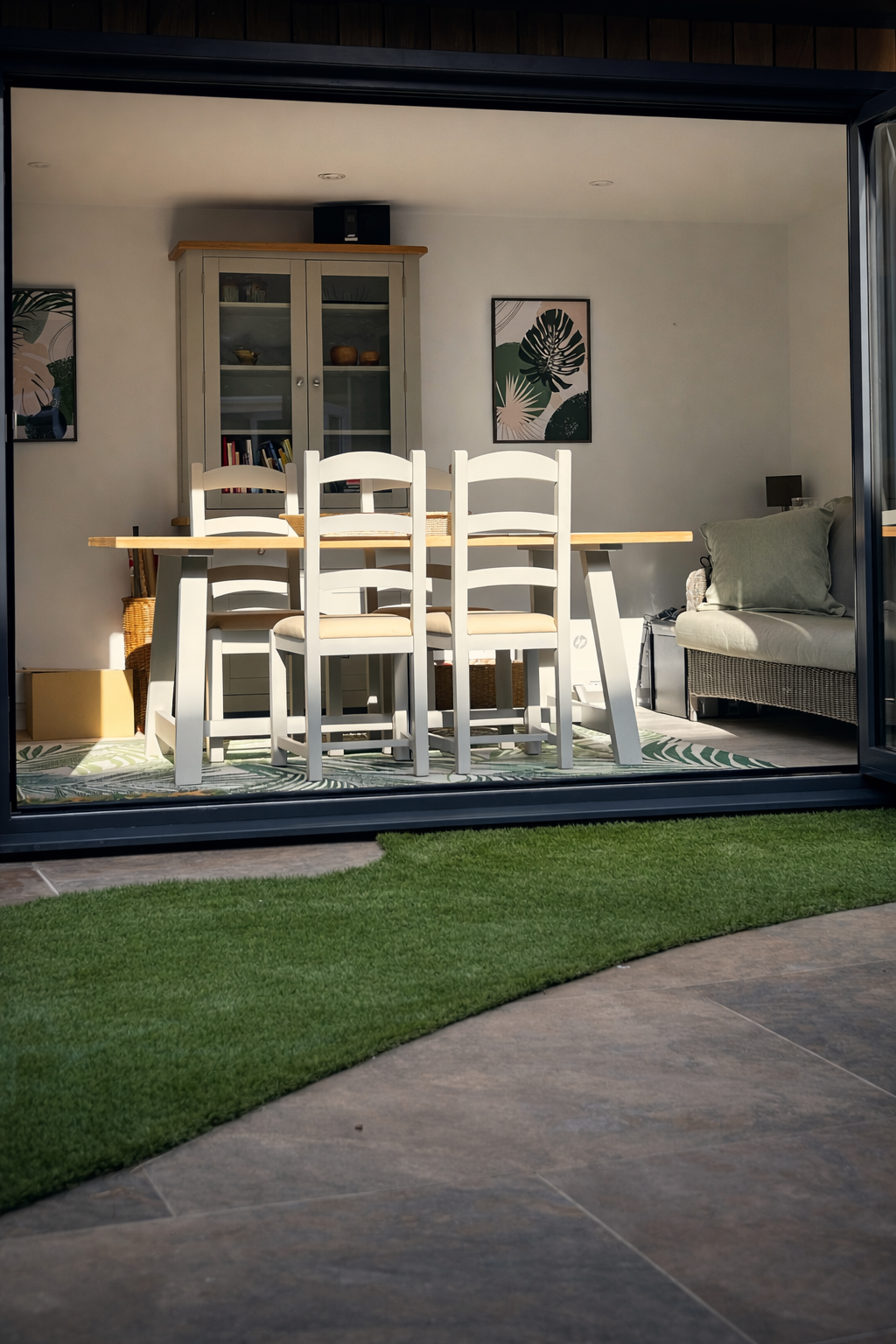
- Garden lounge or entertaining room - wide openings onto terrace, heating you can run occasionally
- Guest space - insulation, ventilation and a route to services if a shower room is ever added
Structure: the part you will never see again
Everything else is finish. A garden room lives or dies on its base and its frame. We build on either a reinforced concrete raft or a screw-pile and steel-frame base, chosen by soil, levels and tree proximity. On the Wealden clay that runs through Mid Sussex, seasonal shrink and swell is real - a base designed for a level, free-draining plot will move on clay, and a moved base opens joints, sticks doors and cracks finishes.
Above that, a timber frame at proper centres, treated to the right use class, with a breather membrane, drainage cavity, treated battens and a vapour control layer on the warm side. That build-up is the difference between a building that is dry in year fifteen and one that quietly rots behind the cladding.
Insulation and glazing
Ask for U-values in writing rather than insulation thickness. Thickness without a stated performance figure tells you nothing about thermal bridging at junctions, which is where most cheap buildings lose their heat. Glazing should be double or triple glazed with warm-edge spacers and a thermally broken frame; large south-facing glass wants solar control or shading, or the room becomes unusable in July.
Cladding and roof
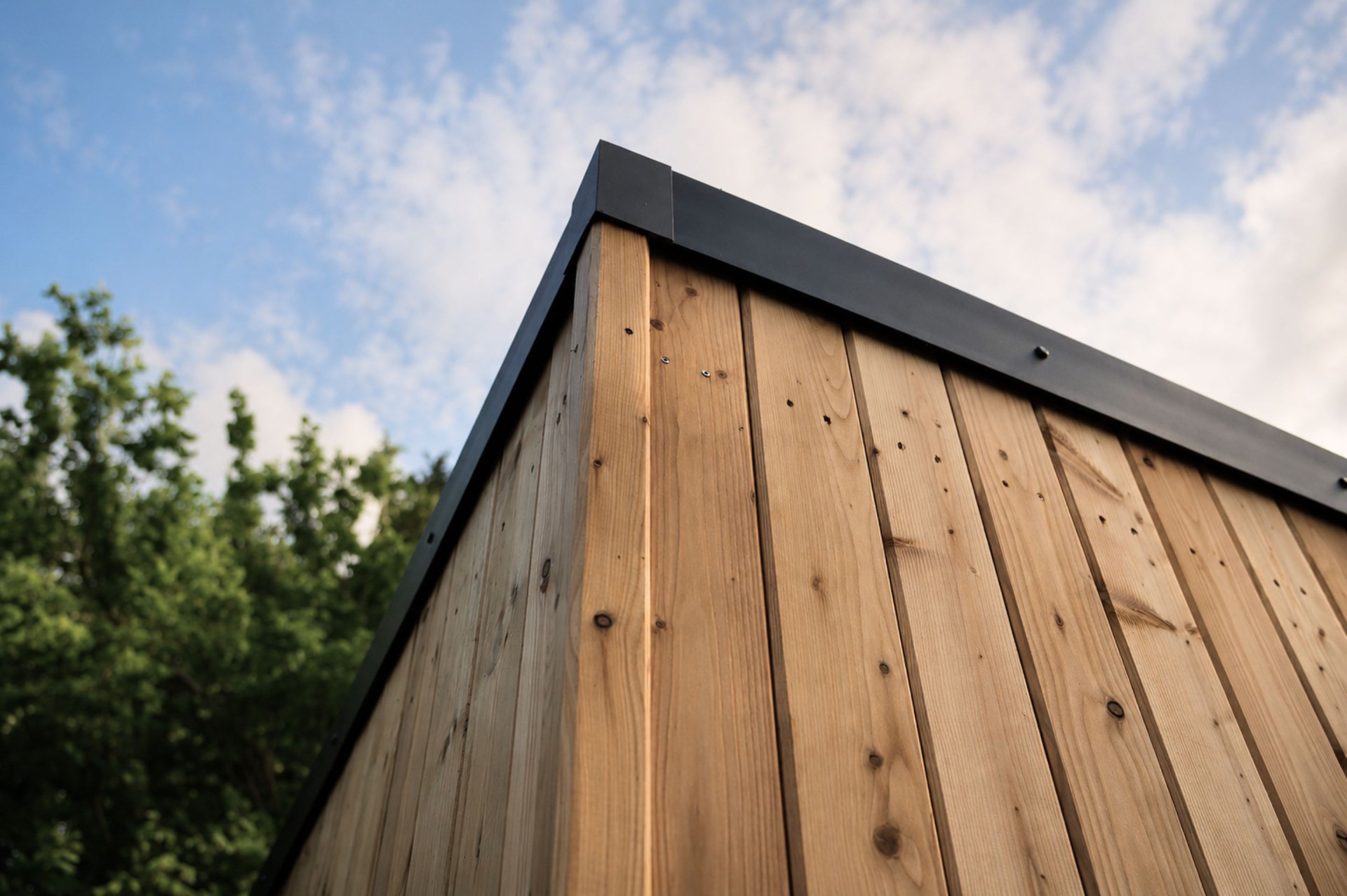
Siberian larch, western red cedar, thermally modified timber and sweet chestnut all weather beautifully and all silver over time unless you commit to regular oiling. Composite and aluminium last with less attention but read colder. Roofs are usually EPDM or single-ply membrane, and a sedum or wildflower green roof is worth considering where the building is overlooked from the house - it softens the mass and buffers summer heat.
Services and groundworks
Power should be a dedicated armoured supply from the consumer unit, installed and certified by a qualified electrician, with its own consumer unit in the building. Plan data as well as power - a wired connection beats a struggling repeater. If there is any chance of a cloakroom, sauna or kitchenette later, lay the drainage and water while the ground is already open. Retrofitting it means digging up a finished garden.
Questions worth asking every supplier
- What is the base construction, and how was it sized for my ground conditions?
- What U-values does the floor, wall and roof build-up achieve?
- Who carries out the electrical work and what certification do I receive?
- Is the cladding fixed on a drained and ventilated cavity?
- What is the warranty, and what does it exclude?
- Who is on site each day, and are they employed or subcontracted?
A good answer is specific. A vague answer is the answer.
Where we work
We design and build gardens, garden rooms and pergolas across Mid Sussex and the surrounding towns.
More garden rooms guides
- How Much Does a Garden Room Cost in Sussex?A line-by-line look at where garden room budgets go in Sussex, and the specification choices that separate a ten-year building from a thirty-year one.
- Oak-Framed vs Contemporary Garden Rooms: Which Suits a Sussex Home?If you are drawn to oak-framed buildings but need the performance of a contemporary garden room, this guide compares the two styles on looks, planning and longevity.
- Do You Need Planning Permission for a Garden Room?Most garden rooms are permitted development - but the exceptions catch people out, especially in conservation areas and near listed buildings.