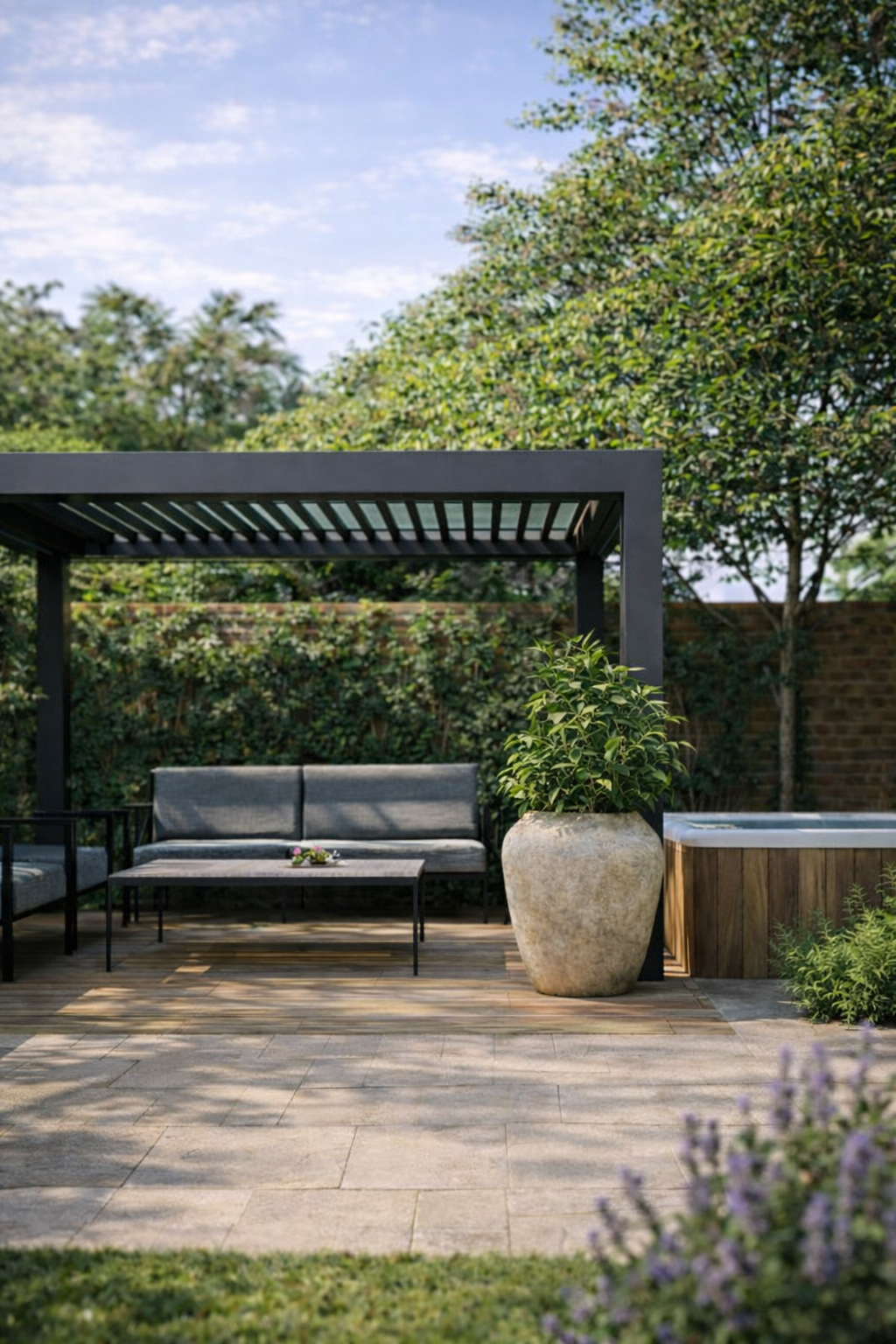
Sussex, Surrey & Kent · 8 min read
Landscaping Ideas on a Budget: Where the Money Actually Matters
You can build a garden in stages without ending up with a patchwork. Here is the order that works, and the shortcuts that always cost more later.
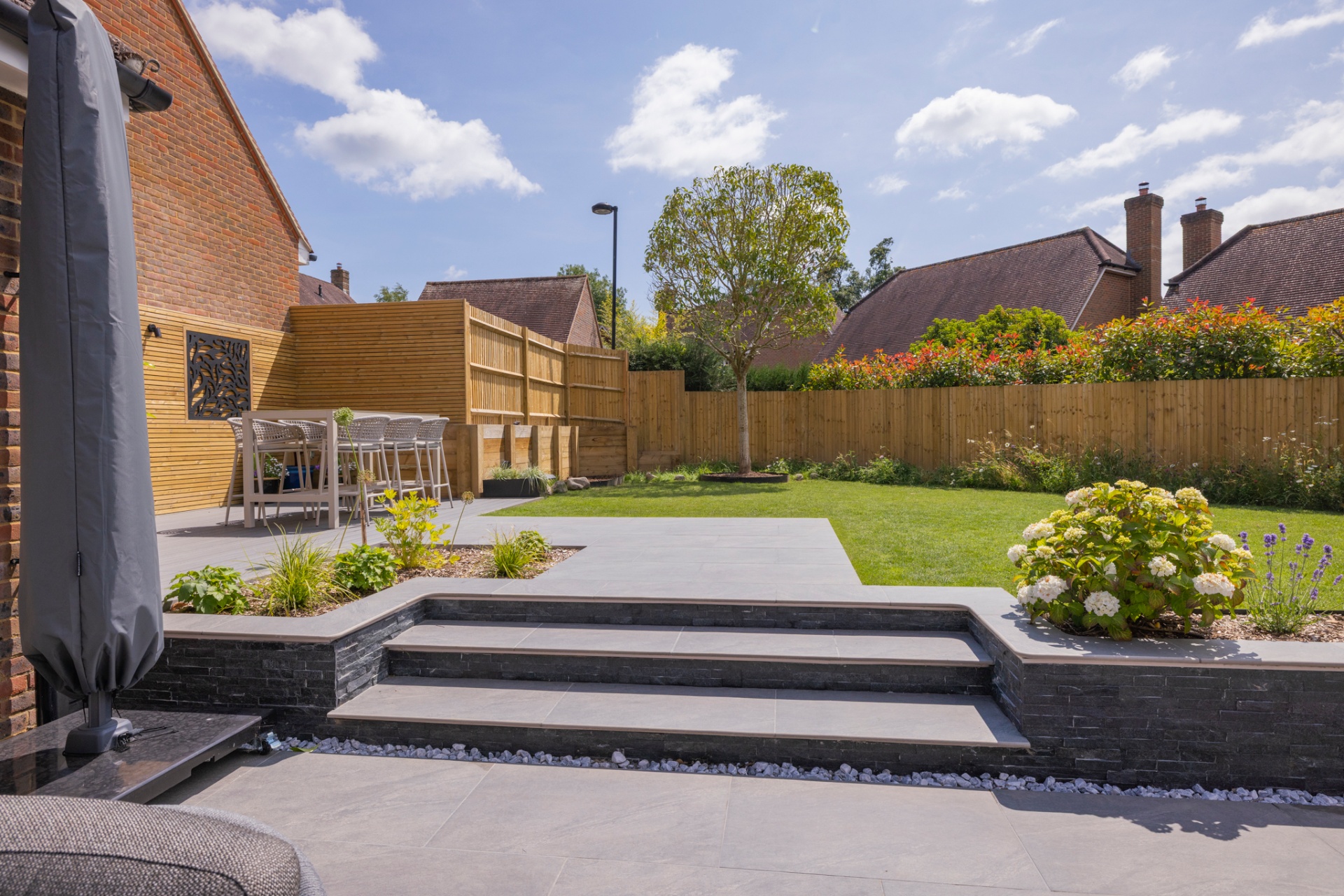
A garden built in two phases: terrace, levels and services first, planting and structures the following year.
Very few people build their whole garden at once, and there is nothing wrong with that. What goes wrong is building it in the wrong order - laying the terrace before the drainage, or the lawn before the cable runs. Phasing works beautifully if you design the whole garden first and then build it in a sensible sequence.
Design the whole thing, build it in parts
A full design costs a fraction of a build and is the single cheapest way to save money. It tells you where the services go, what the finished levels are, and which decisions cannot be reversed. Without one, phase two usually involves digging up part of phase one.
Spend here
- Drainage and sub-base. Invisible, unglamorous, and the reason a terrace is still flat in ten years.
- Levels and retaining. Structural work is the one thing you genuinely cannot redo cheaply.
- Buried services - lighting cable, power, irrigation and data runs. Pennies while the ground is open.
- Boundaries. A tidy, consistent boundary lifts everything inside it more than any single feature.
- The terrace immediately outside the door, because that is the part used every single day.
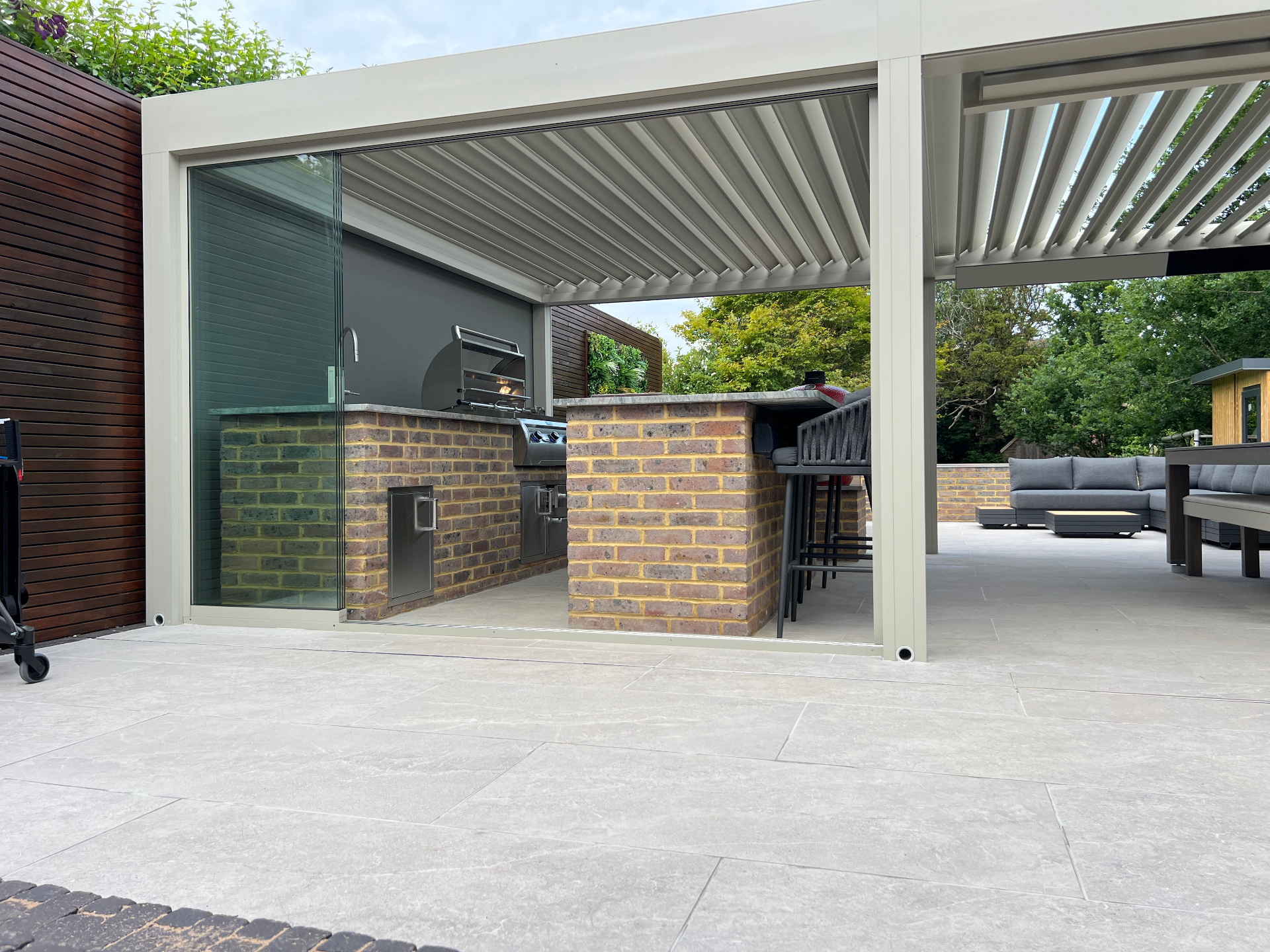
Save here
- Plant sizes. Nine-centimetre perennials planted in generous drifts catch up with expensive specimens within two seasons and cover far more ground per pound.
- Feature trees. One good multi-stem specimen does more than five average ones.
- Furniture. Built-in seating in phase one means you are not buying a dining set to fill space.
- Sculptural extras, water features and fire pits. Design the position and services now, install later.
- Turf versus seed on a large area, if you can give it a season.
A phasing order that works
- Phase one - clearance, levels, drainage, retaining, all buried services, and the main terrace.
- Phase two - boundaries, screening, the secondary seating area, steps and paths.
- Phase three - structures such as a pergola or garden room, on foundations already allowed for.
- Phase four - planting out in full, lighting fittings onto the cables already run, and lawn.
The reason this order works is that every phase is buildable without disturbing the previous one. The reverse order - planting first because it is the visible bit - guarantees rework.
The shortcuts that always cost more
- Paving straight onto sand or a thin sub-base. It will move within two winters on Weald clay.
- Sleeper retaining above about 600mm without a proper structure behind it.
- Surface-run cable to be tidied up later. It never is, and it is a hazard in the meantime.
- Cheap glazing on a garden room. It is the first thing to fail and the most disruptive to replace.
- No drainage on a new-build plot with compacted subsoil. The lawn will be standing water by December.
Seasonal timing
Winter is the best time to design and the best time to book. Groundworks are perfectly achievable through the colder months when they are planned for, and bare-root hedging and trees planted between November and March establish far better and cost considerably less than containerised stock in June.
Making a modest budget look deliberate
The gardens that look expensive are rarely the ones with the most in them. They are the ones with fewer materials, larger simple shapes, generous planting and good lighting. If the budget is tight, reduce the palette rather than the quality - one paving, one timber tone, one hedge species, repeated. Restraint reads as design; variety reads as compromise.
Related services
Where we work
We design and build gardens, garden rooms and pergolas across Mid Sussex and the surrounding towns.
More landscapers & landscape gardeners guides
- Transforming a Tired Back Garden in Burgess Hill: A Renovation GuideMost Burgess Hill back gardens are structurally sound and visually exhausted. Here is how to renovate one without starting from zero.
- How to Choose a Landscaping Company in Mid Sussex: 10 Questions to AskThe difference between a garden that lasts and one that fails is almost always visible in the quote. Ten questions to ask before you sign.
- Garden Renovation: What a Full Rebuild InvolvesA renovation is a construction project with plants at the end of it. Knowing the sequence makes the disruption far easier to live with.