Mid Sussex · 6 min read
Luxury Pergolas and All-Season Outdoor Living in Mid Sussex
The pergola is what turns a terrace you use six weeks a year into a room you use eight months a year. Here is how to specify one properly.
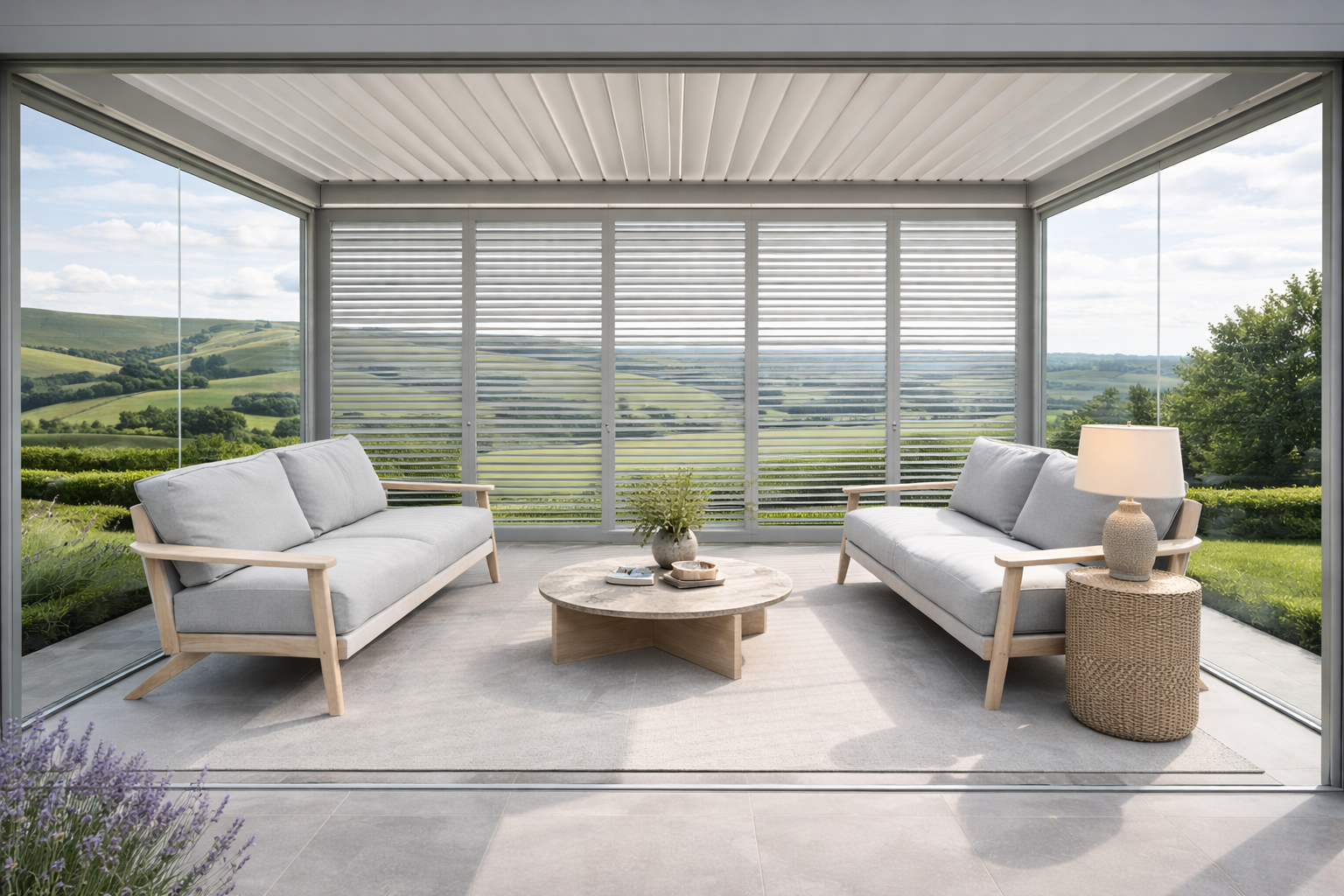
Luxury pergola over a stone dining terrace in a Sussex garden
The English climate does not reward optimism. A beautiful terrace with no cover is a terrace you use when the forecast agrees with you. A well-designed pergola removes the forecast from the decision, and that single change is what most clients say transformed how they use the garden.
Louvred aluminium
- Rotating blades close to a waterproof roof and open for full sun.
- Integrated LED lighting, heaters, side screens and rain sensors.
- Slim structural sections and a contemporary line - excellent against modern extensions.
- Effectively maintenance free.
Hand-cut timber
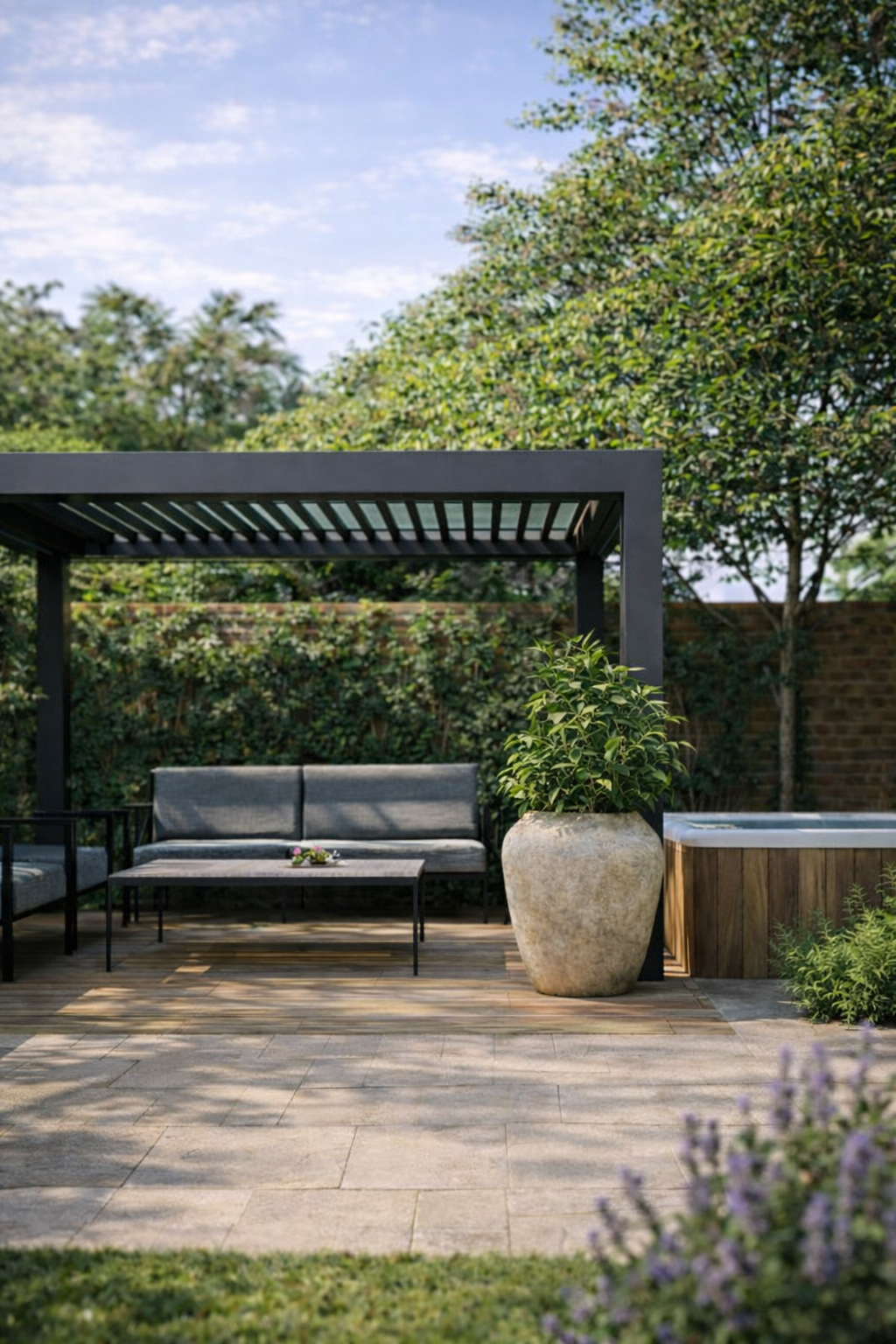
Green oak and sweet chestnut age into a garden in a way aluminium never will. Timber suits period Sussex properties, walled gardens and anywhere planting will be trained over the structure. It is not waterproof unless you add a roof, but paired with climbers it delivers shade, scent and structure through the year.
Getting the proportions right
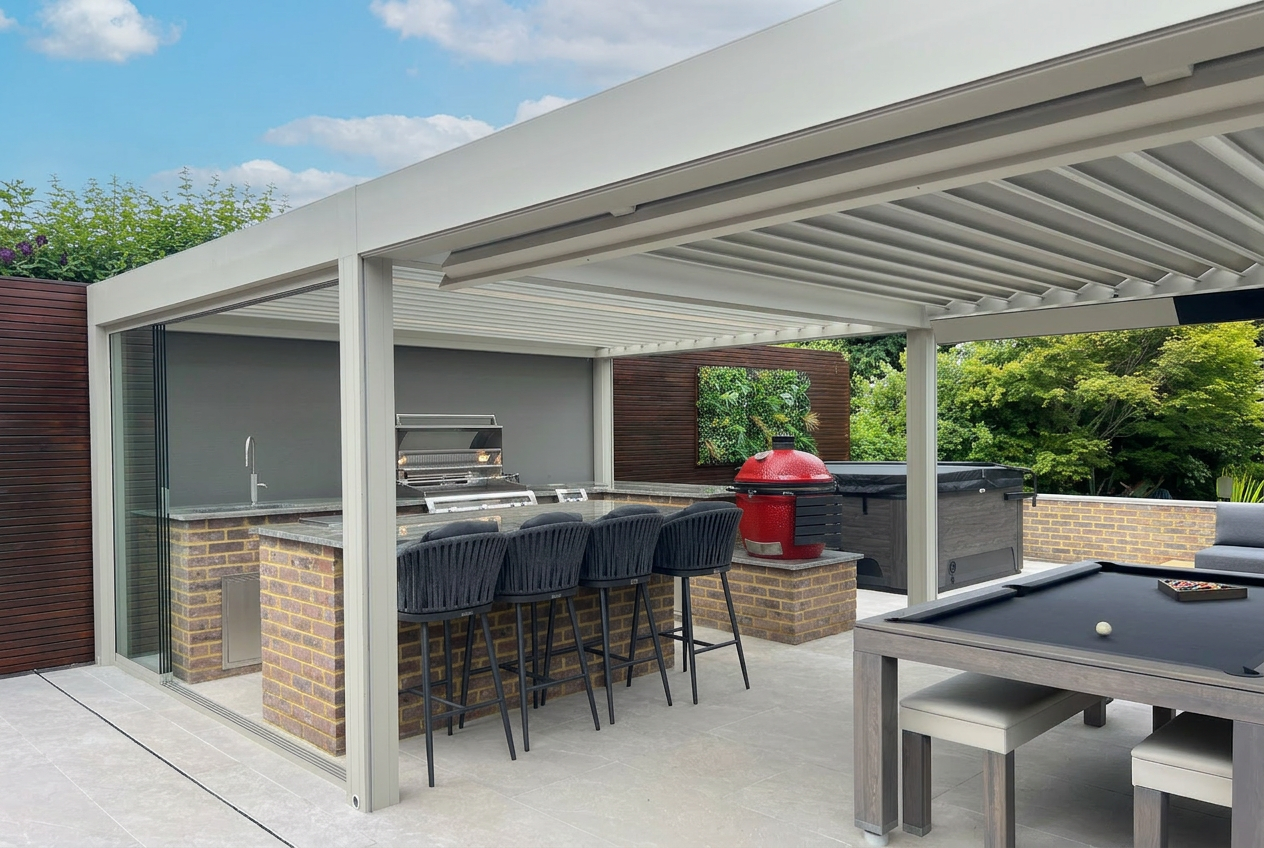
Most pergolas are built too small. Measure the table, add a metre of chair pull-back on every side, then check the post positions do not land where somebody sits. Height matters too - a low pergola feels oppressive against a two-storey house; the structure should relate to the eaves line, not the door head.
The details that make it a room
- Lighting on a dimmer, not a floodlight.
- Heating positioned to warm people, not the roof.
- Side screens or planting on the prevailing wind side.
- A floor that drains and does not go green in November.
Where we work
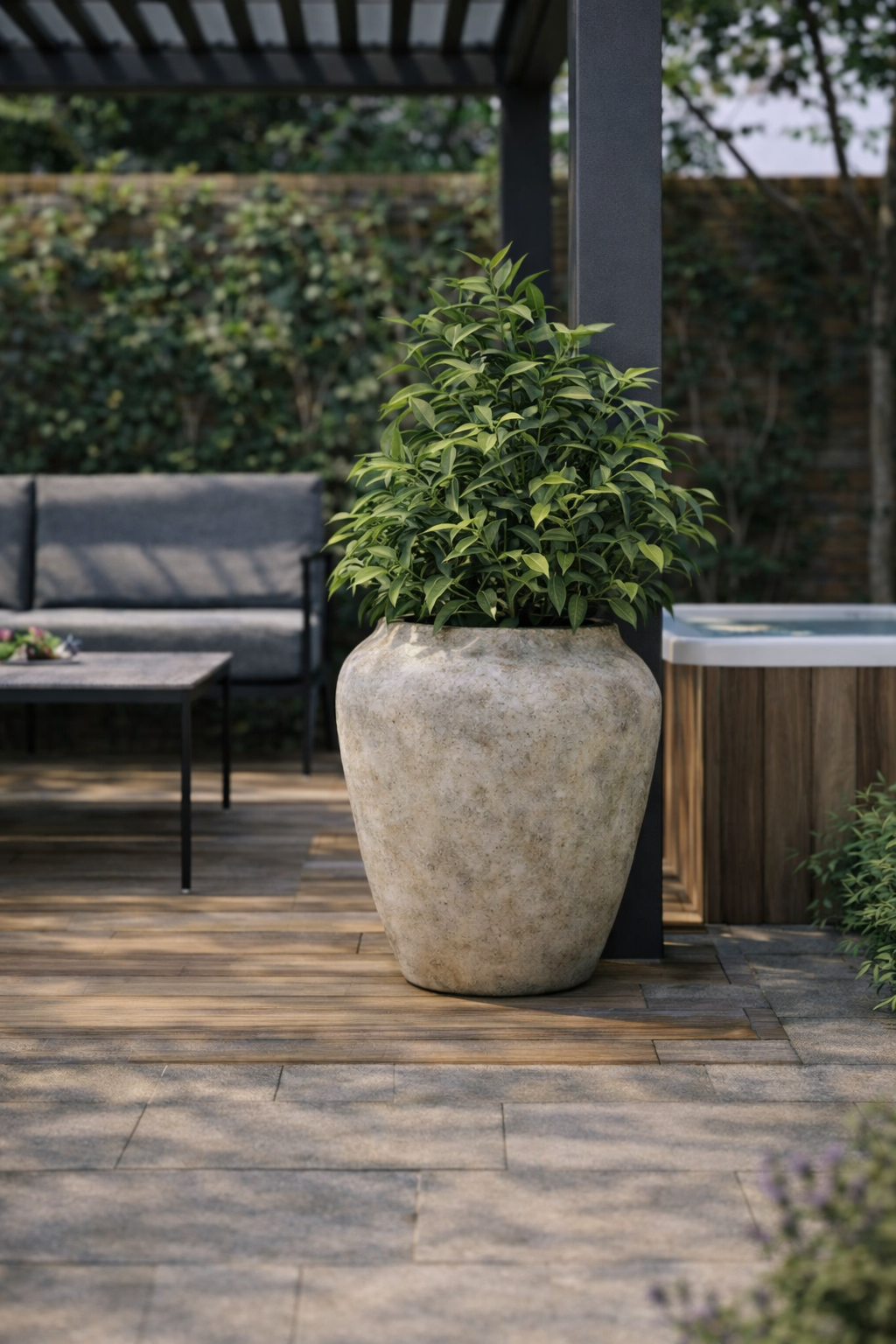
We design and build gardens, garden rooms and pergolas across Mid Sussex and the surrounding towns.
More outdoor living guides
- Outdoor Living Spaces: Designing a Garden You Actually UseMost gardens are used for six weeks a year. Shelter, warmth and light stretch that to eight months.
- Outdoor Kitchen Design and BuildAn outdoor kitchen is joinery, plumbing and electrics left outside all year. Material and detail choices decide whether it lasts.
- Pergola Ideas: Oak, Sweet Chestnut and Aluminium ComparedWhich pergola material suits your house, how each ages, and what a louvred roof adds over an open structure.