Sussex · 7 min read
Outdoor Living Spaces: Designing a Garden You Actually Use
Most gardens are used for six weeks a year. Shelter, warmth and light stretch that to eight months.
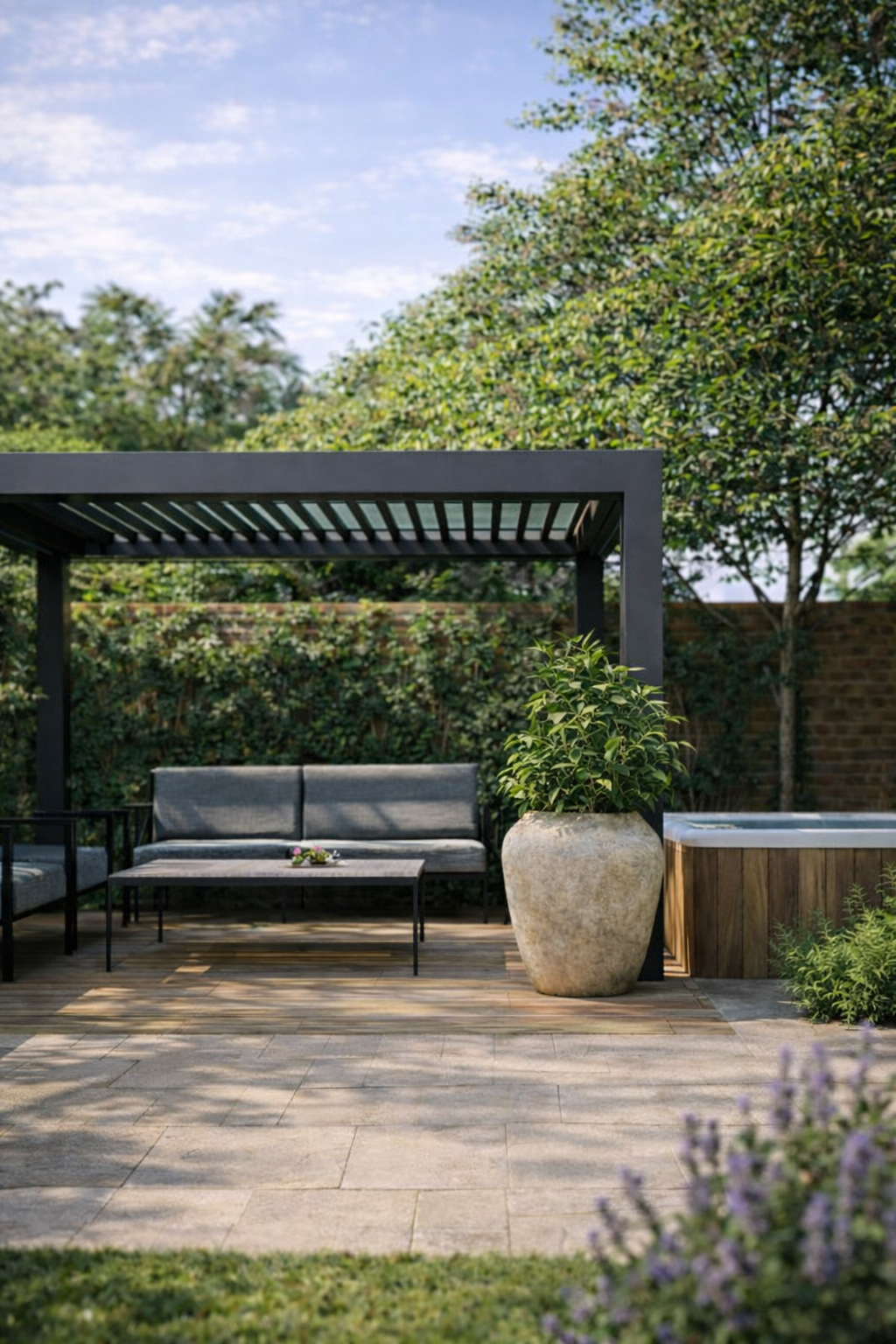
Sheltered outdoor living terrace with seating and planting
An outdoor living space is not a patio with furniture on it. It is a room without a ceiling, and the things that make an indoor room comfortable - enclosure, warmth, light, somewhere to put a drink down - are exactly the things that make an outdoor one work.
Start with the flow from the house
The best outdoor rooms sit directly off the kitchen or living room, at the same level, with a threshold you can walk across barefoot. Every step down and every metre of distance reduces how often the space is used. Where the ground falls away, we bring the terrace out level and manage the change beyond it.
Shelter is what extends the season
- A pergola or louvred roof for rain cover and shade
- Side screening against the prevailing south-westerly
- Planting or a wall to break wind without creating turbulence
- Overhead structure that also carries lighting and heating
Fire and heat
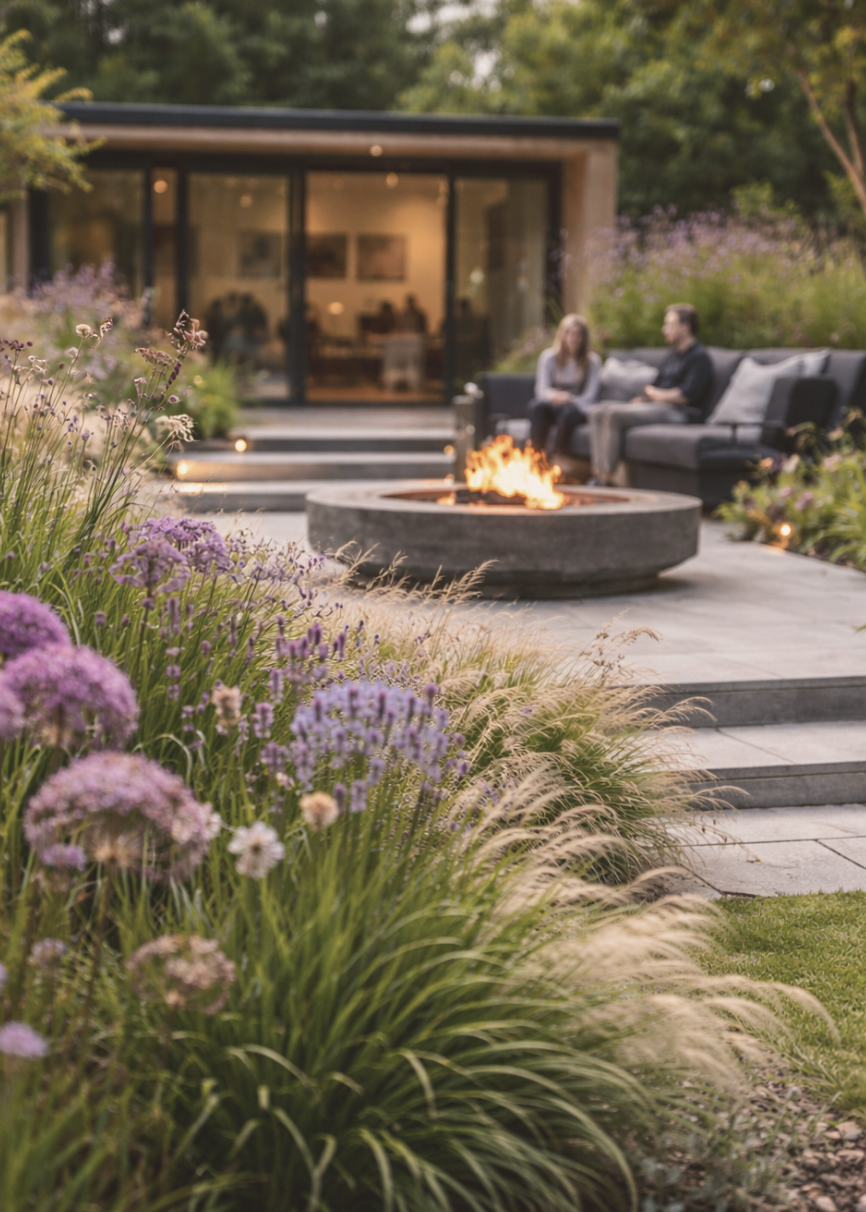
A firepit or outdoor fireplace changes the character of an evening more than any other single element - people gather around it and stay out an hour longer. For covered spaces, discreet infrared heaters mounted in the structure do the practical work without dominating the design.
Light for atmosphere, not visibility
Low-level, warm and layered. Uplights into trees, grazing light down a wall, a soft wash on steps for safety. Avoid a single bright downlight in the middle - it flattens everything and makes the garden beyond disappear into blackness.
Zones give a garden purpose
Dining near the kitchen, lounge seating around the fire, and a separate quiet spot that catches evening sun. Three defined zones connected by a good path will be used far more than one large undifferentiated terrace, even if the total area is the same.
Related services
Where we work
We design and build gardens, garden rooms and pergolas across Mid Sussex and the surrounding towns.
More outdoor living guides
- Luxury Pergolas and All-Season Outdoor Living in Mid SussexThe pergola is what turns a terrace you use six weeks a year into a room you use eight months a year. Here is how to specify one properly.
- Outdoor Kitchen Design and BuildAn outdoor kitchen is joinery, plumbing and electrics left outside all year. Material and detail choices decide whether it lasts.
- Pergola Ideas: Oak, Sweet Chestnut and Aluminium ComparedWhich pergola material suits your house, how each ages, and what a louvred roof adds over an open structure.