Mid Sussex · 7 min read
Pergola Ideas: Oak, Sweet Chestnut and Aluminium Compared
Which pergola material suits your house, how each ages, and what a louvred roof adds over an open structure.
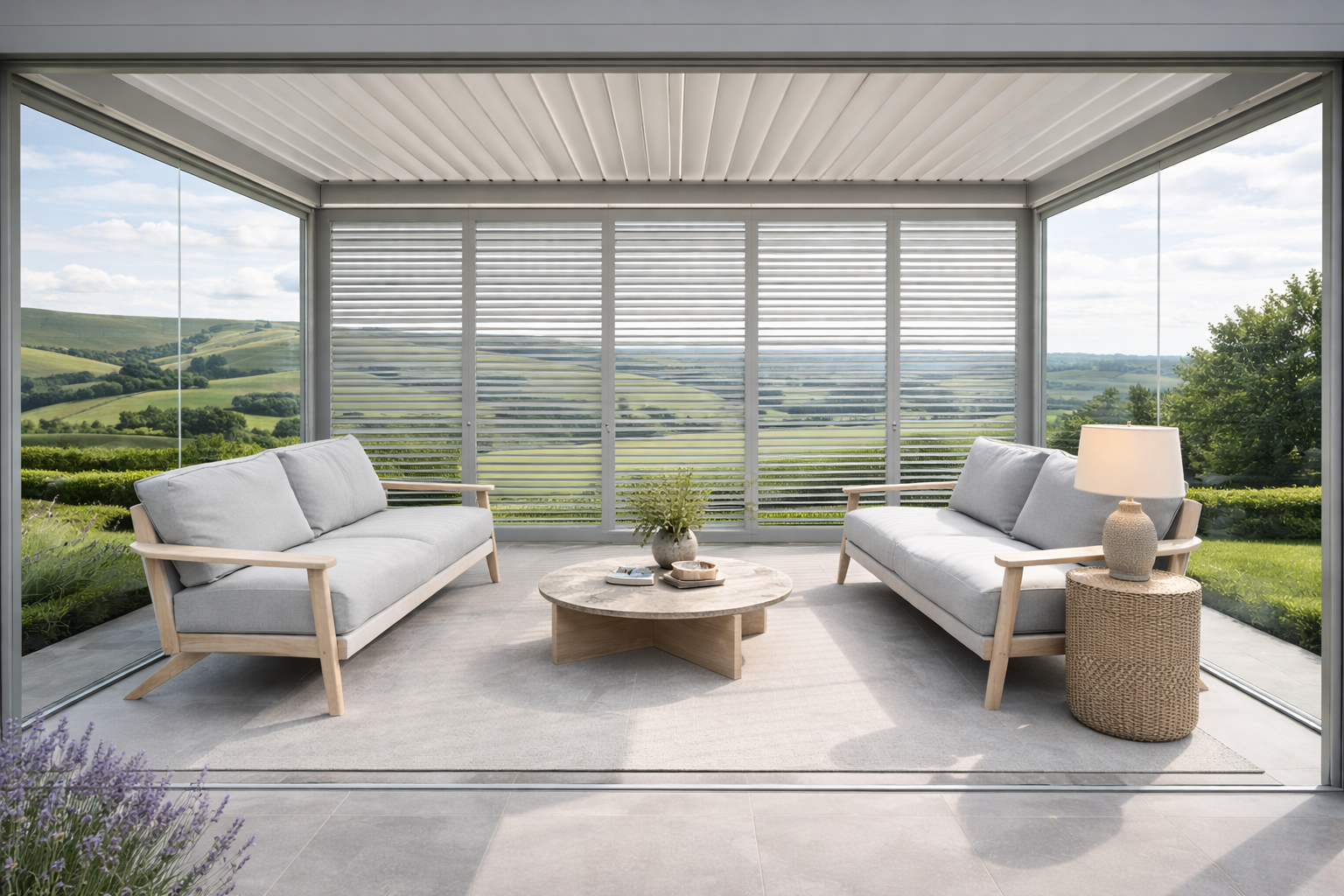
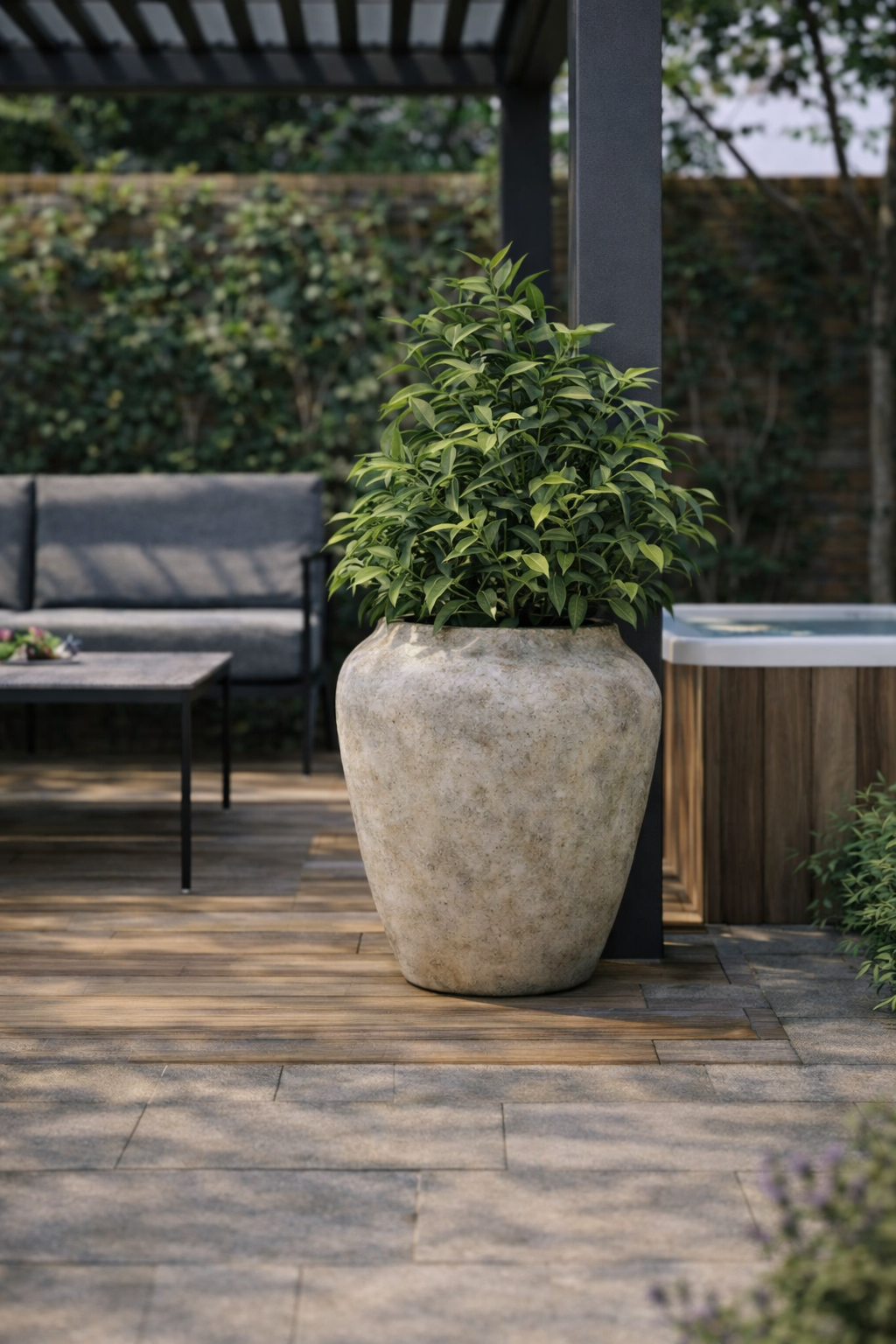
Timber pergola over a stone terrace in a Sussex garden
A pergola is the cheapest way to make a garden feel designed. It creates a room, frames a view, carries planting and lighting, and gives the eye something to measure the space against. The material you choose sets the character.
Green oak
Heavy, honest and traditional. Green oak is worked fresh, then dries and moves in place, developing checks and shakes that are part of its character. It silvers to grey over a few years and lasts for decades untreated. It suits period houses, brick and flint walls, and gardens where the structure should feel permanent. Expect tannin staining on light paving in the first year.
Hand-cut sweet chestnut
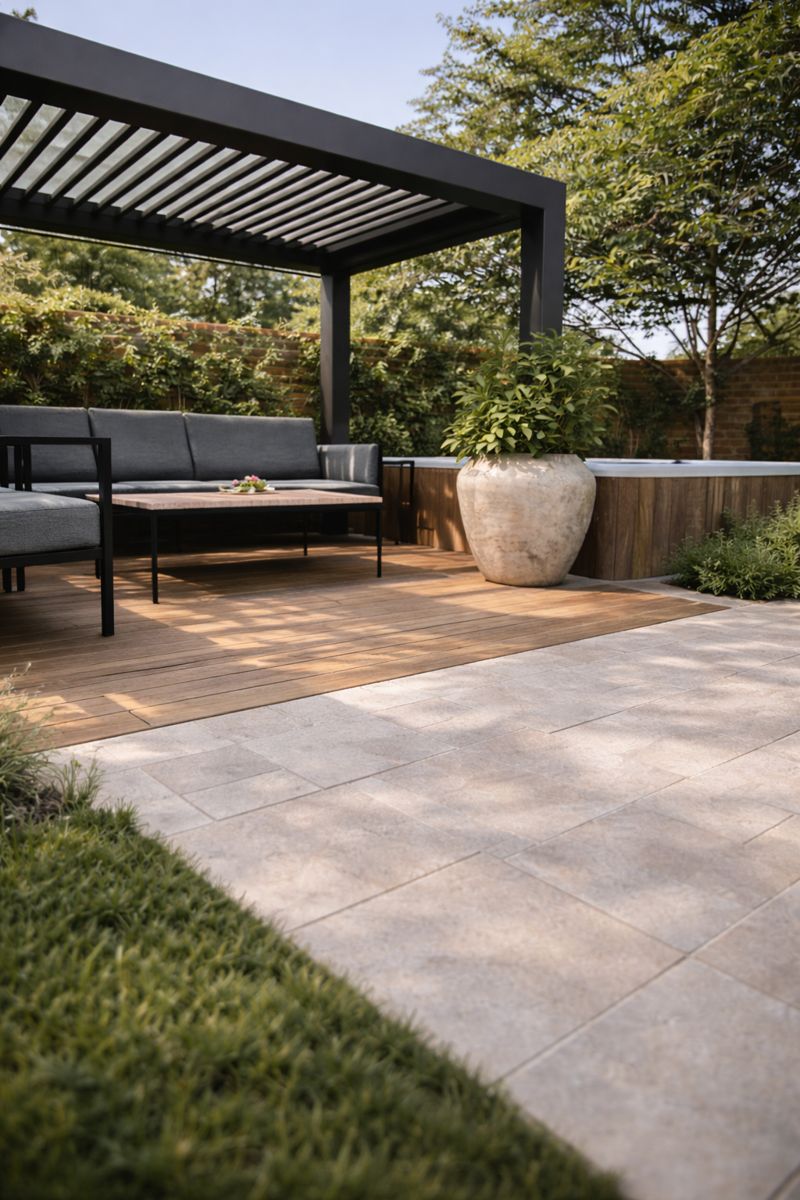
Our preference for a lighter, more rustic frame. Chestnut is naturally durable, moves less than oak and carries hand-cut joinery beautifully. On a recent Coulsdon garden room we ran a chestnut pergola down the side elevation, which softened the building and gave the climbers somewhere to go.
Powder-coated aluminium and louvred roofs
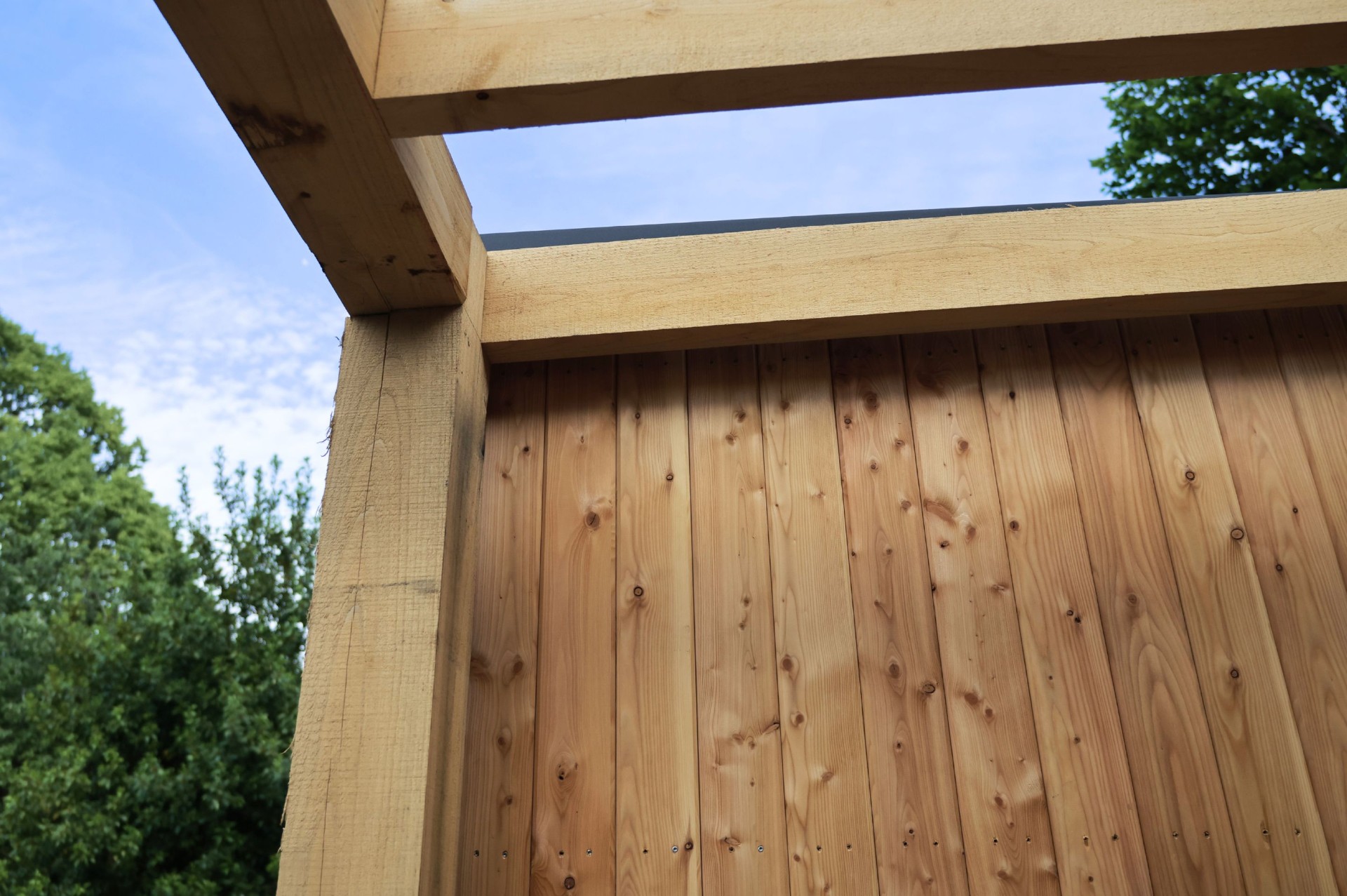
- Slim profiles, long clear spans and effectively no maintenance
- Adjustable louvres give shade on demand and full rain cover when closed
- Integrated LED lighting, heaters, side screens and blinds
- Best suited to contemporary architecture and to spaces used year-round
Planting a pergola
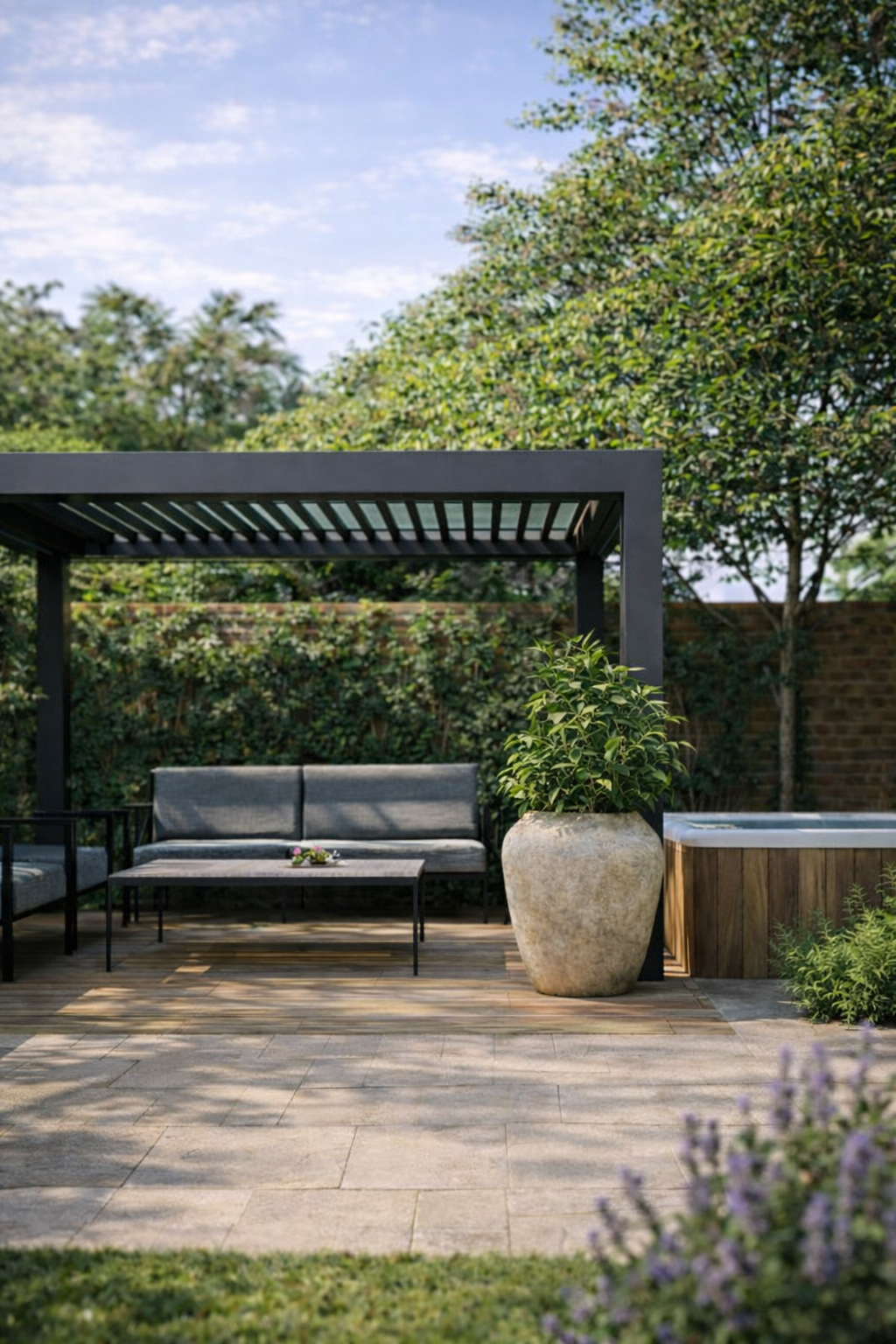
Wisteria for spring drama and a heavy frame to carry it, climbing roses with a clematis threaded through for a long season, or grape vine for dappled summer shade that drops in winter. Whatever you choose, wire the structure at the design stage - retro-fitted wires always look retro-fitted.
Where we work
We design and build gardens, garden rooms and pergolas across Mid Sussex and the surrounding towns.
More outdoor living guides
- Luxury Pergolas and All-Season Outdoor Living in Mid SussexThe pergola is what turns a terrace you use six weeks a year into a room you use eight months a year. Here is how to specify one properly.
- Outdoor Living Spaces: Designing a Garden You Actually UseMost gardens are used for six weeks a year. Shelter, warmth and light stretch that to eight months.
- Outdoor Kitchen Design and BuildAn outdoor kitchen is joinery, plumbing and electrics left outside all year. Material and detail choices decide whether it lasts.