Sussex, Surrey & Kent · 7 min read
Patio or Decking? A Straight Comparison for a British Garden
One is not better than the other. They solve different problems, and your levels usually decide which.
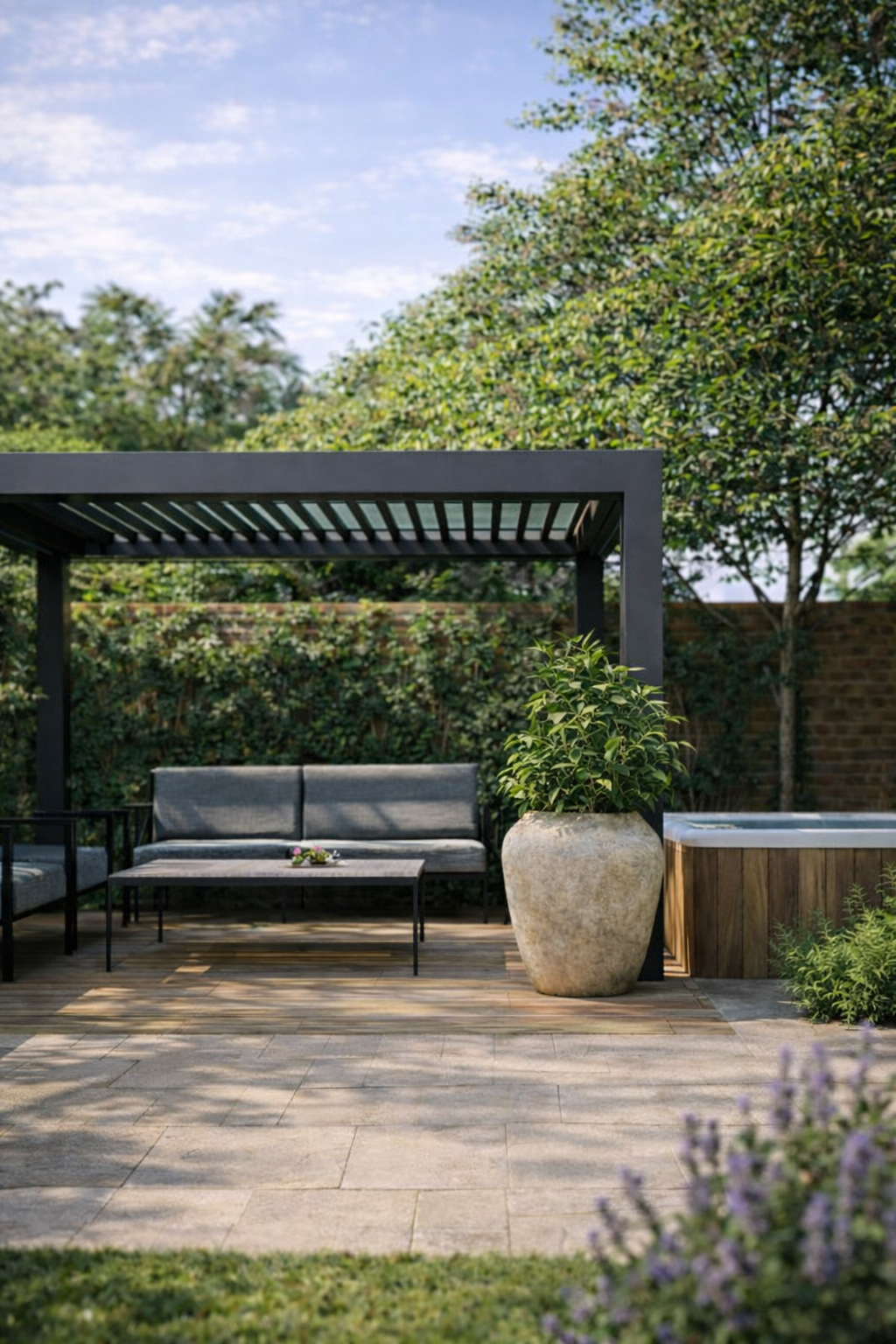
Natural stone patio with steps and planting in a sunny garden
This is usually framed as a taste question and answered by cost. In practice the levels of your garden decide it. Paving wants ground it can sit on; decking wants to span. Once you know which of those your plot is, the rest of the comparison is detail.
When paving is the right answer
On ground that is close to the level you want, paving is durable, low maintenance and better value over twenty years. Porcelain in particular is dimensionally stable, does not stain and needs washing rather than treating. Natural stone weathers beautifully and suits period property. Both need a full sub-base, correct falls and drainage, which is where the real cost sits.
When decking is the right answer
Where the ground falls away, or where you want a terrace level with an internal floor that sits well above the garden, decking spans that gap without the retaining walls and imported fill that paving would need. On a steep plot decking is frequently the cheaper and less disruptive answer, not the more expensive one.
Cost, as a guide
Guide ranges only: quality porcelain or natural stone paving, fully built up with drainage, usually falls between £180 and £320 per square metre. Composite decking on a founded frame typically falls between £200 and £320 per square metre, and hardwood decking between £250 and £400. A raised deck with balustrade and steps costs considerably more than a ground-level one because of the structure beneath it.
Please treat every figure here as an indicative guide range based on projects we have completed, not a quotation. The final price depends on access, ground conditions, levels, drainage and specification, and is only confirmed after a site visit.
Maintenance and lifespan
- Porcelain: washing only, no sealing, effectively unchanged for decades.
- Natural stone: occasional wash and a sealer on some stones. Ages well rather than degrades.
- Composite decking: wash twice a year, will not rot, colour settles after the first season. Typically 20 to 25 years.
- Hardwood decking: annual clean and oil if you want the colour retained, otherwise it silvers. Typically 15 to 25 years in the right timber.
- Softwood decking: cheapest to install, shortest life, and the one that gets slippery in shade.
Slip, shade and the British winter
Shaded north-facing surfaces grow algae, and that is what makes a surface slippery rather than the material itself. Specify a textured porcelain with a decent slip rating, or grooved and well-ventilated decking, and keep water moving away rather than pooling. Good drainage does more for winter safety than any surface coating.
The answer most of our gardens land on
Frequently both: paving where the garden meets the house, so the threshold is flush and hard-wearing, and a deck further down where the ground falls away or where a seating area wants warmth underfoot. Designing them to share a module and a line is what keeps that from looking like a compromise.
Related services
Where we work
We design and build gardens, garden rooms and pergolas across Mid Sussex and the surrounding towns.
More materials & build guides
- Choosing Paving and Natural Stone for a Sussex GardenPaving is the largest single surface in most gardens and the easiest to get wrong. A practical guide to stone selection for Sussex homes.
- Year-Round Planting Schemes for West Sussex GardensMost gardens peak for six weeks and disappear for the rest of the year. Structure, succession and the right soil match fix that.
- Porcelain vs Natural Stone Paving: An Honest ComparisonBoth are excellent. They fail in different ways and suit different houses - here is how we choose between them.