West Sussex · 7 min read
Choosing Paving and Natural Stone for a Sussex Garden
Paving is the largest single surface in most gardens and the easiest to get wrong. A practical guide to stone selection for Sussex homes.
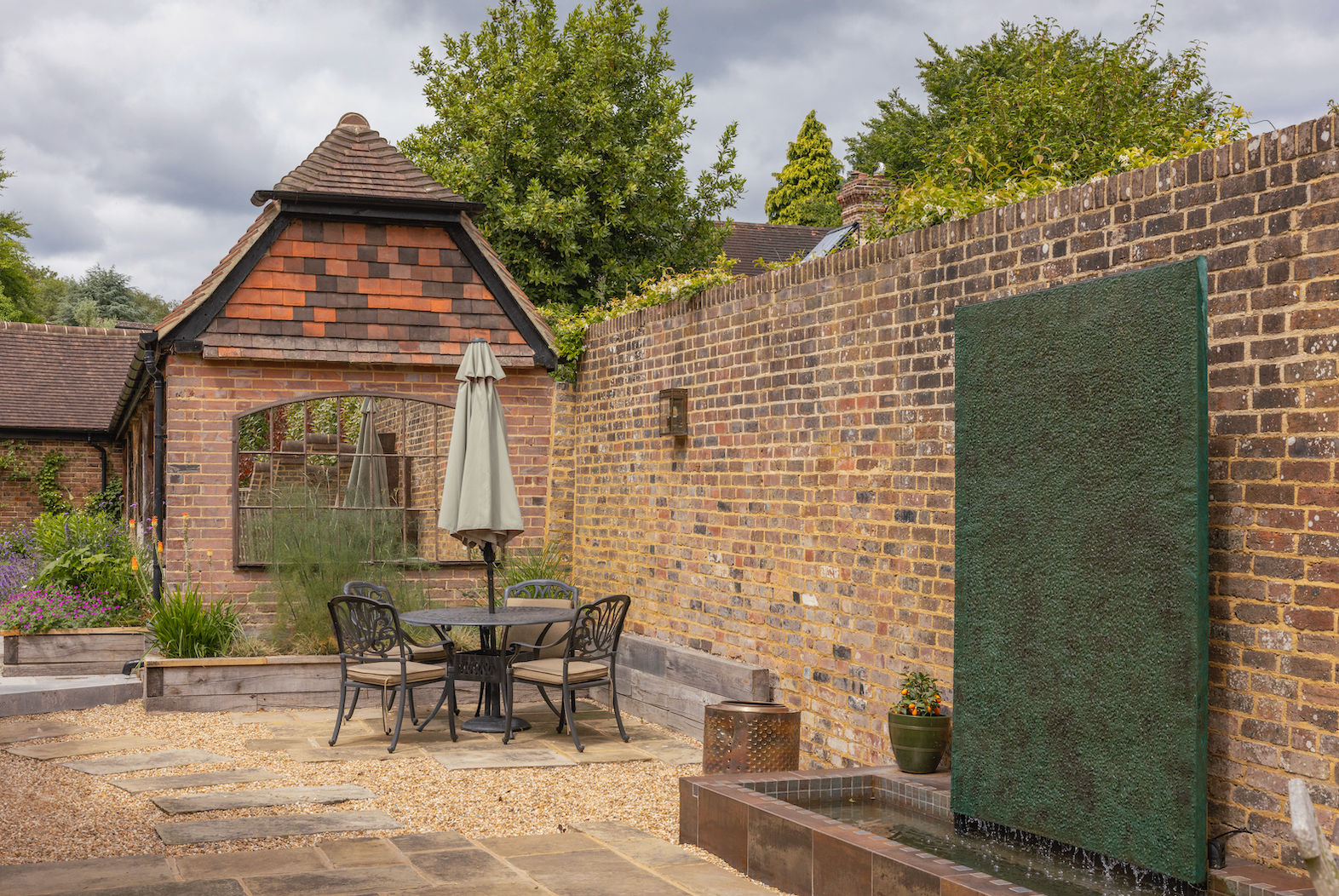
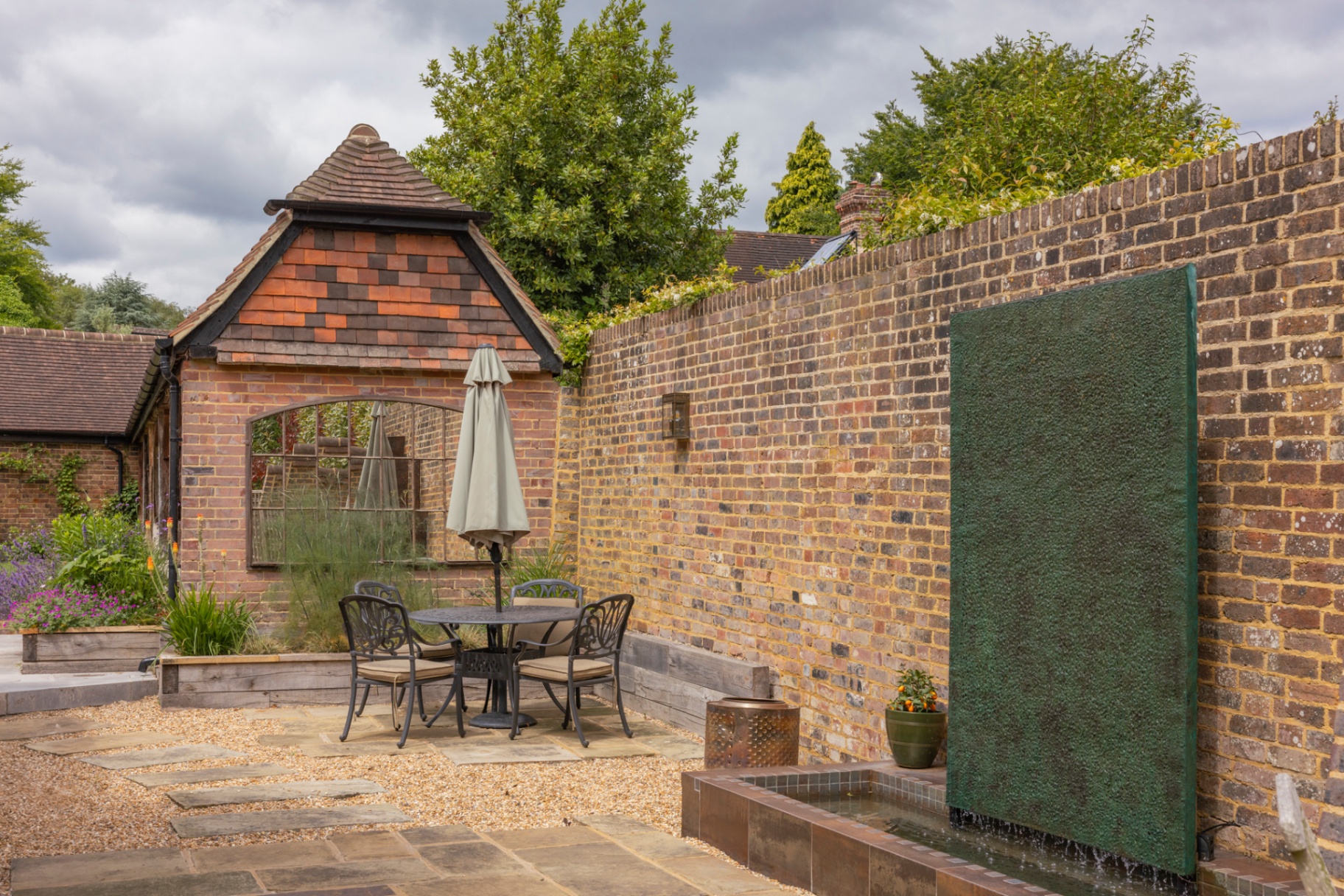
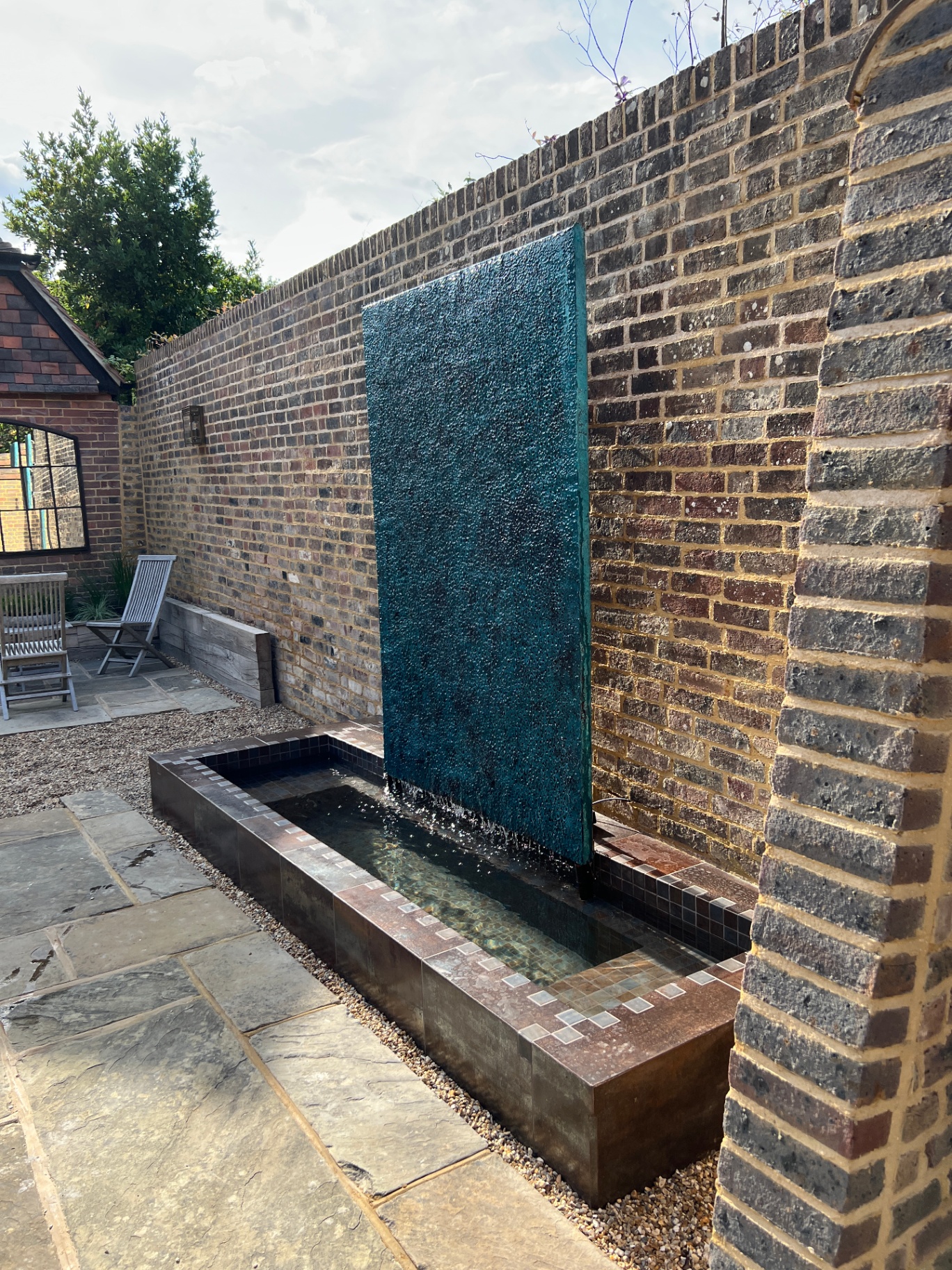
Reclaimed stone courtyard terrace with brick walls and planting
Paving is the biggest visual decision in a garden and the one most often made from a 100mm sample in a showroom. Wet it, put it next to the house brick, and look at it in the shade before you commit to sixty square metres of it.
The main options
Sandstone
Warm, forgiving, widely used and sympathetic to Sussex brick and flint. Riven sandstone has character; sawn and honed sandstone reads more contemporary. It is porous, so it will weather and needs sealing in shaded, damp positions.
Limestone
Denser than sandstone, with a fine even surface and cooler grey and blue tones. Excellent with painted render and modern glazing. Avoid the softer, chalkier grades under trees.
Granite
The workhorse. Extremely hard, excellent grip, resists staining, and setts are unbeatable for driveways and edging. Colour range is narrower and the material is harder to cut on site.
Porcelain
Non-porous, colour-stable, low maintenance and consistently sized - genuinely excellent for shaded terraces and around water. It must be laid on a full bed with a slurry primer; when porcelain fails it is almost always the bedding, not the tile.
Sussex-specific advice
- Shade and damp mean algae - choose a textured finish and specify falls that actually shed water.
- Match the undertone of the house, not the colour. Cool grey stone against warm red brick is the most common mismatch.
- Wealden clay moves. Sub-base depth and drainage matter more here than the stone on top.
- Buy from one batch and mix pallets while laying to avoid banding.
Jointing, edges and the invisible half
A brush-in resin joint on a correctly laid full mortar bed will outlast the fashion for the stone above it. Edge details - a sawn kerb, a brick soldier course, a flush lawn edge - are what makes a terrace look designed rather than delivered.
Related services
Where we work
We design and build gardens, garden rooms and pergolas across Mid Sussex and the surrounding towns.
More materials & build guides
- Year-Round Planting Schemes for West Sussex GardensMost gardens peak for six weeks and disappear for the rest of the year. Structure, succession and the right soil match fix that.
- Porcelain vs Natural Stone Paving: An Honest ComparisonBoth are excellent. They fail in different ways and suit different houses - here is how we choose between them.
- Garden Room Cladding: Every Option Compared, With Real CostsThe cladding is the first thing anyone sees and the first thing to fail if it is specified badly. Here is how the main options compare on cost, movement, colour and maintenance.