Sussex · 7 min read
Porcelain vs Natural Stone Paving: An Honest Comparison
Both are excellent. They fail in different ways and suit different houses - here is how we choose between them.
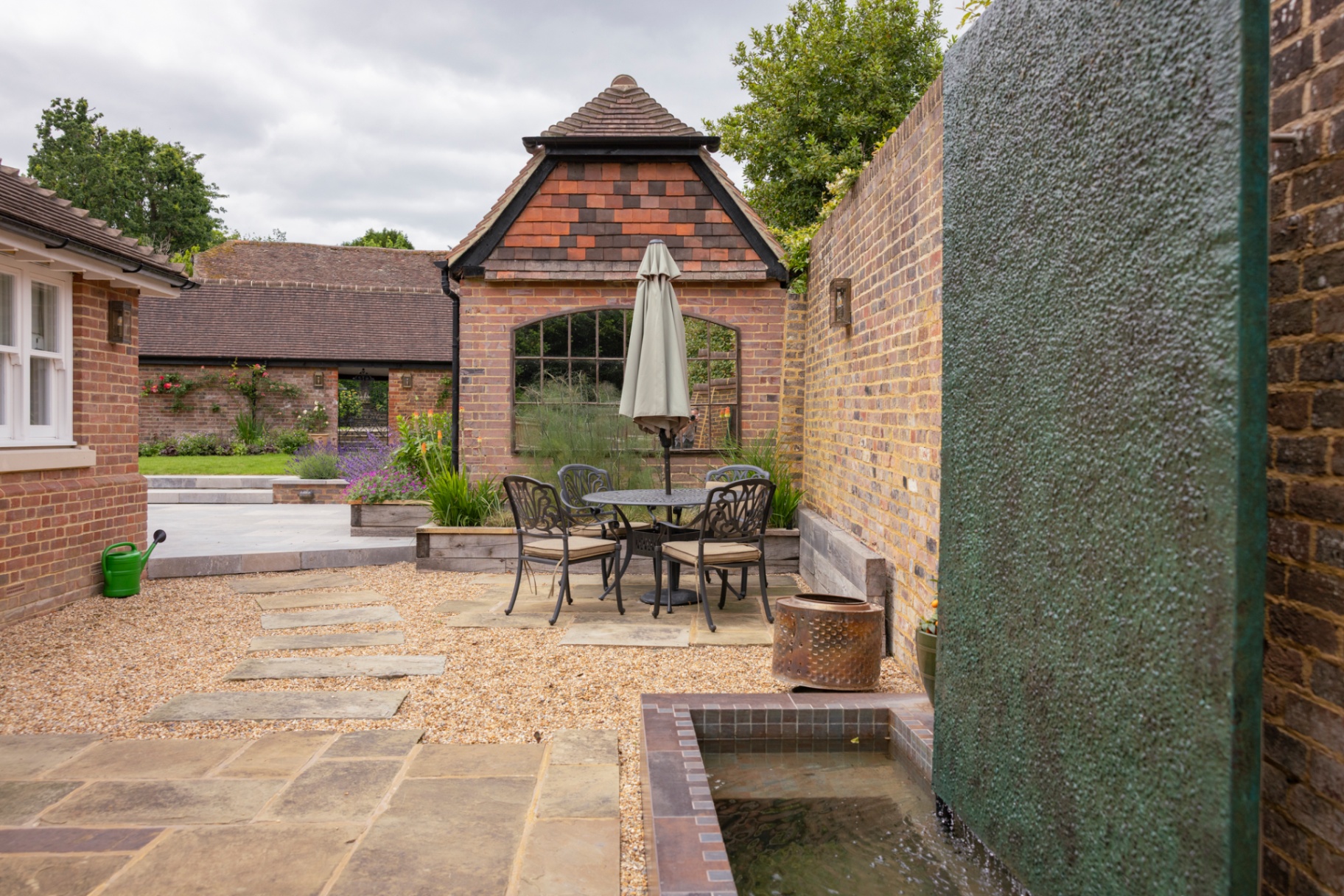
Natural stone paving on a garden terrace
This is the most common material decision in any garden project, and the marketing on both sides is unhelpful. Here is how the two actually behave once they have been down for five winters.
Appearance
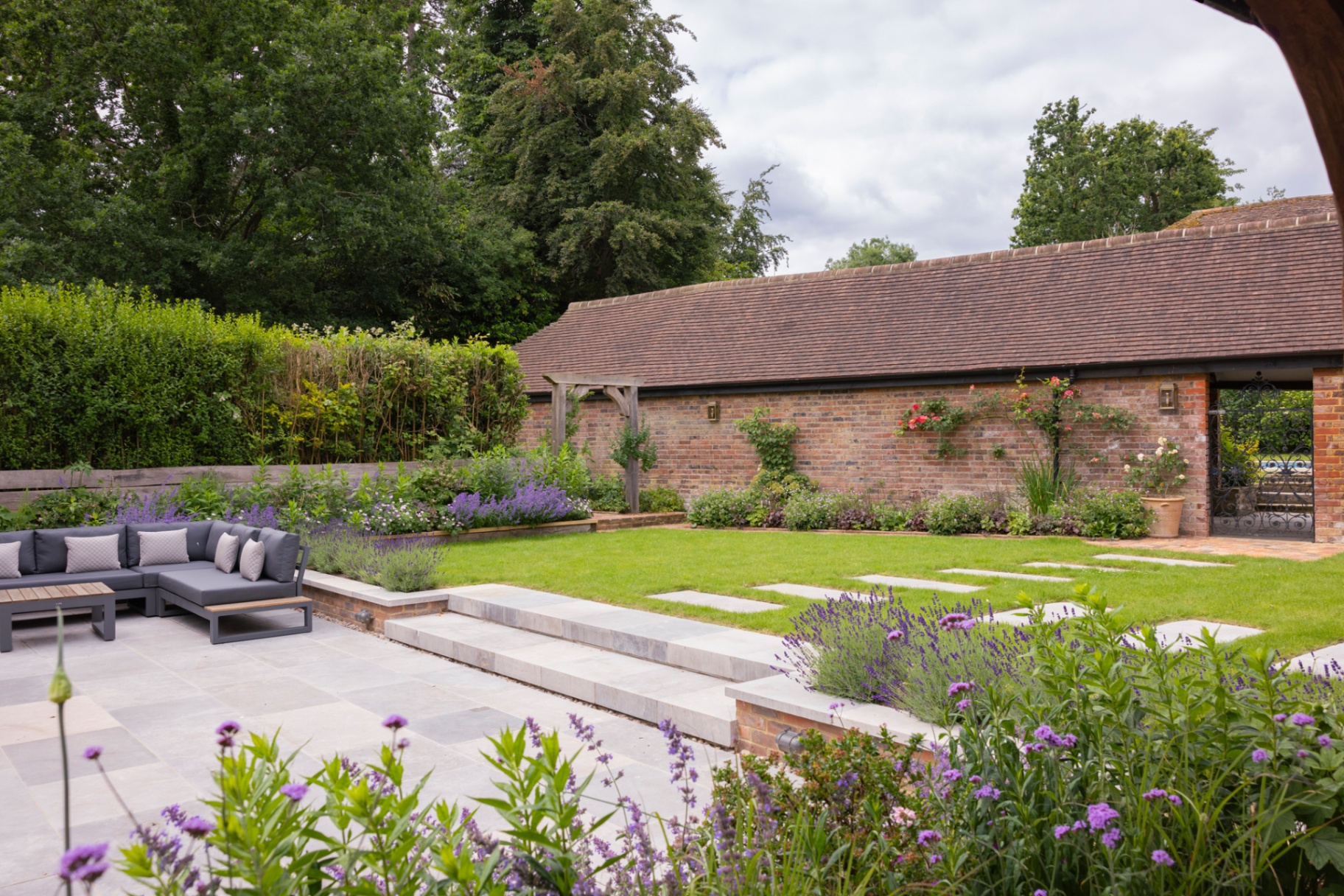
Natural stone varies - sandstone, limestone and granite all bring colour movement, fossil detail and texture that changes as it weathers. Porcelain is manufactured, so it is consistent, and the best products reproduce stone convincingly while the cheaper ones repeat the same three patterns across a terrace. Against a period house, stone almost always wins. Against a contemporary extension, large-format porcelain often looks better.
Performance
- Porcelain: non-porous, so it does not stain from wine, barbecue fat or leaf tannin, and algae washes off
- Porcelain: dimensionally consistent, allowing very tight joints and crisp lines
- Stone: porous to varying degrees; limestone stains most readily, granite least
- Stone: develops patina and, in shade, a natural weathering that many people prefer
- Both can be slippery - check the published slip rating for wet, shaded areas
Laying and cost
Porcelain material costs are often similar to mid-range stone, but laying is more demanding: a full mortar bed, slurry primer on the underside of every slab, and precise cutting with the right blade. Budget more for labour. Stone is more forgiving to lay but heavier and more variable, so it needs sorting on site to distribute colour across the terrace.
How we choose
Period property, planting-led garden, character wanted - natural stone. Contemporary house, family use, low maintenance, dining terrace where spills happen - porcelain. Where the garden has both, we sometimes use porcelain on the working terrace and stone on the paths and steps, provided the tones are chosen together rather than separately.
Related services
Where we work
We design and build gardens, garden rooms and pergolas across Mid Sussex and the surrounding towns.
More materials & build guides
- Choosing Paving and Natural Stone for a Sussex GardenPaving is the largest single surface in most gardens and the easiest to get wrong. A practical guide to stone selection for Sussex homes.
- Year-Round Planting Schemes for West Sussex GardensMost gardens peak for six weeks and disappear for the rest of the year. Structure, succession and the right soil match fix that.
- Garden Room Cladding: Every Option Compared, With Real CostsThe cladding is the first thing anyone sees and the first thing to fail if it is specified badly. Here is how the main options compare on cost, movement, colour and maintenance.