West Sussex · 6 min read
Year-Round Planting Schemes for West Sussex Gardens
Most gardens peak for six weeks and disappear for the rest of the year. Structure, succession and the right soil match fix that.
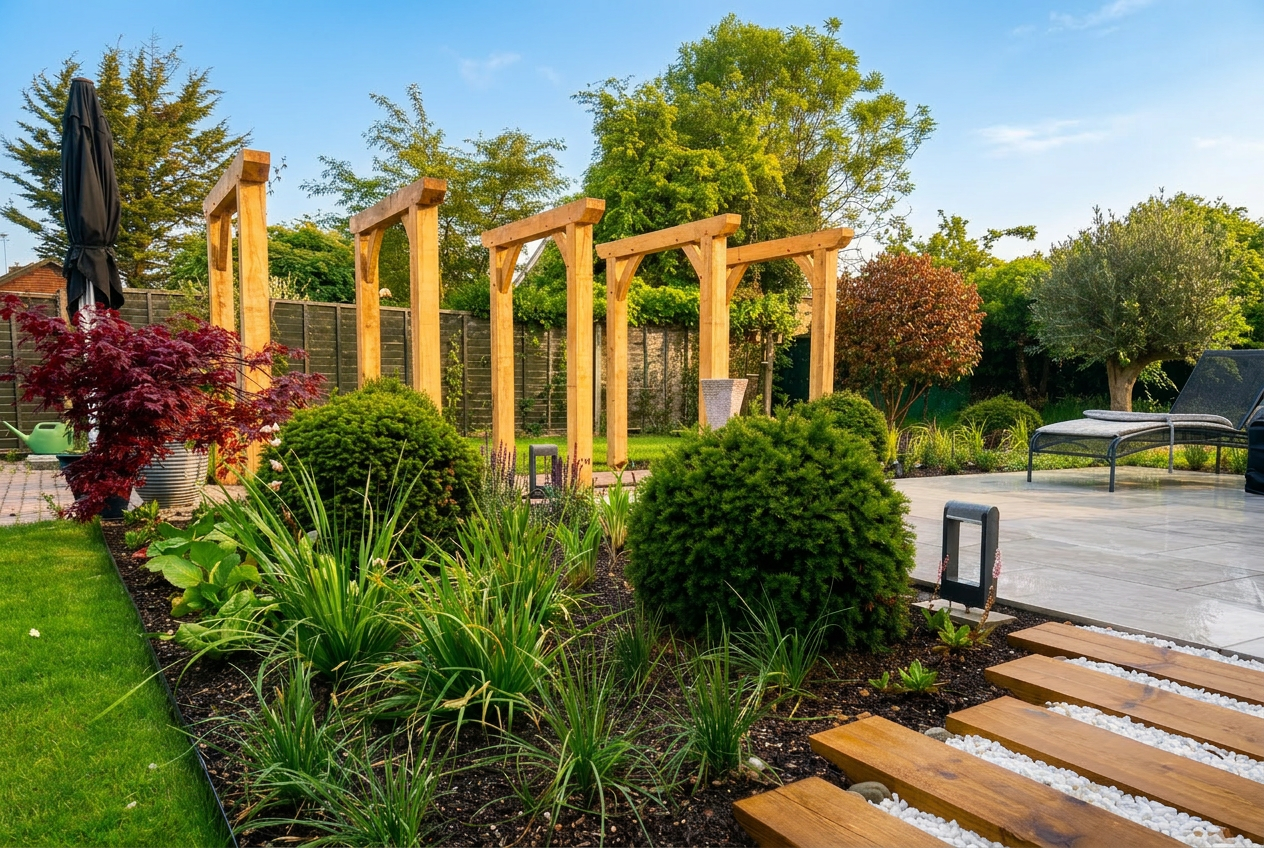
Layered planting scheme with grasses and perennials in a Sussex garden
The test of a planting scheme is not July. It is the second week of February, seen from the kitchen window, in the rain. Gardens that pass that test are built on structure first and flowers second.
Structure carries winter
Evergreen mass - clipped yew, box alternatives such as Ilex crenata, pittosporum, osmanthus - holds the shape of a garden when everything else has gone. Aim for roughly a third of the planting to be evergreen, arranged as repeated forms rather than scattered specimens. Multi-stem trees such as amelanchier or birch add height and winter silhouette without shading the whole plot.
Succession through the year
- Late winter: hellebores, snowdrops, cornus stems, sarcococca for scent by the door.
- Spring: narcissi, tulips through emerging perennials, epimedium, geum.
- Early summer: salvia, nepeta, geranium, roses, alliums going over gracefully.
- High summer: achillea, echinacea, verbena bonariensis, phlox.
- Autumn: grasses at their best - miscanthus, molinia, calamagrostis - plus asters and sedum.
- Winter: seedheads left standing until February, not cut back in October.
Match the soil, do not fight it
West Sussex gives you two very different conditions, sometimes within a few miles. Chalk downland is free-draining and alkaline - perfect for salvias, achillea, verbascum, lavender and grasses. Wealden clay is heavy and wet in winter but fertile - suiting hydrangea, persicaria, geranium, rodgersia and roses. Choosing plants that want your soil removes most of the maintenance before it starts.
Repetition is what makes it look designed
One of everything reads as a collection. Three, five or seven of the same plant, repeated at intervals down a border, reads as a scheme. Restrict the palette to twelve to fifteen species for a domestic garden and plant more of each.
Maintenance that fits your life
A perennial-led border needs one hard cut in late February, a mulch, and an hour every few weeks in summer. A high-maintenance scheme is not a better scheme - it is a scheme that will be abandoned in year three.
Related services
Where we work
We design and build gardens, garden rooms and pergolas across Mid Sussex and the surrounding towns.
More materials & build guides
- Choosing Paving and Natural Stone for a Sussex GardenPaving is the largest single surface in most gardens and the easiest to get wrong. A practical guide to stone selection for Sussex homes.
- Porcelain vs Natural Stone Paving: An Honest ComparisonBoth are excellent. They fail in different ways and suit different houses - here is how we choose between them.
- Garden Room Cladding: Every Option Compared, With Real CostsThe cladding is the first thing anyone sees and the first thing to fail if it is specified badly. Here is how the main options compare on cost, movement, colour and maintenance.