Sussex, Surrey & Kent · 7 min read
Planting for Clay Soil in the Weald: Plants That Actually Cope
Weald clay is difficult, fertile and worth working with. The trick is improving it rather than replacing it, and choosing plants that want it.
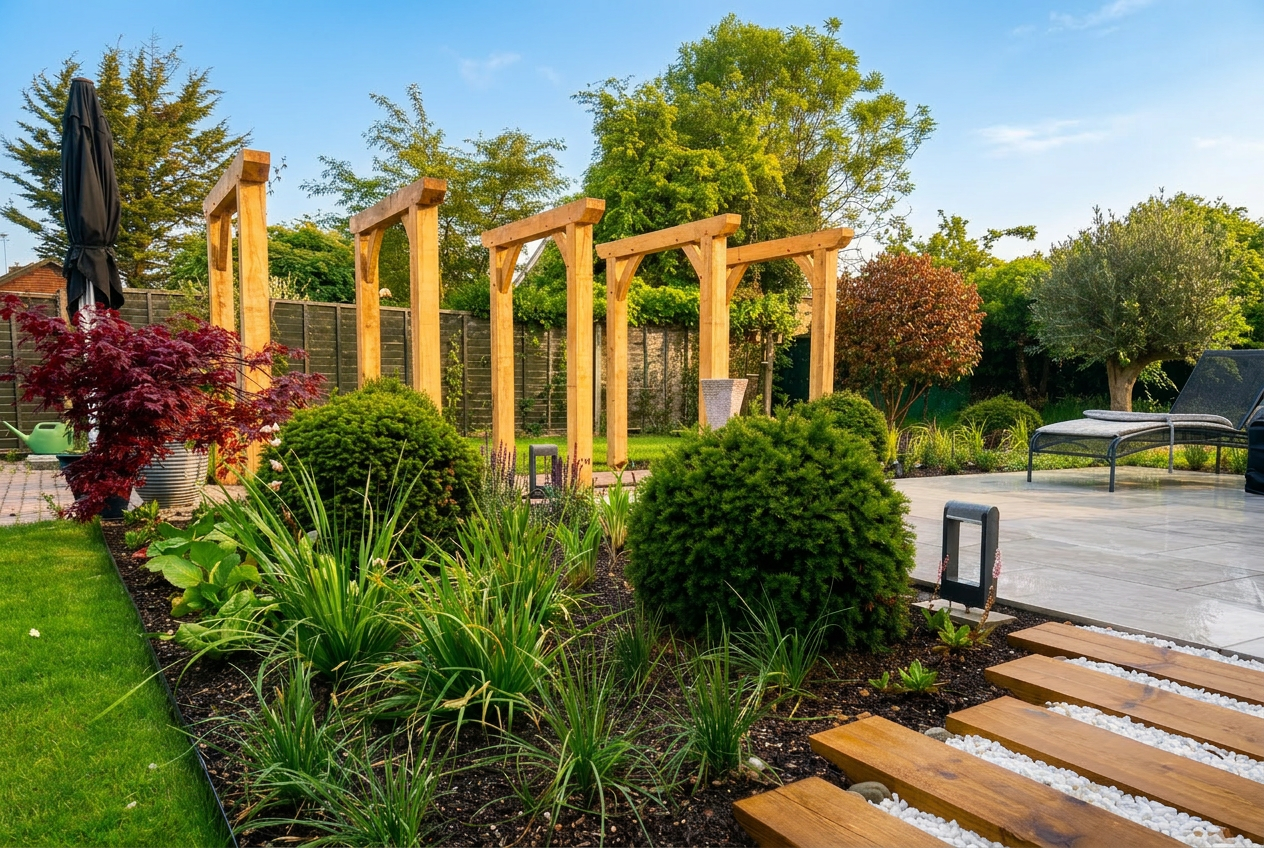
Layered planting scheme being installed in a Sussex garden on clay soil
Most gardens across the Low Weald, from Haywards Heath to Uckfield and out through Horley and Edenbridge, sit on heavy clay. It is cold in spring, sets like concrete in August, and holds water all winter. It is also among the most fertile soil in the country, and once it is handled correctly it will grow things that sandy gardens can only envy.
Improve it, do not replace it
Importing topsoil over clay creates a bathtub: the new soil holds water, the clay below refuses to take it, and the roots sit in it. The better approach is to break up compaction, add bulky organic matter in quantity, and keep adding it every year as a surface mulch. Coarse grit helps structure in planting pits but will not fix a whole border on its own.
- Never dig or walk on clay when it is wet. You are compacting it, and the damage lasts years.
- Decompact with a fork or subsoiler rather than rotavating, which smears and seals the structure.
- Add 75 to 100mm of well-rotted compost or composted bark as a mulch each autumn and let the worms do the work.
- Raise borders by 150 to 200mm where drainage is genuinely poor, so roots start above the wettest layer.
- Plant in autumn or early spring when the ground is workable and warm rather than saturated or baked.
Plants that genuinely thrive on Weald clay
- Trees: amelanchier, sorbus, malus, field maple, hornbeam and birch all cope well.
- Shrubs: viburnum, cornus, philadelphus, hydrangea, rosa rugosa and osmanthus.
- Structure: yew, hornbeam and box alternatives such as Ilex crenata for clipped form.
- Perennials: geranium, persicaria, astrantia, hemerocallis, rudbeckia, helenium and sanguisorba.
- Grasses: molinia, deschampsia and calamagrostis, which all tolerate a wet winter root run.
- Damp corners: ligularia, hosta, iris sibirica and filipendula rather than anything Mediterranean.
What to stop trying
Lavender, rosemary, cistus, most silver-leaved Mediterranean plants and many alpines will sulk and then rot in a wet clay winter. If you want them, give them a raised, sharply drained bed with real grit and accept that you are creating a different soil rather than fighting the one you have.
Lawns on clay
Clay lawns compact, puddle and moss up. Hollow tine aeration each autumn with a top dressing of sandy loam does more than any feed. Where a lawn sits over a badly drained hollow, the honest fix is land drainage, or accepting that the area wants to be a planted, damp-tolerant bed instead.
Related services
Where we work
We design and build gardens, garden rooms and pergolas across Mid Sussex and the surrounding towns.
More materials & build guides
- Choosing Paving and Natural Stone for a Sussex GardenPaving is the largest single surface in most gardens and the easiest to get wrong. A practical guide to stone selection for Sussex homes.
- Year-Round Planting Schemes for West Sussex GardensMost gardens peak for six weeks and disappear for the rest of the year. Structure, succession and the right soil match fix that.
- Porcelain vs Natural Stone Paving: An Honest ComparisonBoth are excellent. They fail in different ways and suit different houses - here is how we choose between them.