Sussex, Surrey & Kent · 7 min read
Driveways and Luxury Car Ports: What They Cost and What the Rules Are
Driveways are governed by drainage law as much as by taste. Here is what each surface costs and what you are required to do with the water.
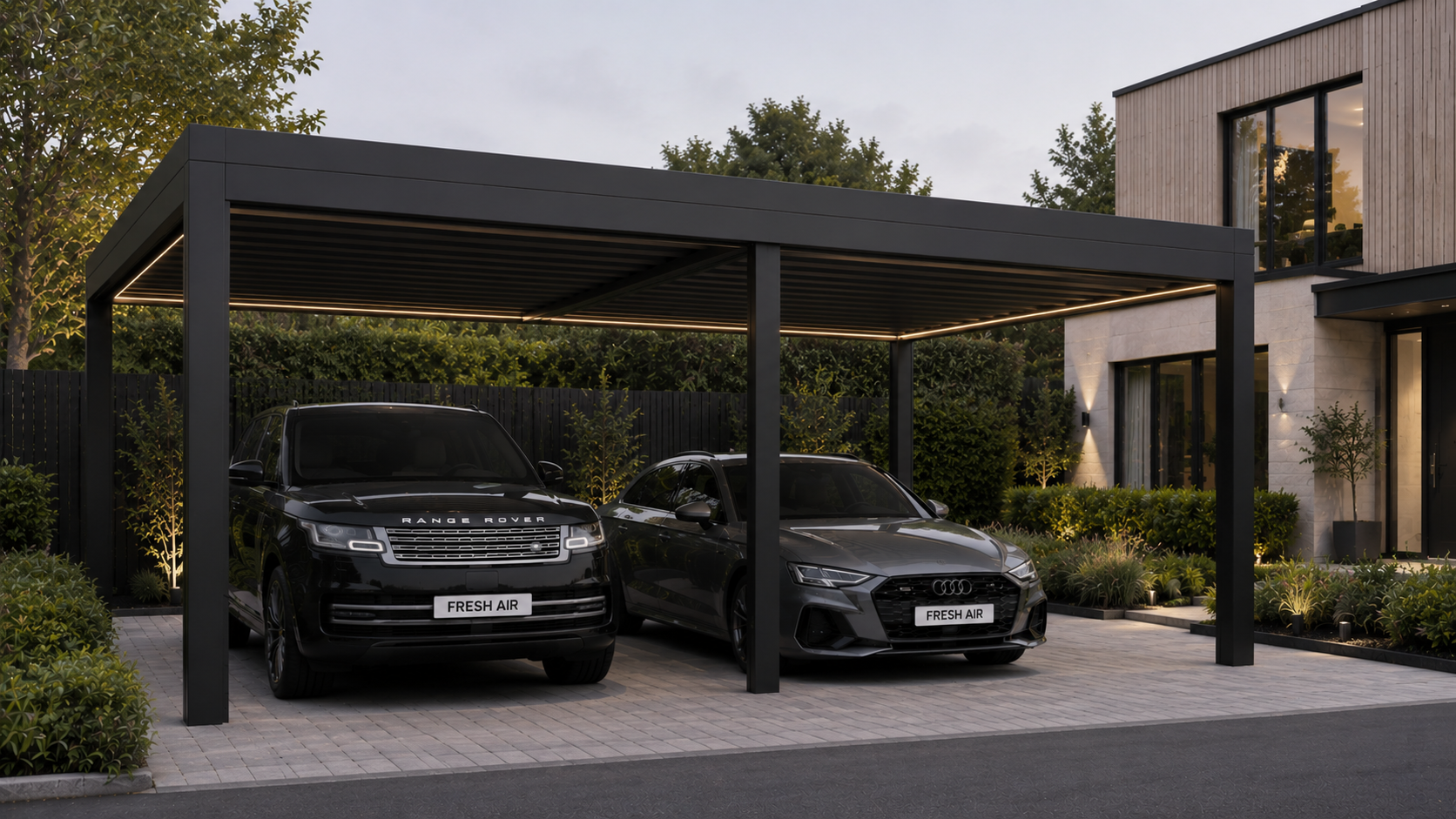
Oak framed luxury car port with a stone driveway in front of a country house
A driveway is the first thing anyone sees and the piece of hard landscaping that takes the most abuse. It is also the only part of your garden governed by national drainage rules. Both of those things should shape the specification before anyone talks about colour.
The drainage rule you cannot ignore
In England, laying an impermeable driveway over five square metres between the house and the road requires either a permeable surface or drainage to a soakaway or permeable area within your own boundary. Directing water onto the highway is not permitted. In practice this means a permeable sub-base build-up, a permeable surface or a properly sized soakaway, and it is one of the biggest genuine cost differences between a correct driveway and a cheap one.
Surfaces, and what each is good at
- Permeable block paving: hard-wearing, repairable in patches, meets drainage rules by design. Generally around £120 to £200 per square metre installed.
- Resin bound gravel: seamless, permeable, quiet underfoot and clean. Generally around £110 to £180 per square metre, and entirely dependent on the base it is laid on.
- Loose gravel over a stabilising grid: the most affordable and the most rural in character. Generally around £70 to £130 per square metre.
- Natural stone or granite setts: the most expensive and the most appropriate for period and listed property. Generally £250 per square metre and upwards.
- Tarmac: cost effective for long rural drives, less so for a formal frontage.
Please treat every figure here as an indicative guide range based on projects we have completed, not a quotation. The final price depends on access, ground conditions, levels, drainage and specification, and is only confirmed after a site visit.
Car ports: cost and why people choose them
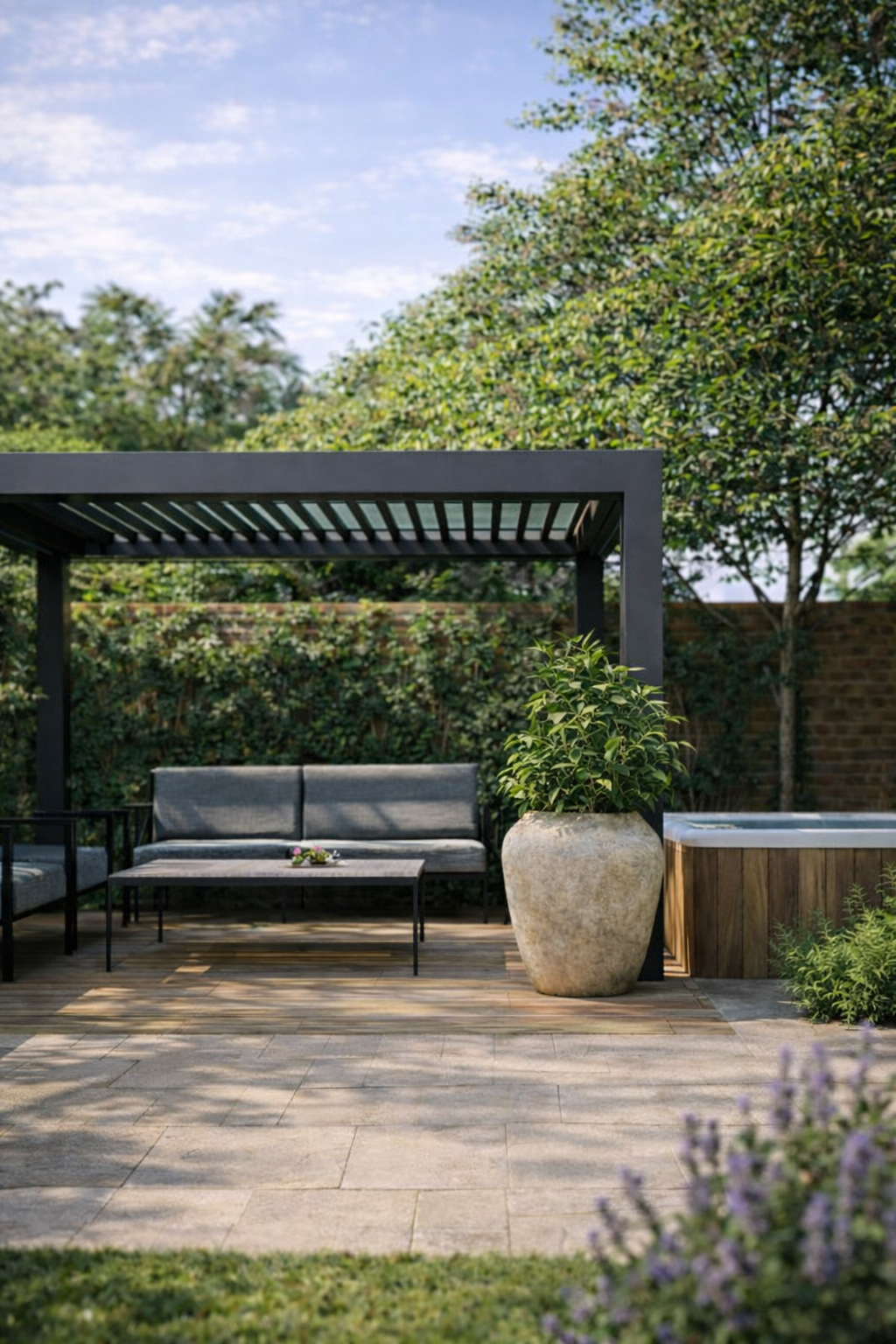
A car port gives you covered parking without the mass, cost and planning weight of a garage, and an oak or Douglas fir frame reads as part of the landscape rather than as an outbuilding. As a guide, a well-detailed timber framed single car port usually starts from around £15,000, a double from around £25,000, and a larger oak framed structure with storage, lighting and a slate or cedar roof commonly falls between £35,000 and £70,000. Groundworks and drainage are additional and depend on the existing surface.
Planning and permitted development
A car port within the curtilage of a house is often permitted development, subject to height, position relative to the highway and the usual constraints. Listed buildings, conservation areas, Areas of Outstanding Natural Beauty and properties where permitted development rights have been removed are different, and worth checking before design rather than after.
What makes a driveway last
- Excavation to the correct depth for the vehicle loading, not to whatever the existing hardcore allows.
- A geotextile membrane separating sub-base from subgrade, especially on clay.
- Compaction in layers with a proper roller, not a single pass with a wacker plate.
- Edge restraints haunched in concrete, because driveways fail at the edges first.
- Falls, channels and a soakaway sized for the area, designed before the surface is chosen.
Where we work
We design and build gardens, garden rooms and pergolas across Mid Sussex and the surrounding towns.
More materials & build guides
- Choosing Paving and Natural Stone for a Sussex GardenPaving is the largest single surface in most gardens and the easiest to get wrong. A practical guide to stone selection for Sussex homes.
- Year-Round Planting Schemes for West Sussex GardensMost gardens peak for six weeks and disappear for the rest of the year. Structure, succession and the right soil match fix that.
- Porcelain vs Natural Stone Paving: An Honest ComparisonBoth are excellent. They fail in different ways and suit different houses - here is how we choose between them.