Sussex · 8 min read
Garden Room vs Extension: Which Is Actually Cheaper and Better?
The honest comparison between a garden room and a house extension, covering cost, planning, disruption and resale value, without assuming one is always right.
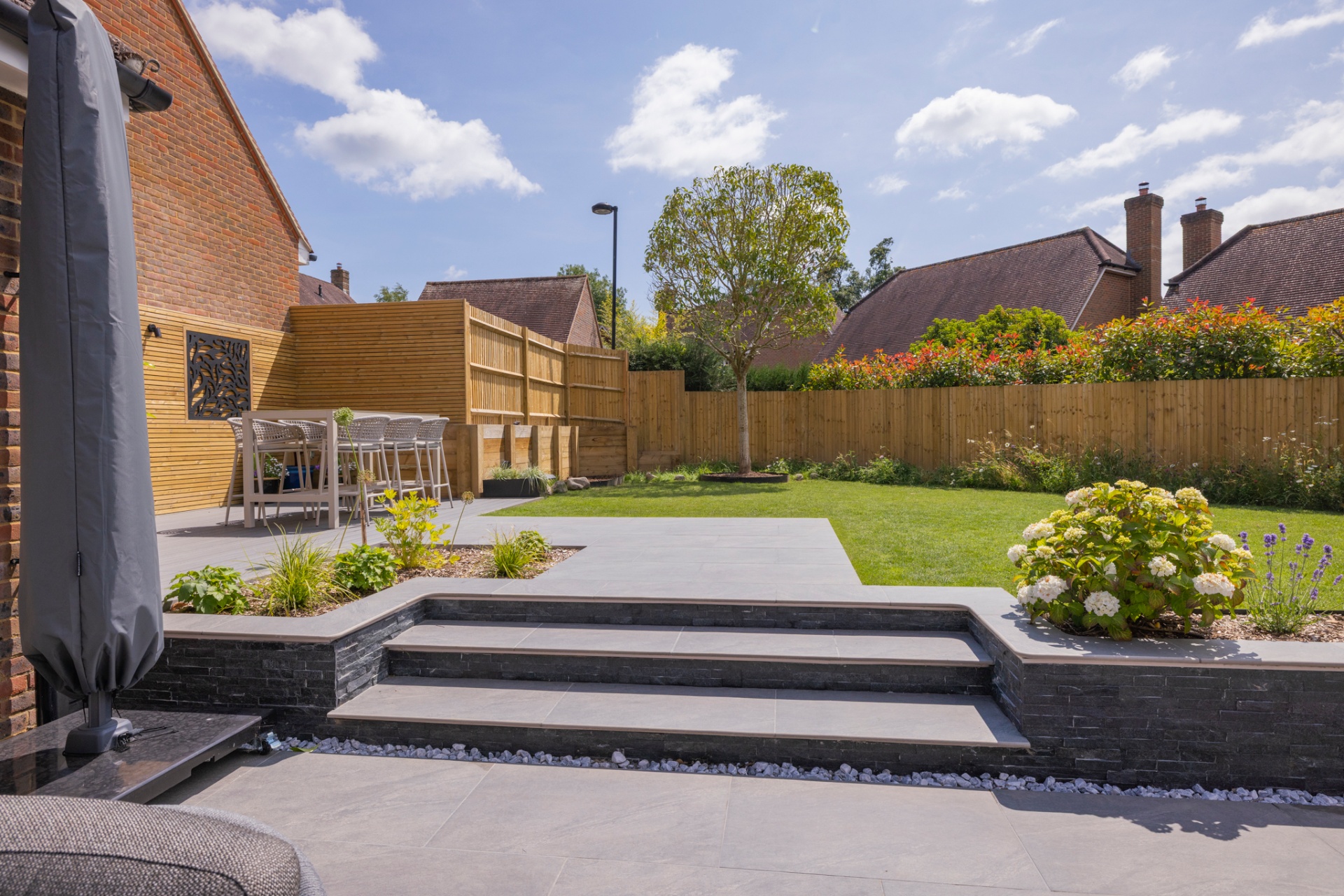
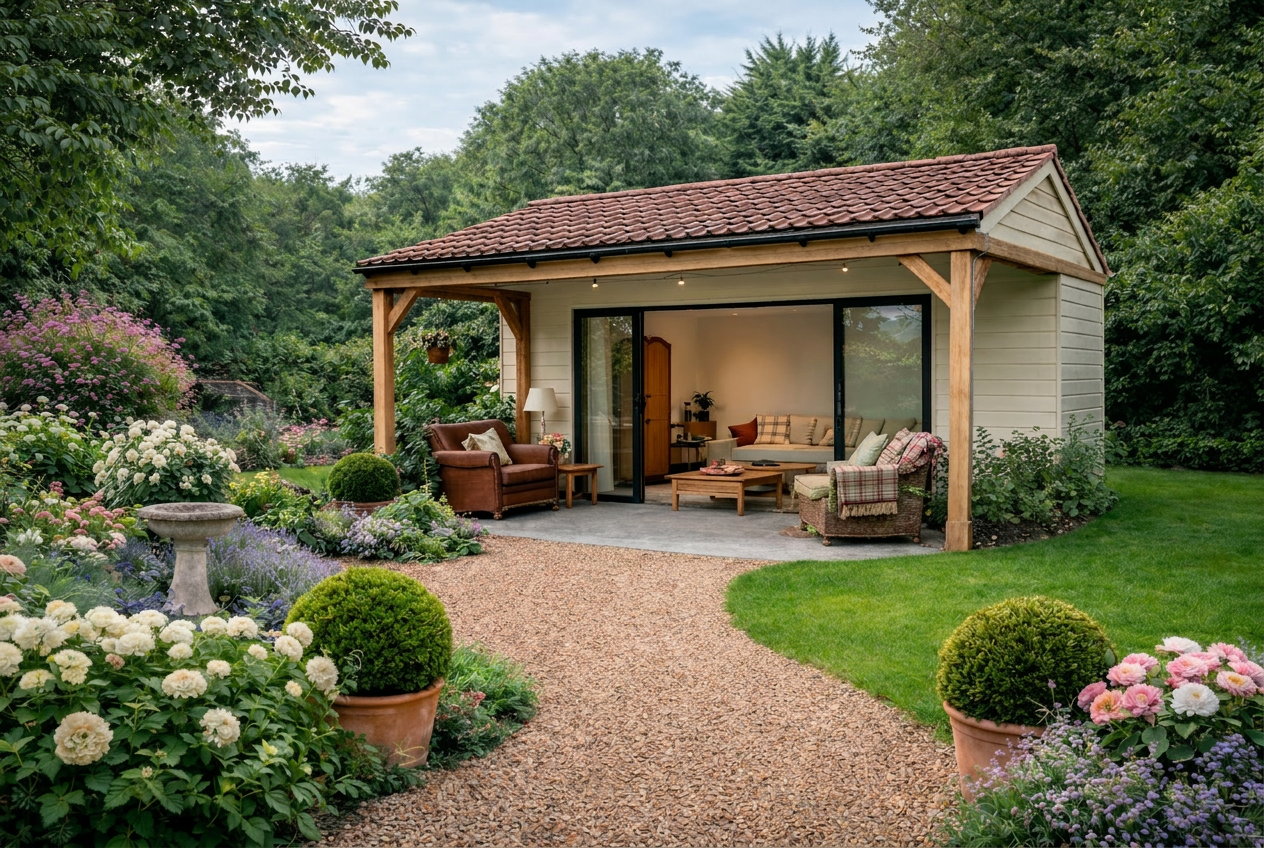
Garden room set within a landscaped Sussex garden as an alternative to a house extension
Most homeowners weighing up a garden room have also, at some point, priced up an extension. Both add usable space; both cost real money; and the right answer depends on what the space is for, not just which is cheaper per square metre. Here is the comparison run properly, including the case where an extension genuinely wins.
Cost per square metre
A well-specified, fully insulated garden room typically costs somewhere in the region of £2,000-£3,500 per square metre depending on glazing, cladding and services, though modest, simpler builds can come in below that. A single-storey house extension of comparable quality typically runs £2,500-£4,000+ per square metre once you include structural work, roofing, connecting the space to existing services and making good the junction with the existing house - and that range climbs quickly if foundations are complicated or the extension involves moving load-bearing walls. Garden rooms are usually the cheaper route for equivalent finished quality, mainly because they avoid the cost of tying into an existing structure.
Planning and building regulations
Most garden rooms fall under permitted development and need no planning application, subject to size, height and position - covered in full in our planning permission guide. Most single-storey extensions also fall under permitted development up to a certain depth, but larger extensions, those on a listed building, in a conservation area, or extending toward a boundary in ways that breach the limits, need a full planning application, which adds cost, time and uncertainty. Extensions almost always trigger full Building Regulations approval; a modest garden room used as an office often does not.
Build time and disruption
This is where the two options diverge most sharply. A garden room is built in the garden, away from the house, and a family can usually stay living normally throughout - most projects complete in eight to fourteen weeks from groundworks to handover. An extension means scaffolding against the house, an opening cut into an external wall, dust and noise inside the home, and a build programme that regularly runs to four to six months or more once weather and any planning delays are factored in. For a family that cannot easily move out, this difference alone often settles the decision.
- Garden room: work happens outside the house, normal life continues largely undisturbed
- Extension: structural opening into the house, scaffolding, dust and noise for months
- Garden room: no need to move out, even temporarily
- Extension: kitchens or living rooms are often unusable for periods during the build
Added value and resale
A well-built extension that increases habitable floor area connected to the house tends to add the most straightforward value on resale, because it appears in the square footage a valuer measures and it reads as permanent, integrated space. A quality garden room adds value too - particularly one used as a genuine office, studio or gym - but valuers and buyers treat it as a strong amenity rather than as additional habitable floor area in the same way, so the uplift is real but typically smaller pound-for-pound than an equivalent extension.
When an extension is genuinely the better answer
If you need the new space to function as part of the house - a larger kitchen you walk into from the hallway, an extra bedroom for a growing family, a bathroom that needs to sit near existing plumbing - an extension is usually the right tool, because a garden room is, by definition, a separate building at the end of the garden. It also makes more sense where a garden is small and every square metre of outdoor space matters more than the building would earn back.
When a garden room wins
For a home office, studio, gym, guest room or garden lounge - anything that benefits from separation from the main house, or anywhere daily disruption during the build is the overriding concern - a garden room usually wins on cost, speed and lifestyle, while leaving the house itself untouched.
Where we work
We design and build gardens, garden rooms and pergolas across Mid Sussex and the surrounding towns.
More materials & build guides
- Choosing Paving and Natural Stone for a Sussex GardenPaving is the largest single surface in most gardens and the easiest to get wrong. A practical guide to stone selection for Sussex homes.
- Year-Round Planting Schemes for West Sussex GardensMost gardens peak for six weeks and disappear for the rest of the year. Structure, succession and the right soil match fix that.
- Porcelain vs Natural Stone Paving: An Honest ComparisonBoth are excellent. They fail in different ways and suit different houses - here is how we choose between them.