Sussex, Surrey & Kent · 6 min read
How to Stop a Garden Room Overheating in Summer
Most garden rooms overheat because of glass, orientation and airflow, not the weather. Here is how to design the heat out, or fix a room you already have.
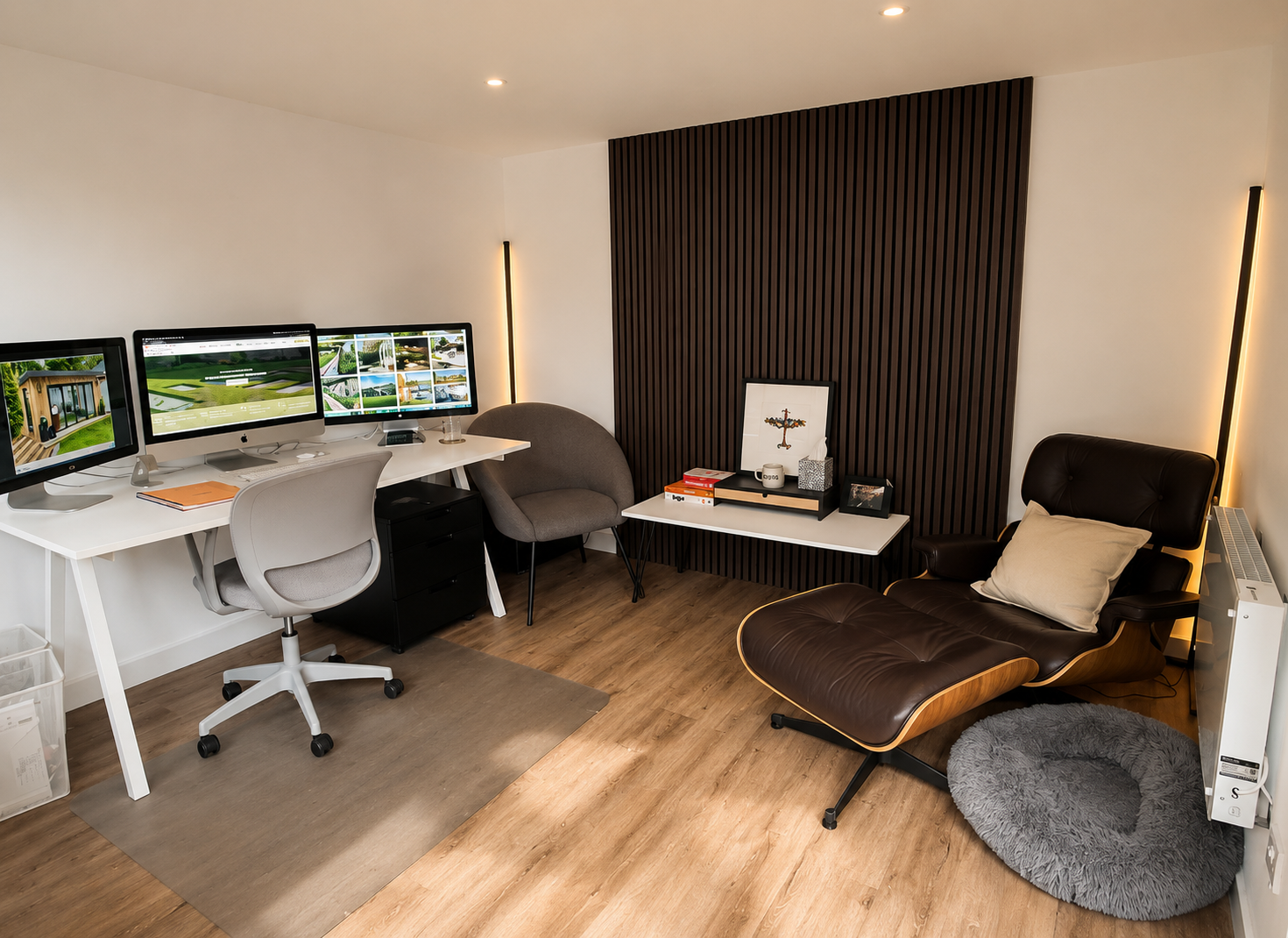
Insulated garden room interior with shaded glazing looking out to a Sussex garden
Short answer: a garden room overheats when sun pours through unshaded glass and the warm air cannot escape. Keep it cool by limiting west facing glass, shading south facing glass with an overhang or pergola, insulating the roof well, and adding opening windows or vents on two sides so air can flow through. Most of this is decided at design stage, before the building is ordered.
Orientation comes first
Low evening sun from the west is the hardest heat to control, because it comes in flat under any overhang just when you want to use the room. South facing glass gets high midday sun that a roof overhang can block. North light is steady and cool, which is why many studios face that way. We check the sun path on every site survey before fixing where the doors go.
Shade the glass from the outside
- A deep roof overhang or canopy over south facing doors
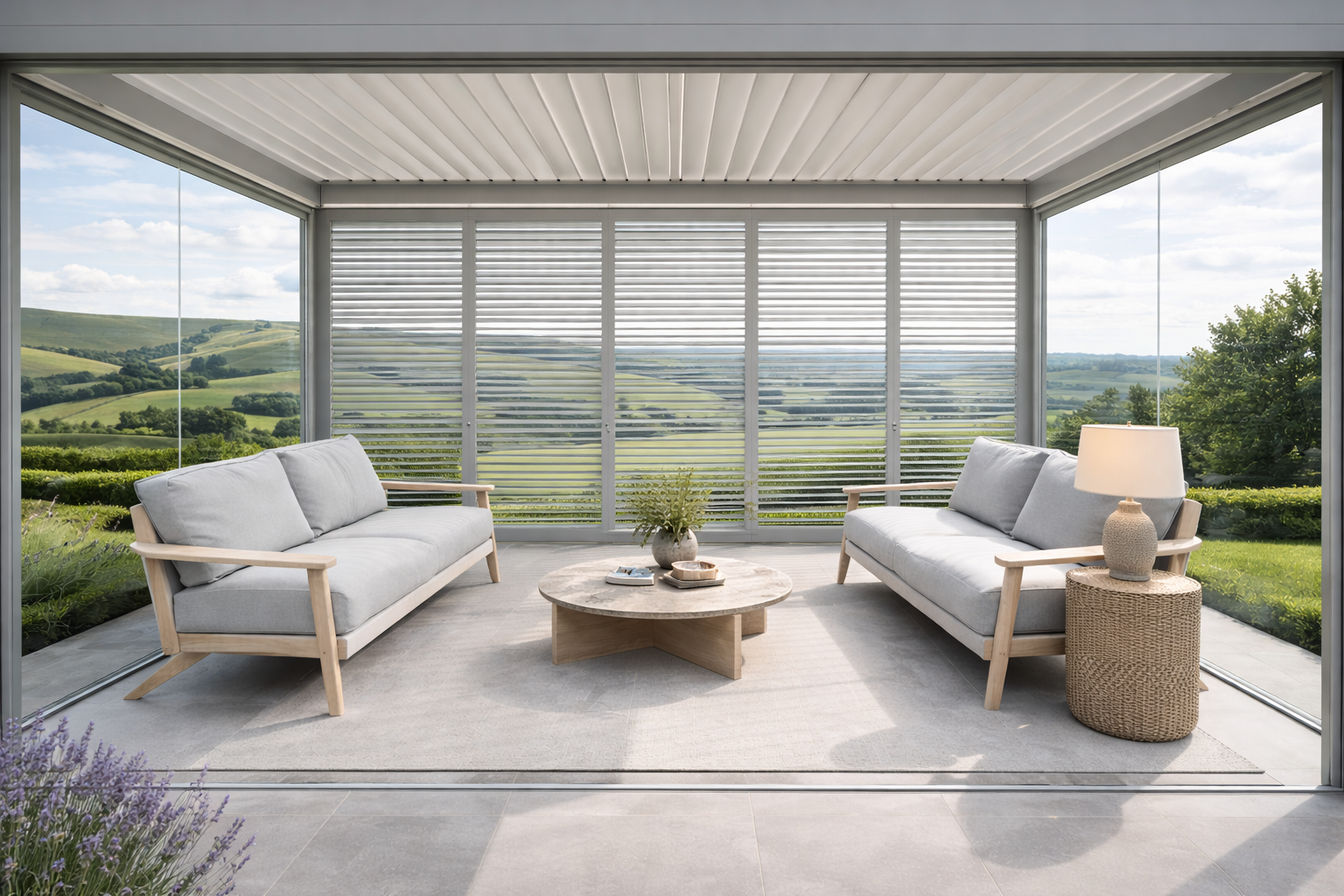
- A pergola, louvred roof or climbing planting in front of the glazing
- External blinds, which stop heat before it reaches the glass
- Solar control glass on elevations you cannot shade
Internal blinds help with glare, but by then the heat is already inside the room.
Ventilation: give the heat a way out
Openings on opposite walls let air flow straight through. A high level vent or roof light lets hot air rise and escape while cooler air comes in low. Lockable trickle vents or secure tilt windows mean you can leave the room venting when you are not in it, so it is not a heat trap when you open up in the afternoon.
Roof insulation and colour
The roof takes the most sun of any surface. Generous insulation and a ventilated gap under the roof covering stop that heat soaking down into the room. A pale roof finish reflects more heat than a dark one, and a green roof adds thermal mass and shade.
Fixes for an existing hot garden room
- Add a pergola or external blinds over the sunniest glass
- Fit solar control film to glazing you cannot shade
- Add a high level vent or opening roof light
- Plant a deciduous tree or climber for summer shade and winter light
- Fit a heat pump air conditioner if the room is used all day
Please treat every figure here as an indicative guide range based on projects we have completed, not a quotation. The final price depends on access, ground conditions, levels, drainage and specification, and is only confirmed after a site visit.
If your garden room is too hot, or you want to design one that never is, get in touch and we will look at the sun path on your plot.
Planning your next step
If this guide has helped shape your plans, see how we approach it in practice on our Garden rooms page, or browse every article in our garden rooms hub. Homeowners reading this often go on to How Much Does a Garden Room Cost in Sussex? and Oak-Framed vs Contemporary Garden Rooms: Which Suits a Sussex Home?. When you are ready to talk through your own garden, get in touch with the Fresh Air Landscapes team.
Common questions
- Why does my garden room get so hot?
- Usually a large area of unshaded south or west facing glass, thin or missing roof insulation and no way for warm air to escape. Sun through glass heats the room faster than a small window can vent it.
- Does insulation make a garden room hotter in summer?
- No. Good roof and wall insulation keeps outside heat out as well as winter heat in. Rooms overheat when heat comes in through glass and has nowhere to go, so pair insulation with shading and ventilation.
- Do I need air conditioning in a garden room?
- Often not, if shading and cross ventilation are designed in. For a well used office on a hot plot, a heat pump air conditioner can cool in summer and heat efficiently in winter.
Where we work
We design and build gardens, garden rooms and pergolas across Mid Sussex and the surrounding towns.
More garden rooms guides
- How Much Does a Garden Room Cost in Sussex?A line-by-line look at where garden room budgets go in Sussex, and the specification choices that separate a ten-year building from a thirty-year one.
- Oak-Framed vs Contemporary Garden Rooms: Which Suits a Sussex Home?If you are drawn to oak-framed buildings but need the performance of a contemporary garden room, this guide compares the two styles on looks, planning and longevity.
- Garden Rooms: The Complete Buyer's GuideGarden rooms range from a shed with a window to a fully insulated, year-round building. This guide explains the differences that actually matter before you spend anything.