Sussex · 7 min read
Cedar vs Larch Cladding: Which Is Right for Your Garden Room?
The two most requested claddings for a garden room, compared head to head on the things that actually decide how they perform and age.
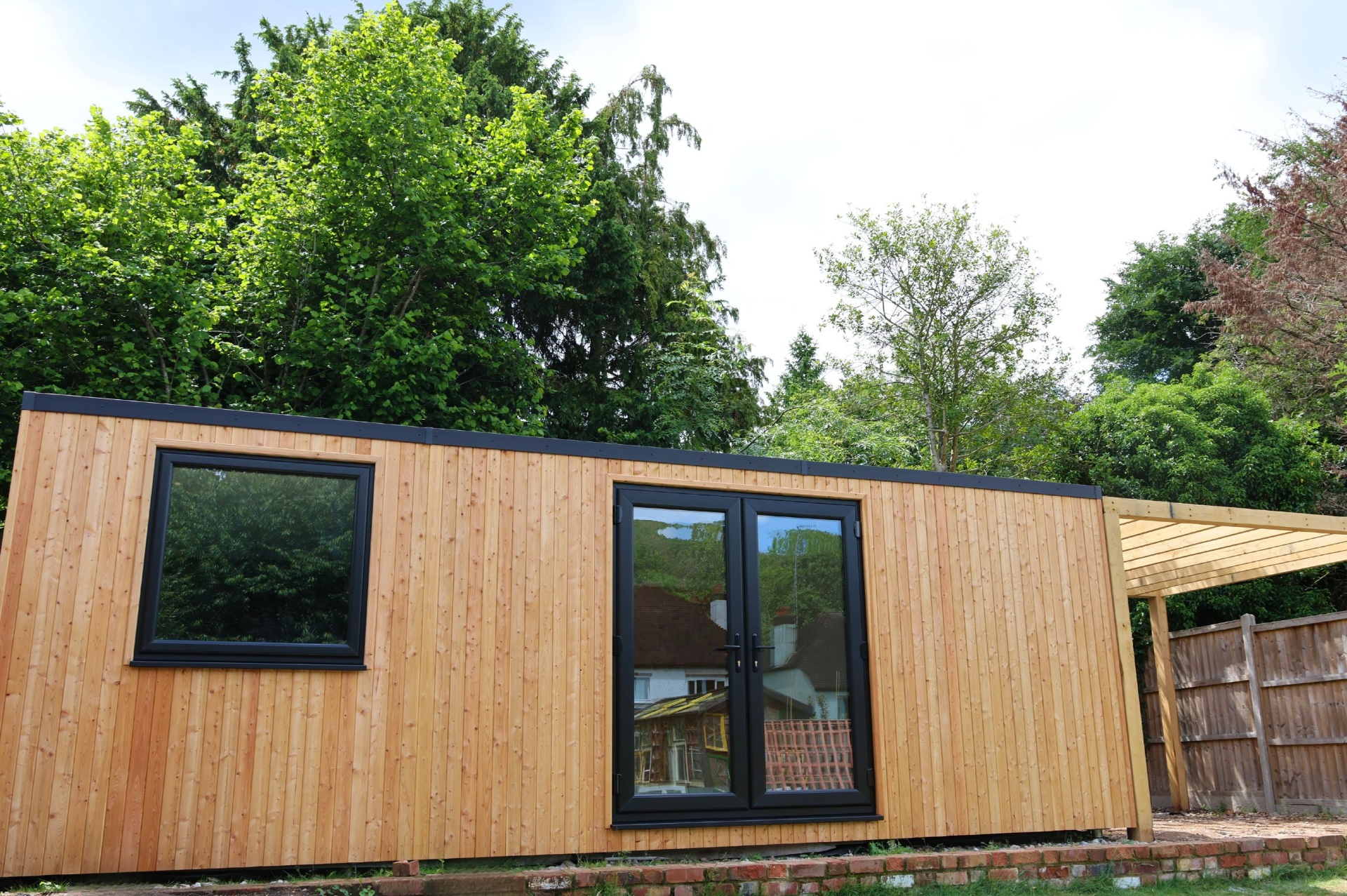
Timber-clad garden room exterior comparing cedar and larch cladding tones
Siberian larch and western red cedar are the two claddings we are asked to compare more than any other combination, and both are genuinely good choices. The right one depends less on which looks better in a sample box and more on durability class, movement, cost and the character you want the building to have in five years, not on day one.
Short answer: Siberian larch costs around £45-£75 per square metre fitted and silvers evenly, while western red cedar costs £65-£100 and gives a warmer colour that weathers less evenly. Both last decades on a ventilated cavity. We specify larch on most builds.
Durability class
Both timbers are naturally durable without chemical treatment, which is why they dominate the modern garden room market. Larch sits in durability class 3-4 depending on source and grade, meaning moderate to good natural resistance to decay. Cedar sits at class 2, slightly better on paper, thanks to natural oils (thujaplicins) that give it inherent fungal and insect resistance. In practice, both perform well for decades when detailed correctly with a ventilated cavity - the difference in durability class rarely decides the outcome on its own.
Cost
Larch is the more affordable of the two, typically £45-£75 per square metre supplied and fitted in a standard rainscreen profile. Cedar runs £65-£100 per square metre for the same treatment. On a modest garden room the difference across the whole elevation is usually a few hundred pounds, which is rarely the deciding factor - colour and character usually matter more once clients see both in daylight.
Colour and how it changes
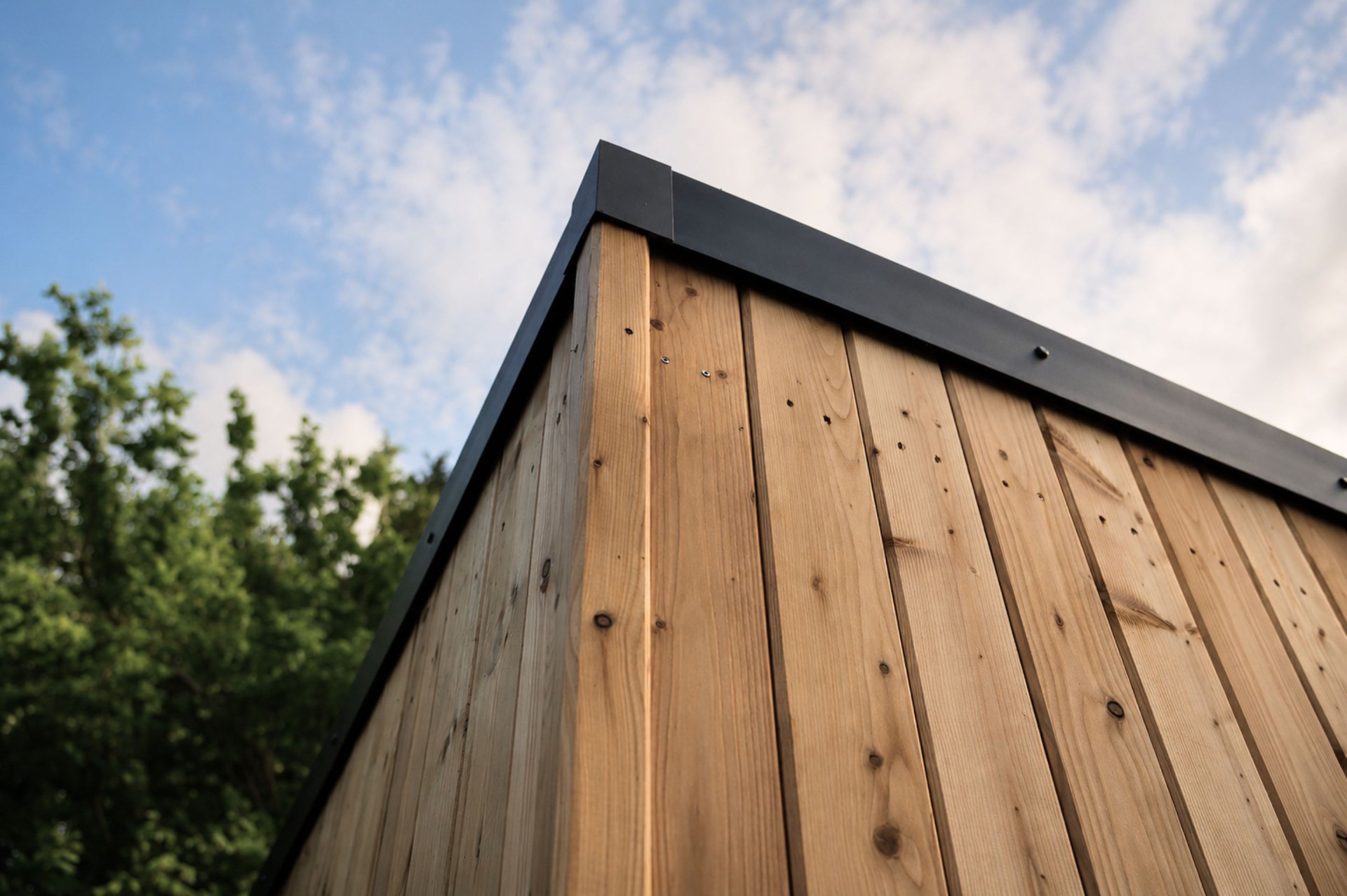
Fresh-cut larch is a pale straw colour with a tight, straight grain. Fresh-cut cedar is a warmer pink-brown with a more visible, sometimes knottier grain depending on grade. Both silver to a similar soft grey if left unfinished, though cedar tends to weather slightly more unevenly where its natural oils leach out unevenly across a board, while larch usually silvers more consistently across an elevation. If you want to hold the original colour, both need oiling roughly every twelve to twenty-four months, with south and west elevations needing it more often.
Movement
Larch is a denser, tighter-grained timber and moves slightly less with changes in humidity than cedar, which is a softer, lower-density wood. In practice this shows up as marginally less cupping and fewer fixing issues over a larch board's life, though correct board width, fixing gaps and a ventilated cavity control movement effectively in both species. Cedar's softness also means it dents and marks more easily at door handles, corners and other high-contact points.
Sourcing
Siberian larch, despite the name, is now predominantly supplied from sustainably managed forests further west, and FSC or PEFC certified stock is widely available at consistent quality. Western red cedar is sourced mainly from North America, and certified, consistently graded stock is also readily available, though lead times and pricing can be more exposed to shipping costs given the longer supply chain. Ask any supplier for certification on either species rather than assuming it as standard.
Which we specify, and when
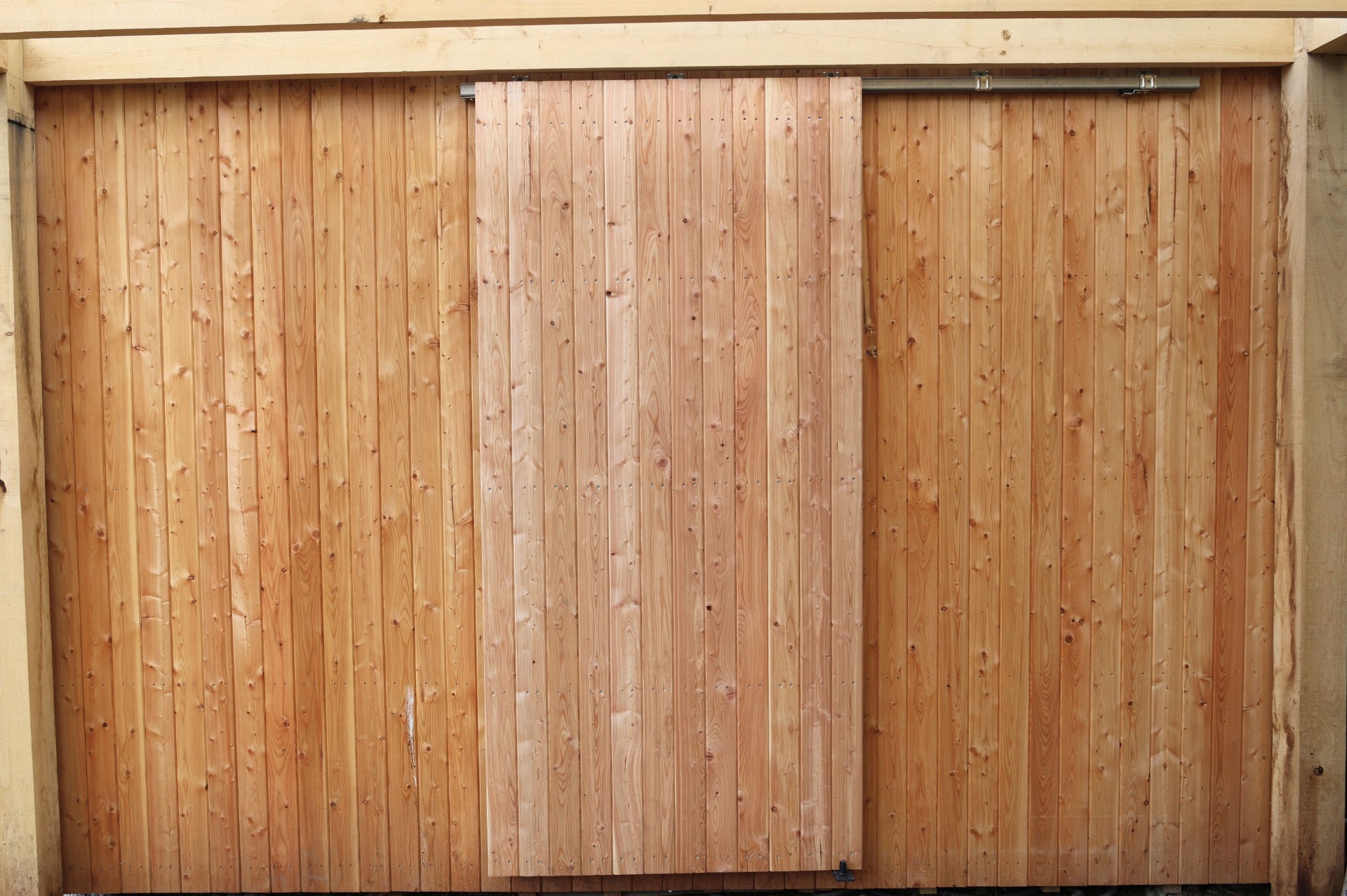
- Larch as the default for most garden offices and garden rooms - it balances cost, consistent weathering and durability well
- Cedar where a warmer tone is wanted against a period or brick-heavy house, or where the client specifically wants cedar's character
- Larch for buildings with a lot of external corners, door reveals or high-touch areas, given its slightly harder surface
- Either species finished with an oil system where the client wants to hold the original colour rather than let it silver
The honest answer
Both are good, durable, natural claddings that will serve a Sussex garden room well for decades when detailed correctly. Choose larch if cost and even weathering matter most to you; choose cedar if you specifically want its warmer colour and are comfortable with slightly more attention to keep it looking that way. Either decision is a safe one - the far more important variable is whether the cladding sits on a properly ventilated cavity with the right fixings, which we cover in our full cladding comparison guide.
Where we clad garden rooms
We cut and fit larch and cedar cladding in our own workshop and install across Sussex, Surrey and Kent, including Haywards Heath, Crawley, Tonbridge, Sevenoaks and Guildford.
Where we work
We design and build gardens, garden rooms and pergolas across Mid Sussex and the surrounding towns.
More materials & build guides
- Choosing Paving and Natural Stone for a Sussex GardenPaving is the largest single surface in most gardens and the easiest to get wrong. A practical guide to stone selection for Sussex homes.
- Year-Round Planting Schemes for West Sussex GardensMost gardens peak for six weeks and disappear for the rest of the year. Structure, succession and the right soil match fix that.
- Porcelain vs Natural Stone Paving: An Honest ComparisonBoth are excellent. They fail in different ways and suit different houses - here is how we choose between them.