What insulated actually means
Most rooms sold as insulated carry a thin layer of insulation stapled between studs and nothing else. The heat leaves through the junctions, the floor perimeter and the roof edge, and the room is cold before Christmas.
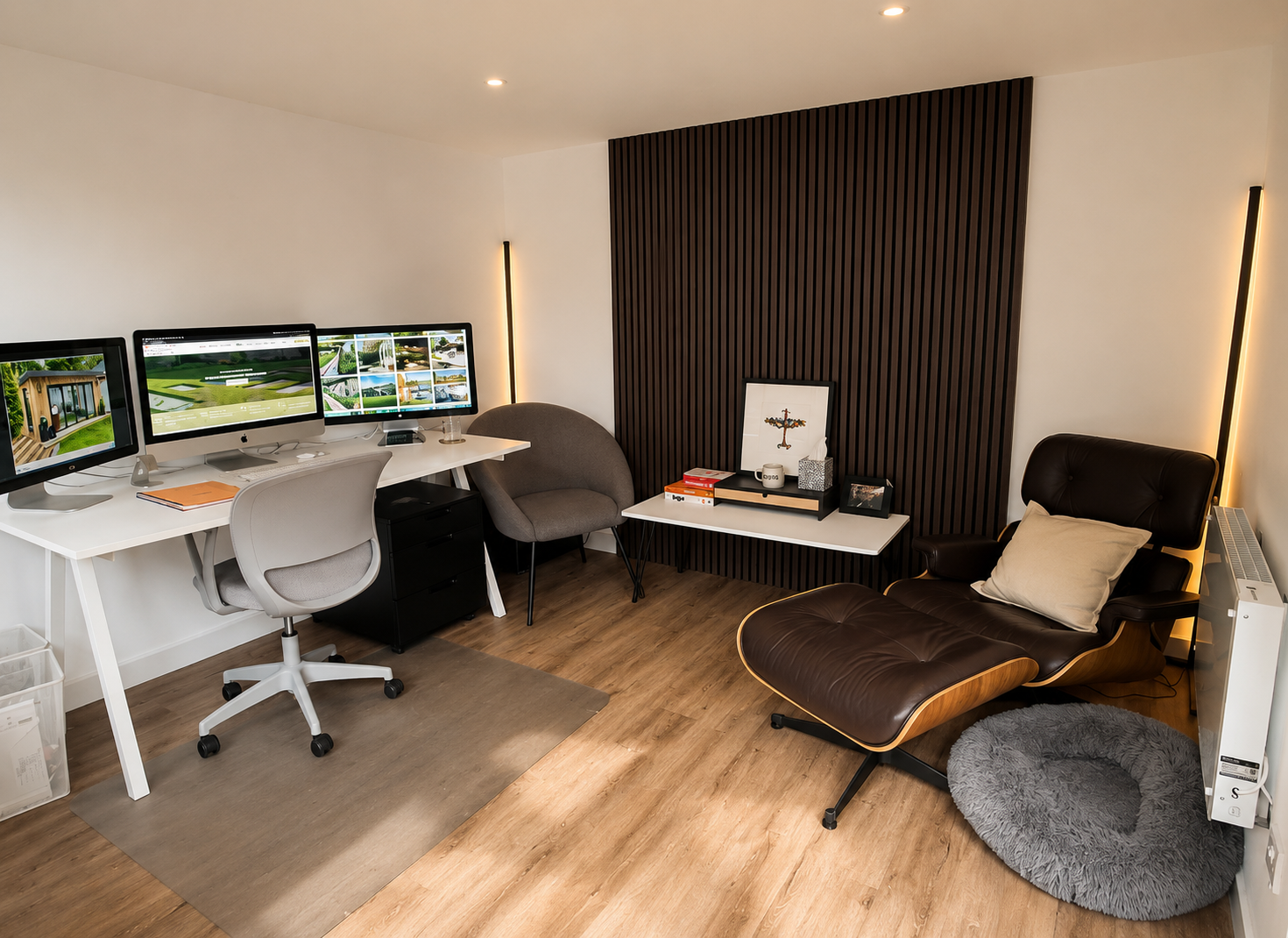
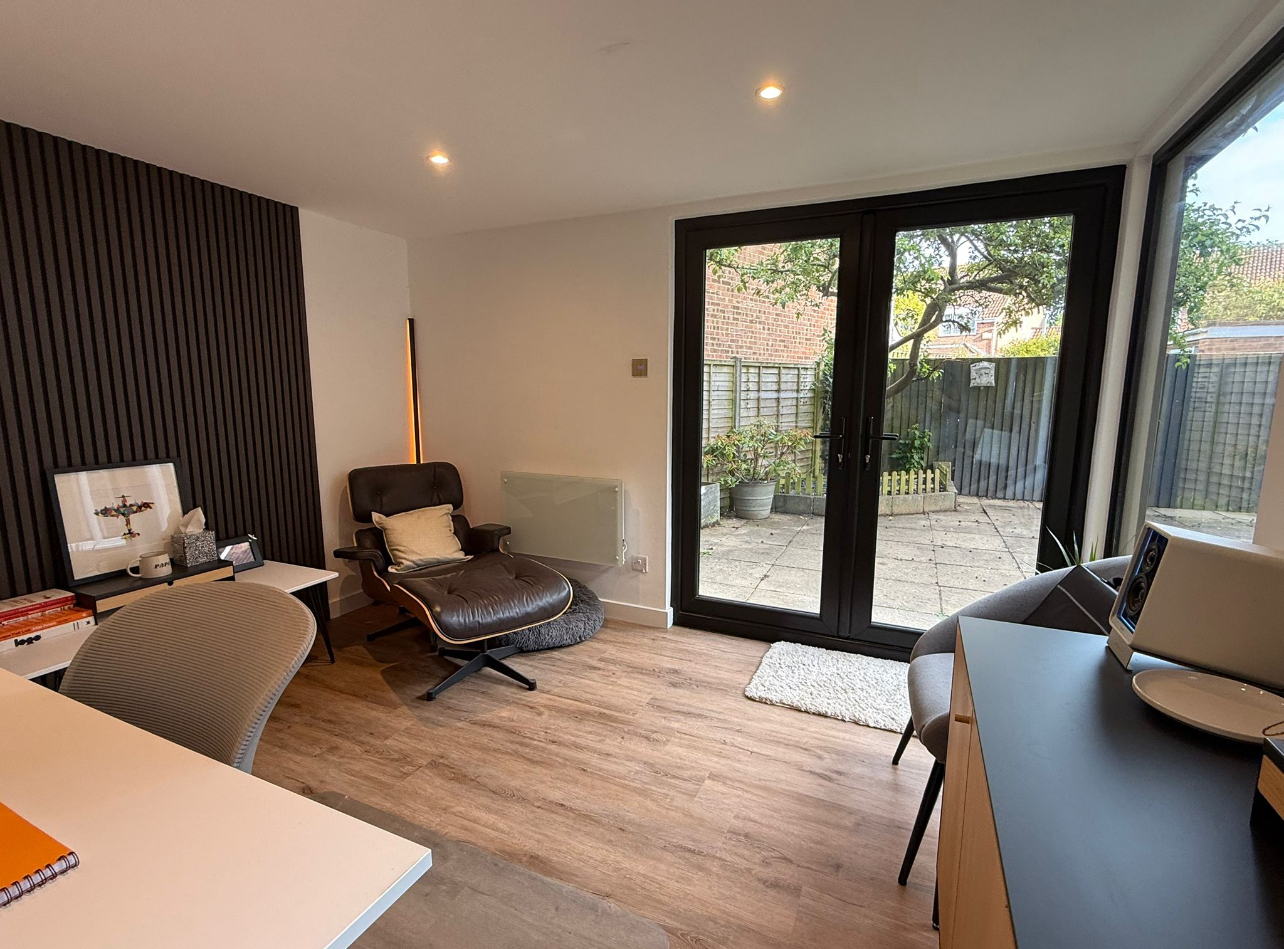
A room that performs is a continuous envelope: insulation in the floor, walls and roof at matched thicknesses, an airtight membrane taped at every junction, and a ventilated cavity behind the cladding so the timber can dry.
- Insulated raft or fully insulated suspended floor - never a bare slab
- Wall build-up delivering roughly 0.20 W/m²K with no cold bridging at corners or openings
- Warm-roof construction with insulation above the deck, not squeezed between rafters
- Taped airtightness membrane and a ventilated rainscreen cavity behind the cladding
- Thermally broken, double-glazed aluminium or timber doors and windows
Heating, power and the things people forget
Once the envelope is right, the heating requirement collapses. A well-built 20m² room needs very little to hold temperature, which is why we fit low-profile electric panel heating rather than oversized units fighting a leaky building.
Every build includes a certified armoured supply from the house, its own consumer unit, sockets and data where you need them, and a lighting scheme designed alongside the interior rather than added at the end.
What an insulated garden room costs
A fully insulated, fully finished room from us typically usually starts from about £25,000 for a compact single-room build, rising with size, glazing and specification. That figure includes groundworks, insulation, certified electrics, heating, flooring and decoration - a building you can move into, not a shell. These are indicative guide ranges based on completed projects, not a quotation; your figure is confirmed after a site visit.
Cheaper quotes almost always exclude the groundworks, the electrical supply or the internal finish. Ask any quote to list those three and the comparison becomes honest very quickly.
Where we build insulated garden rooms
Our yard is in Mid Sussex, so most of West Sussex, East Sussex, east Surrey and west Kent sit inside our usual working radius. We travel further for larger builds.
- West Sussex
- East Sussex
- Surrey
- Kent
Insulated garden room questions
- Can an insulated garden room be used in winter?
- Yes - that is the entire point of building one properly. With a continuous insulated envelope, taped airtightness and double glazing, a low-output panel heater holds a comfortable temperature through a Sussex winter for pennies a day.
- Do insulated garden rooms need planning permission?
- Usually not. Most fall under permitted development: single storey, under 2.5m high within 2m of a boundary, no more than half the garden covered and not used as a separate dwelling. Conservation areas, AONB land and listed properties are the common exceptions, and we check your plot before quoting.
- What insulation do you use?
- Rigid PIR board in the floor and roof with mineral wool or PIR in the walls depending on the build-up, sized so the whole envelope performs consistently rather than one element being strong and the rest weak.
- Do I need building regulations approval?
- Not for a typical detached garden room under 30m² with no sleeping accommodation. The electrical supply still has to be installed and certified to Part P, which we handle as part of the build.
- How long does a build take?
- Two to four weeks on site once the design is signed off, with roughly six to ten weeks lead time from first call to build start depending on the season.
What our clients say
Reviews from homeowners across Sussex, Surrey and Kent.
"Best in class. None of my specific requests were any trouble at all. The team were polite, professional, smart, and accommodating throughout. A perfect example of how professional tradespeople should be."
"Alistair understood exactly how we wanted to use the garden. The finished space feels like a private retreat and we use it every day."
"Our garden office has completely transformed how we work from home. The quality is outstanding and the process was seamless."
Areas we cover
Designed and built by our own team across Sussex, Surrey and Kent.
West Sussex
East Sussex
Surrey
Not on the list? See the full coverage map, or find landscapers near you town by town - we travel further for larger projects.
Read next
- The full garden room collection and build process
- Garden rooms in Sussex: towns, costs and lead times
- Garden offices: spec, costs and planning
- Garden room planning permission explained
Want the full specification?
The brochure sets out sizes, layouts, the full build-up and finishes. Or call and we will tell you honestly what your plot suits.